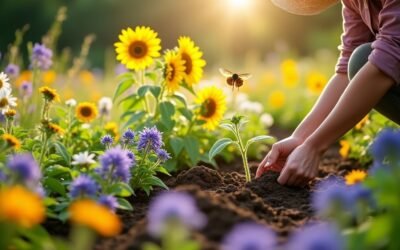
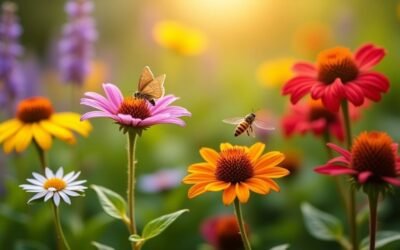
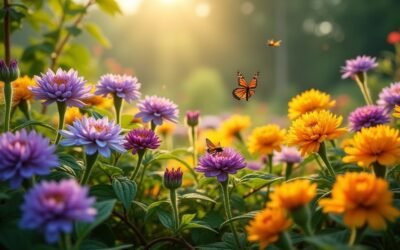
Heliopsis helianthoides, or Smooth Ox-Eye, is a North American perennial wildflower celebrated for its striking yellow flowers and adaptability. Rising to heights of 3 to 5 feet, it flourishes in full sun with a preference for various soil types, thriving within a pH range of 4.5 to 8. Remarkably drought-resistant and capable of self-seeding, it supports numerous pollinators, including bees and butterflies, enriching local ecosystems. While it requires minimal maintenance, monitoring for pests like aphids is essential. Gardeners valuing biodiversity will find this resilient species a stunning addition, which offers even more rewarding insights about its ecology and care.
Main Points
- Heliopsis helianthoides, commonly known as Smooth Ox-Eye, is native to North America and belongs to the Asteraceae family.
- This perennial wildflower blooms from June to September, displaying vibrant yellow flowers that attract various pollinators.
- Smooth Ox-Eye thrives in full sun and tolerates a wide range of soil conditions, including heavy clay and drought once established.
- It supports over 150 insect species, enhancing biodiversity and providing crucial food sources for nectar-loving creatures.
- Regular care includes monitoring for pests like aphids and managing moisture levels to prevent diseases such as powdery mildew.
Introduction
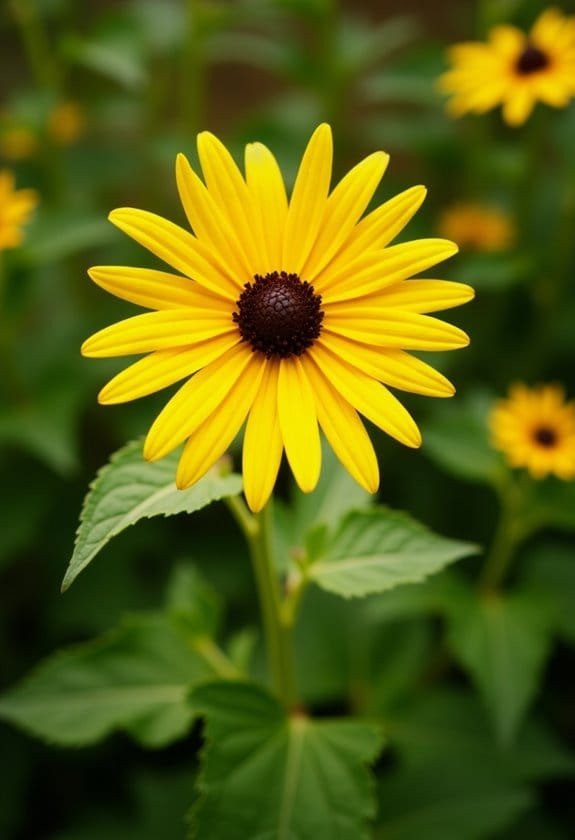
Heliopsis helianthoides, commonly referred to as the Smooth Ox-Eye or False Sunflower, stands out as a remarkable perennial wildflower native to North America.
With its striking yellow blossoms gracing gardens from early to late summer, this member of the Asteraceae family not only enhances aesthetic appeal but also promotes biodiversity.
It thrives in a variety of habitats, adapting seamlessly to numerous soil conditions, thereby playing an essential role in supporting local ecosystems.
Common Name
The Ox Eye Sunflower, also known as Early Sunflower and False Sunflower, captivates with its vibrant yellow blooms. This perennial wildflower, classified under the Asteraceae family, displays striking flowers that bloom from early to late summer. The plant's cheerful petals aren't only visually delightful but also serve as a beacon for various pollinators, enhancing its appeal in natural landscaping.
Among its common names, one may also encounter Eastern Ox-eye and Eastern Sunflower-everlasting. These names reflect its geographical distribution and its enduring presence in garden settings. The term "Ox Eye" subtly hints at the flower's resemblance to true sunflowers, despite their notable differences in botanical classification. Such common names allow enthusiasts and gardeners alike to identify Heliopsis helianthoides more easily within diverse ecosystems.
In addition to its aesthetic value, the Ox Eye Sunflower's role in supporting pollinator populations can't be overstated. By creating habitats for bees, butterflies, and other insects, this plant strengthens local biodiversity.
Its popularity as a garden choice isn't merely due to its beauty, but also its positive impact on the environment—providing sustenance for essential species within our ecosystems.
Scientific Name
Known for its distinctive yellow blooms, Heliopsis helianthoides is categorized under the Asteraceae family, which encompasses the aster and daisy types. This particular scientific name reflects its close kinship to various flower species, specifically those in the Helianthus genus, where true sunflowers reside.
Previously, it was classified as Heliopsis scabra, highlighting the evolving understanding of its taxonomy within the botanical community. The phonetic spelling, hee-lee-OP-sis hee-lee-an-THOY-dees, aids enthusiasts and professionals alike in pronouncing it correctly, fostering a sense of familiarity with this remarkable perennial. Typically reaching heights between 3 to 5 feet, Heliopsis helianthoides showcases its vibrant yellow flowers, contributing both aesthetic beauty and ecological importance. This plant also serves as a vital nectar source for various pollinators.
Native to North America, this herbaceous perennial plays a crucial role in local ecosystems, serving as a refuge for essential pollinators, such as bees and butterflies. Additionally, like Horseshoe Vetch, it supports biodiversity by providing crucial habitats for various insect species, further enhancing the ecological balance.
Overview
With its stunning golden blooms and robust growth, Smooth Ox-Eye brightens gardens and natural landscapes alike. This native perennial wildflower, scientifically known as Heliopsis helianthoides, belongs to the Asteraceae family and is celebrated for its vibrant yellow flowers that grace the landscape from early to late summer.
Standing between 3 to 5 feet tall, Smooth Ox-Eye flourishes in various environments, from moist open woodlands to dry prairies, and thrives best under full sun exposure. Notably, similar to Common Foxglove, it can thrive in diverse climates and conditions, demonstrating resilience in natural settings.
The plant exhibits opposite, toothed leaves that possess a sandpapery texture, adding visual interest to any setting. Critically, Smooth Ox-Eye attracts a diverse array of pollinators, including industrious bees, graceful butterflies, and even hummingbirds, enriching the garden's ecosystem.
Known for its ability to self-seed, this short-lived perennial easily establishes itself in open soil, making it a suitable choice for gardeners seeking low-maintenance beauty.
Additionally, it enhances biodiversity by providing late-season nectar, similar to Autumn hawkbit, which also supports various pollinators.
Adaptable to multiple soil conditions, Smooth Ox-Eye prefers a pH range of 4.5 to 8, showcasing its resilience and capacity to thrive in varied habitats. Its enduring presence not only enhances aesthetics but also promotes biodiversity within its environment.
Key Features
Heliopsis helianthoides, commonly known as Smooth Ox-Eye, showcases an impressive growth size, reaching heights of 3 to 5 feet.
Its vibrant yellow flowers, adorned with intricate golden centers, bloom from early summer through late summer, creating a stunning visual display that captivates both pollinators and onlookers alike.
With its unique oppositely attached leaves featuring a distinctive sandpapery texture, this perennial presents a remarkable blend of beauty and ecological importance in any garden setting.
Growth Size
Standing tall, Smooth Ox-Eye typically reaches heights of 3 to 5 feet, making it a striking addition to any garden. This growth size establishes it as a formidable presence among perennial plantings. Not only does this remarkable plant thrive in various conditions, but it also boasts a rapid growth rate, enabling it to flourish even in poorer soils.
As a short-lived perennial, Smooth Ox-Eye's life cycle guarantees consistent growth, from sprouting to blooming, within a single growing season. The capacity to self-seed further contributes to its adaptability—the seeds disperse readily, germinating in suitable environments, which promotes natural colonization.
Gardeners can appreciate its robust nature, as its height allows it to serve as a backdrop or focal point amidst smaller plants, introducing vibrant colors and textures.
When planted in clusters, their combined growth size creates an impressive display that attracts pollinators and enhances biodiversity.
In essence, the growth size of Heliopsis helianthoides not only enriches landscape aesthetics but also supports ecological functions, providing habitat and food for various species while enchanting the human eye in any garden setting.
Appearance
Smooth Ox-Eye captivates gardeners and nature enthusiasts alike with its striking appearance. This herbaceous perennial, scientifically known as Heliopsis helianthoides, showcases vibrant yellow flowers that boast a radiant golden center. These blooms, reminiscent of true sunflowers, emerge from early summer to late fall, offering a visual feast for onlookers.
Standing between 3 and 5 feet tall, Smooth Oxeye possesses opposite, toothed leaves that exhibit a unique sandpapery texture, enhancing its tactile allure.
The plant's long-lasting, eye-catching flowers attract an array of pollinators, including bees and butterflies, thereby fostering biodiversity within various landscapes. Although its blooms share similarities with the Helianthus family, it's important to highlight that Smooth Oxeye belongs to the Asteraceae family, distinguishing it from its sunflower relatives.
This plant's self-seeding nature allows it to flourish in diverse habitats, making it an ideal choice for pollinator gardens, natural landscapes, and habitats that celebrate native flora. This adaptability not only supports ecological balance but also enriches the visual tapestry of gardens, inviting a myriad of wildlife to partake in its beauty.
Flowering Season
Blooming from early summer through late summer, the flowering season of Smooth Ox-Eye injects a burst of vibrant color into gardens. This herbaceous perennial, scientifically known as Heliopsis helianthoides, typically displays its striking yellow flowers from mid-summer to fall.
These radiant blooms, characterized by their golden center and surrounding petals, can dramatically enhance the visual appeal of prairies and woodland edges. Throughout the flowering season, the plant produces numerous blooms, creating a continuous showcase of color from June to September.
This abundance not only captivates the eyes but also attracts pollinators like bees and butterflies, contributing to local biodiversity and ecosystem health. The primary flower heads can grow up to 3 inches in diameter, making them a substantial presence in any garden space.
Moreover, Smooth Ox-Eye's ease of growth and rapid maturation guarantees that gardeners enjoy a quick display of yellow flowers with minimal maintenance.
Growing Requirements
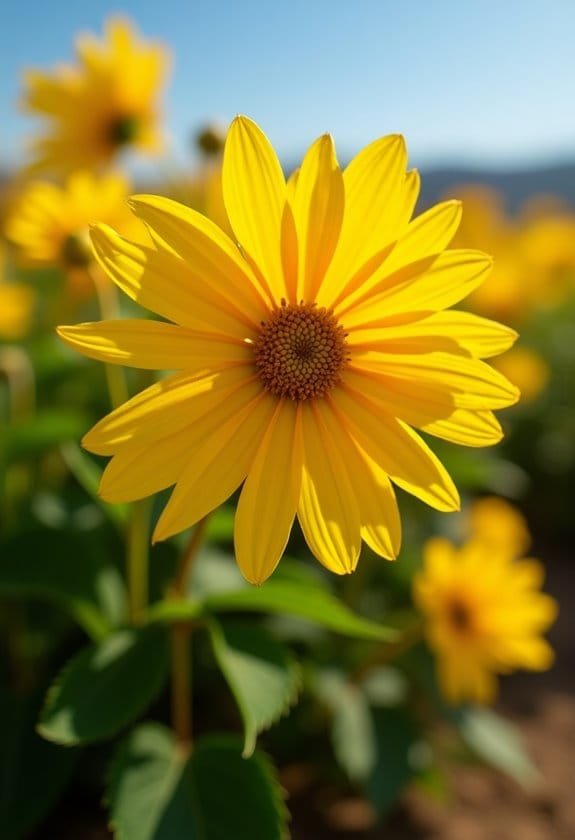
Heliopsis helianthoides flourishes in full sun and requires specific growing conditions to thrive.
With a preference for soil pH ranging from 4.5 to 8, this adaptable perennial can tolerate various soil types, including clay and even occasional standing water, provided flooding is rare.
Understanding the plant's light, soil, moisture, and temperature needs is essential for encouraging robust growth and vibrant blooms throughout the summer and fall seasons.
Light
For ideal growth and vibrant flowering, Heliopsis helianthoides thrives under full sun exposure. This hardy perennial, akin to a sunflower in its radiant brilliance, flourishes best in environments that provide ample light throughout the day.
A minimum of six to eight hours of direct sunlight is essential for stimulating robust growth and fostering the profuse blooming of its striking yellow flowers from early summer to late fall.
In USDA planting zones 3-9, adequate sunlight facilitates not only the plant's aesthetic appeal but also its ecological role; the abundant flowers serve as a vital food source for diverse pollinators, including bees and butterflies.
These beneficial insects are attracted by the brilliant blooms, enhancing the garden's natural vibrancy and contributing to local biodiversity.
Furthermore, while Heliopsis helianthoides can adapt to varying soil types, from sandy to heavy clay, the light's significance can't be overstated.
When planted in ideal sunlight, this resilient species exhibits enhanced vigor and flourishes to its full potential, transforming gardens into sun-kissed sanctuaries filled with life and color.
Soil
Several key factors influence the growth of Heliopsis helianthoides, with soil being one of the most important. This resilient plant thrives particularly well in tough and heavy clay soils, which demonstrates its remarkable adaptability to challenging environments.
Heliopsis helianthoides prefers a soil pH range of 4.5 to 8, aligning itself with various soil types, from acidic to slightly alkaline. It performs best in moist, well-drained soil, highlighting the necessity of proper drainage, as standing water can prove detrimental. However, once established, it can tolerate periods of drought, showcasing its tenacity. The presence of nitrogen-fixing properties in companion plants, such as Meadow Vetchling, can further enhance soil health in the surrounding garden.
In gardening settings, the ability of Heliopsis helianthoides to adapt to a wide range of soil conditions—including poor quality soils—makes it an excellent choice for many enthusiasts. Additionally, like Henbit Deadnettle, which utilizes cleistogamous flowers for reproduction, Heliopsis helianthoides also has strategies that enhance its survival in diverse environments.
When planting this robust perennial, gardeners should verify adequate drainage to prevent water accumulation, although occasional flooding, if infrequent, can be tolerated. By understanding these soil requirements, gardeners can create an ideal environment that promotes vibrant growth and robust health of Heliopsis helianthoides, guaranteeing it flourishes despite environmental variances.
Therefore, selecting the right soil contributes considerably to the successful cultivation of this enchanting plant.
Water
While Heliopsis helianthoides can tolerate various water conditions, proper watering is essential for its growth. This plant thrives best in well-drained soil, ideally situated in environments that range from moist to dry.
While it can withstand occasional standing water, it's vital that this condition doesn't become habitual, as frequent flooding can lead to detrimental root rot. Common Yarrow's impressive drought resilience makes it an excellent companion plant for those seeking to create a sustainable garden.
The plant's preference for full sun enhances its flowering potential, making the management of water even more significant during the hotter months. Young plants, in particular, require diligent attention to water availability.
During dry spells, ensuring consistent moisture can mean the difference between a healthy, flourishing specimen and one that struggles to establish itself. Additionally, established plants show impressive drought tolerance, which further emphasizes the need for balanced watering.
Thus, gardeners should monitor soil moisture levels, watering moderately to maintain a balance that doesn't allow for soil saturation.
Proper watering not only supports root establishment but also promotes vibrant blooms, helping to showcase Heliopsis helianthoides in its full glory. A keen understanding of these water requirements ultimately enriches any garden, creating a thriving habitat for this stunning perennial.
Temperature
Maintaining the right temperature is essential for the health and growth of Heliopsis helianthoides. This perennial wildflower thrives best in USDA hardiness zones 3-9, demonstrating remarkable adaptability to varying temperature ranges within these specific zones.
Ideally, Heliopsis helianthoides flourishes in temperatures ranging from 60°F to 75°F, which greatly enhances its flower production and overall vigor.
While it exhibits resilience to temperature fluctuations, this plant prefers full sun exposure, requiring at least six hours of sunlight daily to maximize its growth potential. Its ability to thrive under moist and dry conditions allows it to flourish in diverse environments, making it an excellent choice for gardeners in various climates.
Moreover, Heliopsis helianthoides is relatively heat tolerant, thriving even in warmer regions, as long as adequate moisture is provided. Consequently, for ideal growth and delightful flowering performance, gardeners should aim to create a conducive temperature environment, ensuring their plants receive the light and warmth they demand.
With careful attention to temperature, these vibrant beauties can adorn gardens, bringing joy and color to all who encounter them.
Pollinator Criteria
Heliopsis helianthoides plays an essential role in attracting a diverse array of pollinators, such as bees, butterflies, and hummingbirds, thanks to its vibrant yellow flowers filled with nectar.
This plant's unique structure not only facilitates easy access for ground-nesting bees but also enhances overall pollination effectiveness, promoting an efficient method of cross-pollination.
As the blooms persist from early to late summer, they provide a reliable sanctuary of sustenance, fostering a healthy ecosystem and supporting biodiversity in pollinator-friendly gardens. Additionally, Heliopsis helianthoides thrives in full sun, making it an ideal choice for attracting pollinators in well-drained soil gardens.
Attracted Pollinators
Attracting a wide range of pollinators, Smooth Oxeye stands out in gardens with its vibrant yellow blooms and rich nectar production. This compelling attraction includes various beneficial species, such as bees, butterflies, and even hummingbirds, all drawn to the flower's striking coloration and ample nectar reserves.
The flowering season, spanning from early summer to late fall, guarantees a continuous food source for pollinators throughout the plant's bloom period.
Smooth Oxeye's large, showy flowers exhibit an open structure that particularly appeals to ground-nesting bees, offering abundant resources for those seeking sustenance. Such diverse pollinator visits not only enhance the plant's reproductive success but also contribute considerably to local ecosystems.
By supporting a range of pollinator species, Heliopsis helianthoides fosters biodiversity, creating a rich tapestry of life in the garden. The presence of these pollinators strengthens insect populations, which are crucial for maintaining healthy ecological systems(#). It's through this dynamic interplay that Smooth Oxeye serves as an essential component, guaranteeing ecological balance while providing beauty and function in floral landscapes.
For gardeners passionate about sustainability, the appeal of Smooth Oxeye becomes undeniably clear.
Pollination Method
Smooth Oxeye employs a variety of pollination strategies that capitalize on its vibrant flowers to attract and accommodate multiple types of pollinators. With bright yellow petals and an abundant nectar supply, Heliopsis helianthoides lures bees, butterflies, and even hummingbirds, creating a dynamic ecosystem around the plant. The blooming phase spans from early summer to fall, ensuring a continuous source of pollen and nectar, crucial for sustaining these pollinator populations. Additionally, like Alexanders, the Smooth Oxeye supports over 150 insect species, contributing to local biodiversity.
The plant's unique structure, featuring both disk and ray flowers, optimizes accessibility for pollinators, enhancing its effectiveness in facilitating pollination. The disk flowers, rich in pollen, are particularly appealing to bees, while the broader ray flowers offer a landing pad for visiting butterflies and hummingbirds.
This strategic design not only aids in the plant's reproduction but also supports local biodiversity—a significant element in maintaining ecosystem health. Additionally, the Smooth Oxeye's nitrogen-fixing capabilities improve the soil quality, further promoting a thriving habitat for various organisms.
Pollination is, consequently, essential for the Smooth Oxeye, as it directly influences seed production. By encouraging a diverse array of pollinators, this species has a profound impact on the environment, fostering rich habitats that nurture various organisms.
Fundamentally, Smooth Oxeye stands as a reflection of nature's interconnectedness.
Care & Maintenance
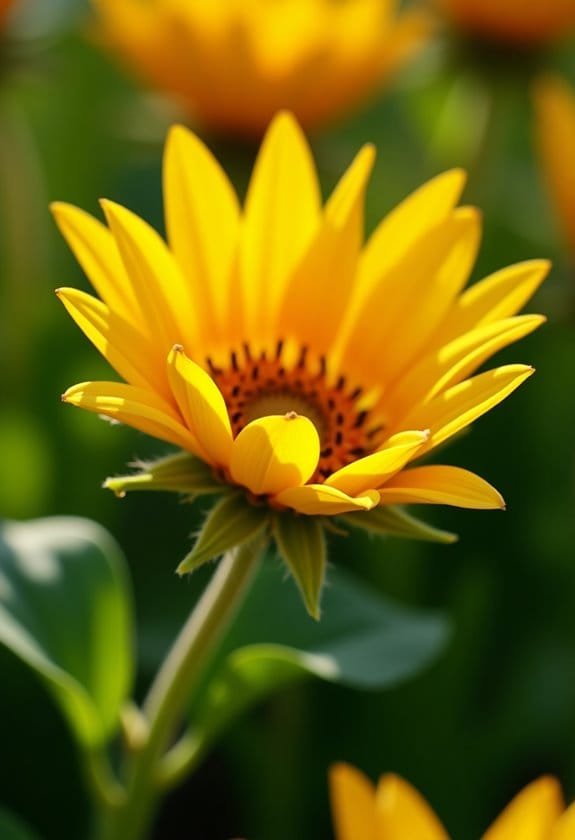
When it comes to the care and maintenance of Heliopsis helianthoides, understanding its need for full sunlight and well-drained soil is essential for peak growth.
This resilient, short-lived perennial thrives with minimal intervention but does benefit from regular monitoring for aphids, which can be detrimental if left unchecked.
Additionally, taller varieties often require staking to guarantee they withstand the elements, allowing these vibrant plants to flourish fully, achieving heights of 3 to 5 feet.
Planting Tips
To guarantee successful growth of Heliopsis helianthoides, follow a few essential planting tips that prioritize sun exposure and soil quality.
This perennial flourishes in full sun, requiring 6-8 hours of sunlight daily, which promotes robust growth and vibrant blooms. When selecting soil, aim for a well-drained mix with a pH range between 4.5 and 8; Heliopsis helianthoides proves remarkably adaptable, thriving even in heavy clay or poorer conditions.
It's important to water the plants moderately, allowing the soil to dry out between waterings after establishment, preventing the dreaded root rot—like suffocating a flower with too much affection.
When you're placing plant orders, consider that self-seeding is a natural trait of these blooms, so leaving spent flowers on the plants can yield delightful surprises each season, ensuring future blooms without additional effort.
Lastly, maintain vigilance against aphids, common pests that can detract from the plant's well-being.
Implementing basic pest management strategies will be essential for sustaining your plants' health and ensuring they remain a stunning addition to your garden for years to come.
Ongoing Care
Successful planting sets the stage for ongoing care as Heliopsis helianthoides continues to thrive in the garden. This delightful perennial flourishes in full sun and adapts to various soil types, making it a versatile choice for many landscapes.
To guarantee that these resilient plants can be grown to their full potential, regular monitoring of soil moisture is essential. During dry spells, maintaining consistent moisture promotes healthy growth and abundant flowering, especially in the plant's first year.
While Heliopsis helianthoides is low-maintenance, guardians of the garden should be vigilant for pests, such as aphids, which can detrimentally impact health. Utilizing natural pest management strategies can help mitigate infestations effectively.
The taller varieties of smooth ox-eye may require staking to prevent collapse during inclement weather characterized by high winds or storms.
Understanding these elements of ongoing care not only fosters a thriving garden but also guarantees a vibrant display of yellow blooms that herald the warmth of summer. By implementing these practices, gardeners can enjoy the unique charm and resilience of Heliopsis helianthoides throughout its life cycle and beyond.
Suggested Companions
Pairing Heliopsis helianthoides with the right companions can greatly enhance the garden's overall impact and ecological health. This true sunflower, or Sweet Smooth Oxeye, thrives within the contiguous United States, as a map shows the native counties listed for its growth.
Gardeners can select a wide range of companions to bolster the aesthetic and ecological value of their plantings. Incorporating native grasses like Schizachyrium scoparium (little bluestem) provides structural support and biodiversity, while pollinator-friendly choices such as Echinacea purpurea (purple coneflower) attract beneficial insects. This partnership with varieties like Echinacea purpurea ensures a vibrant and buzzing garden atmosphere.
Compact varieties of Aster, members of the Aster family, offer a contrasting backdrop to Heliopsis' vibrant ray flowers, creating a layered visual effect in the garden. Planting alongside Rudbeckia hirta (black-eyed Susan) generates a striking display of complementary colors, easily grown under similar sun conditions.
Furthermore, deep-rooted perennials like Asclepias tuberosa (butterfly weed) not only enhance the garden's aesthetic appeal but also contribute to soil stability and moisture retention in the surrounding area. California poppy can also be included as a companion due to its attractive blooms and ability to support pollinator populations, enriching the garden's biodiversity.
Common Issues
Heliopsis helianthoides faces several challenges that gardeners should be aware of to guarantee its robust growth.
Aphid infestations can quickly compromise the plant's health, necessitating proactive pest management, while taller varieties may require staking for stability against strong winds.
Additionally, the plant's propensity for self-seeding can lead to overcrowding, which underscores the need for regular maintenance and careful planning within garden spaces.
Pests/Diseases
Often, gardeners encounter several common pests and diseases when cultivating Heliopsis helianthoides, also known as Smooth Ox-eye. One prominent issue involves aphid infestations; these minuscule pests can weaken plants by sucking sap, leading to distorted leaves and stunted growth.
Additionally, powdery mildew poses a major threat, particularly in humid conditions, producing a white, powdery coating that can impede photosynthesis and overall vigor. Leaf spot diseases, another concern, usually develop from excessive moisture or overcrowding, creating unsightly brown lesions that can negatively impact the plant's health.
Proper spacing between plants is essential for maintaining good air circulation, which notably lowers the risk of fungal diseases. Regular monitoring becomes imperative, allowing gardeners to quickly identify and address any issues. To enhance plant health, incorporating companion plants such as creeping thyme can effectively suppress weeds and improve overall resilience.
Prompt removal of affected parts enhances the resilience of Smooth Ox-eye, promoting healthier growth.
Solutions
Addressing common issues with Heliopsis helianthoides requires proactive measures to maintain plant health and energy. This vibrant perennial is prone to aphids, so implementing effective pest management strategies is essential. Gardeners can consider using organic insecticides or introducing beneficial insects, such as ladybugs, to maintain ecological balance while controlling pest populations. Additionally, incorporating plants like the Great Willowherb can attract pollinators, which further supports the overall health of the garden ecosystem.
For taller varieties, staking becomes necessary to support their height and prevent flopping during intense weather, such as strong winds or heavy rains. Additionally, it's important to recognize that Heliopsis helianthoides possesses a medium flammability rating, indicating that proper spacing and management strategies can mitigate fire risks, especially in susceptible areas.
Regular maintenance, including deadheading spent flowers, prolongs blooming periods while enhancing overall health. Moreover, this robust plant enthusiastically self-seeds when conditions are favorable, which could lead to overcrowding in garden settings.
As a result, proactive conservation strategies, such as monitoring growth and managing seed dispersal, are essential in ensuring a well-balanced garden environment. By addressing these common issues with informed practices, gardeners can promote the sustainability and beauty of Heliopsis helianthoides in their landscapes. Additionally, incorporating drought-tolerant plants that require similar conditions can improve overall garden resilience and ecological balance.
What Are the Differences Between Smooth Ox-Eye and Yellow Ox-Eye Plants?
Smooth ox-eye and yellow ox-eye plants both belong to the aster family, but they have differences. Smooth ox-eye has yellow petals and dark centers, while yellow ox-eye has bright yellow flowers with a prominent cone-shaped center. For more yellow oxeye plant information and uses, consult a botanical guide.
Summary
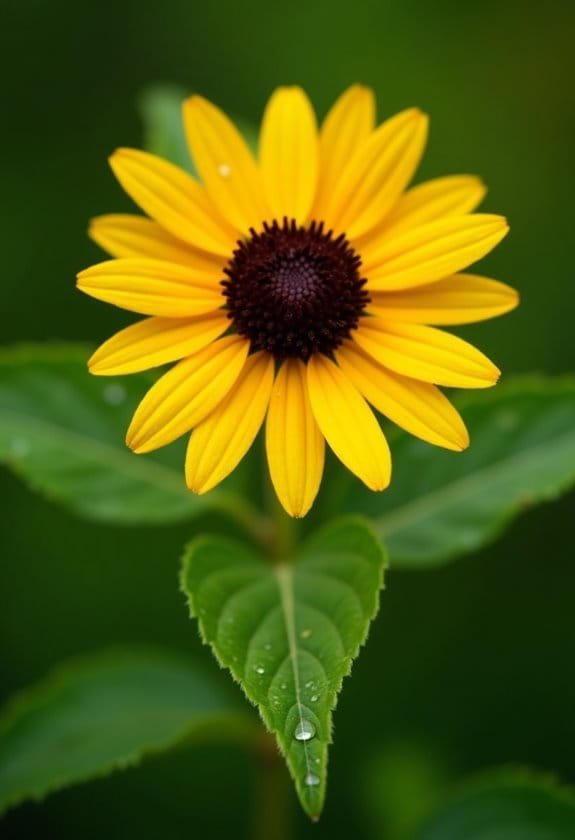
Known for its vibrant yellow blooms, Heliopsis helianthoides, or Smooth Ox-Eye, is a native perennial wildflower that enhances gardens from early summer to fall. This stunning plant belongs to the Asteraceae family and thrives in diverse habitats, such as moist to dry open woodlands, prairies, and fields, showcasing its adaptability to various soil types, including heavy clay and impoverished soils.
Standing tall at 3 to 5 feet, the Smooth Ox-Eye features distinctively textured, oppositely attached leaves with toothed edges, adding an unparalleled visual interest to any garden. Its ability to readily self-seed fosters native populations and attracts beneficial insects, including bees and butterflies, thereby promoting a healthy ecosystem.
This short-lived perennial generally thrives in full sunlight, making it an exceptional choice for low-maintenance, biodiverse gardens. Bugloss, another plant that attracts essential pollinators like bees, highlights the importance of incorporating a variety of flowering plants to support local fauna.
Beyond its aesthetic appeal, Heliopsis helianthoides possesses cultural significance, as native wildflowers like it support local wildlife and restore natural landscapes.
As horticulturalists and gardeners increasingly prioritize ecological harmony, embracing this resilient wildflower helps maintain biodiversity and enhances the delicate balance of garden ecosystems.