Lavatera trimestris, or Annual Mallow, exhibits striking hibiscus-like flowers in vibrant pink hues, blooming from June to September. This bushy plant typically reaches heights of 16 to 20 inches, thriving in full sun and well-drained soil. It attracts essential pollinators, such as bees, enriching garden ecosystems and enhancing biodiversity. To achieve peak growth, gardeners should maintain regular moisture and monitor for pests or diseases, including mallow disease and aphids. With proper care, including deadheading and a nutrient-rich soil foundation, Lavatera creates a fascinating landscape appearance. Exploring its ecological benefits further highlights Lavatera's role in sustainable gardening practices.
Main Points
- Lavatera trimestris, or Annual Mallow, features vibrant hibiscus-like flowers and grows 16 to 20 inches tall, ideal for borders and containers.
- It thrives in full sun and well-drained soil, requiring regular moisture and germinating best at temperatures of 65-70°F.
- This non-toxic plant attracts pollinators, supporting local biodiversity while adding aesthetic value to gardens.
- Key care practices include deadheading, monitoring for pests, and maintaining good garden hygiene to prevent disease.
- Companion plants such as salvia and nepeta enhance the appeal and health of Lavatera, promoting biodiversity in the garden.
Introduction
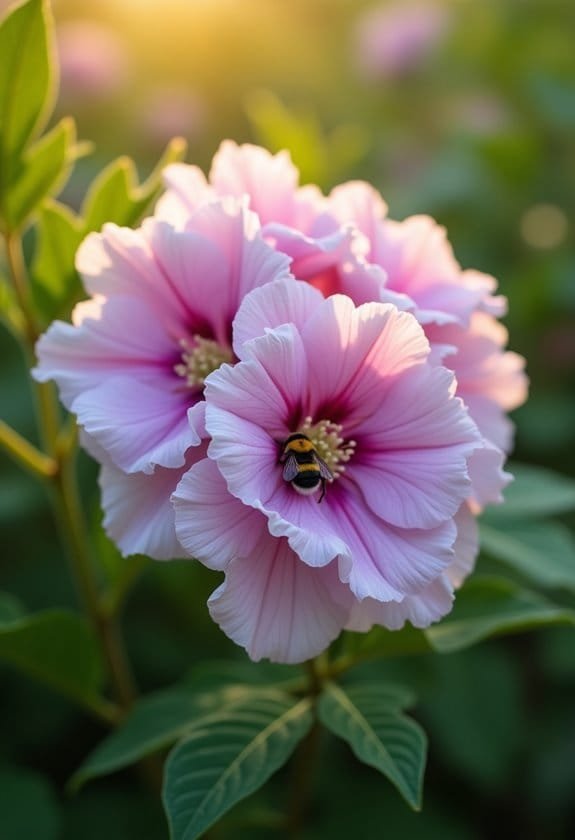
Lavatera trimestris, widely known as Annual Mallow, captivates gardeners with its stunning, hibiscus-like flowers that range from delicate pink to pure white.
This resilient plant, usually growing between 16 to 20 inches tall, thrives in sunny environments and plays a critical role in supporting local pollinator populations, particularly bees.
Common Name
What makes Annual Mallow a favorite among gardeners? Known scientifically as Lavatera trimestris, this annual plant captivates with its striking blooms, which resemble the beloved hibiscus flowers. The vibrant pink and pristine white flowers appear from June to September, ensuring that gardens burst with color during the warm summer months.
Spanning heights of 16 to 20 inches, Lavatera's attractive stature makes it ideal for borders and container gardening, where it provides a delightful visual focal point.
One of the most appealing varieties is the Twins Hot Pink, recognized not only for its enchanting hue but also for its remarkable disease resistance, which greatly enhances its performance in diverse garden conditions.
Additionally, as an annual plant, Lavatera trimestris has an exceptional ability to self-seed, potentially yielding new growth in subsequent seasons without the need for replanting. This characteristic adds to its charm and practicality, making maintenance a breeze for gardeners.
In their exuberance, the white flowers of Lavatera evoke a sense of purity and tranquility, further solidifying its place as a cherished staple in many landscapes.
Scientific Name
Famed in gardens for its vibrant blooms, the scientific name of Annual Mallow is Lavatera trimestris. This delightful garden plant belongs to the Malvaceae family, showcasing its ties to a group celebrated for diverse flowering species.
Originating in the warm, sunny Mediterranean region, Lavatera trimestris has adapted remarkably well to well-drained soil conditions, thriving in environments that provide ample sunlight.
Known for its striking, hibiscus-like flowers that blossom in shades of pink and white, this plant attracts various pollinators, contributing to garden ecosystems. Typically growing between 16 to 20 inches in height, it develops a bushy form, enhancing the overall aesthetic of any garden space.
Providing lush foliage, this species not only captivates the eye but also invites the gentle hum of bees and butterflies.
When planting, gardeners will find that Lavatera trimestris seeds germinate best at temperatures of 65-70°F, with sprouting occurring within 14 to 21 days following sowing.
Overview
Annual Mallow, known scientifically as Lavatera trimestris, stands out in gardens for its stunning hibiscus-like flowers that bloom from June to September.
Characterized by vibrant pink flowers, this plant attracts the eye and the pollinators, enriching the ecosystem with its nectar-rich blooms. Lavatera trimestris typically reaches a height of 16 to 20 inches, making it ideal for borders and container gardening, where its mounding growth habit can truly shine.
This perennial gem thrives best in full sun, requiring well-drained soil to avoid the risk of rot caused by overly wet conditions. Regular moisture guarantees healthy growth, while average soil fertility supports the plant's vigor.
Lavatera isn't merely an ornamental choice; it plays a crucial role in enhancing biodiversity, offering a haven for bees and other beneficial insects.
Notably, Lavatera trimestris has received the esteemed Royal Horticultural Society's Award of Garden Merit, affirming its reliability and popularity among gardeners.
To summarize, Lavatera trimestris effortlessly combines visual allure with ecological benefit, living up to its reputation as a beloved addition to any garden landscape.
Key Features
Lavatera trimestris stands out for its striking growth size, typically reaching heights of 16 to 20 inches, coupled with a mounding habit that fits perfectly in borders and versatile containers.
Its vibrant hibiscus-like flowers, available in enchanting shades of pink and white, bloom from June to September, offering a persistent burst of color throughout the summer.
Growth Size
Growing to a height of 16-20 inches, Lavatera trimestris is ideal for borders and container gardening. This annual plant develops a bushy, mounding growth habit that adds a lush quality to any garden setting, providing an engaging structure without overwhelming other plants.
With adequate care and full sun exposure, Lavatera thrives, filling gaps in garden designs to create a cohesive and visually interesting landscape.
From June to September, Lavatera trimestris delights gardeners with its striking bright pink, hibiscus-like flowers. These blossoms not only enhance aesthetic appeal but also attract a variety of pollinators, playing an essential role in the garden's ecosystem.
Among the various cultivars, the Twins Hot Pink variety stands out for its vibrant color and excellent disease resistance, promoting longevity and beauty throughout the growing season.
For those looking to sow garden seeds, Lavatera trimestris offers a resilient option that flourishes with minimal effort. Whether planted in the ground or in pots, these plants create a vibrant display that radiates warmth and charm, ensuring every garden becomes a sanctuary of color and life.
Consequently, Lavatera trimestris represents a splendid addition to diverse gardening endeavors.
Appearance
Known for its stunning visual appeal, Lavatera trimestris showcases a range of spectacular features that enhance any garden. This delightful plant typically grows to heights of 16 to 20 inches, creating a bushy mound of lush foliage that serves as an excellent backdrop for vibrant blooms.
The striking, saucer-like flowers, reminiscent of hibiscus blossoms, boast colors that vary from soft pink to crisp white, ensuring a mesmerizing display throughout the summer months. From June to September, Lavatera's prolific flower production offers an abundance of these enchanting blooms, attracting both the avid gardener's eye and crucial pollinators, particularly bees, drawn in by the rich nectar they provide.
Remarkably, the Twins Hot Pink variety stands out for its exceptional disease resistance, promoting longevity and overall health in various garden settings.
This species excels not just in appearance but also in its ability to enhance biodiversity, proving itself a worthy addition to borders and container gardens alike. With its vibrant flowers and sturdy growth habit, Lavatera trimestris can transform any garden space into a flourishing oasis, delighting those who cultivate and visit it.
Flowering Season
During the flowering season, Lavatera trimestris captivates garden enthusiasts with its vibrant display from June to September. This annual mallow bursts forth with striking bright pink, hibiscus-like blooms, which not only create a picturesque landscape but also attract bees and other essential pollinators enchanted by their nectar-rich structure.
The flowering benefits extend beyond aesthetics, as these plants contribute to the health of local ecosystems.
Employing effective blooming techniques, such as regular deadheading, can noticeably prolong the flowering duration. By preventing seed formation, gardeners can encourage more prolific growth and a continuous display of blossoms, ensuring that the garden remains vibrant throughout the summer.
Notable varieties like Twins Hot Pink showcase superb disease resistance while reaching an ideal height of 16-20 inches, making them perfect for borders and container arrangements.
Seasonal care plays a key role in maintaining health and vigor during the flowering period. Proper watering and nutrient management fortify Lavatera trimestris, allowing it to flourish even in challenging conditions.
Consequently, this annual mallow not only beautifies gardens but also enriches the surrounding environment, drawing admiration from both casual observers and horticultural experts alike.
Growing Requirements
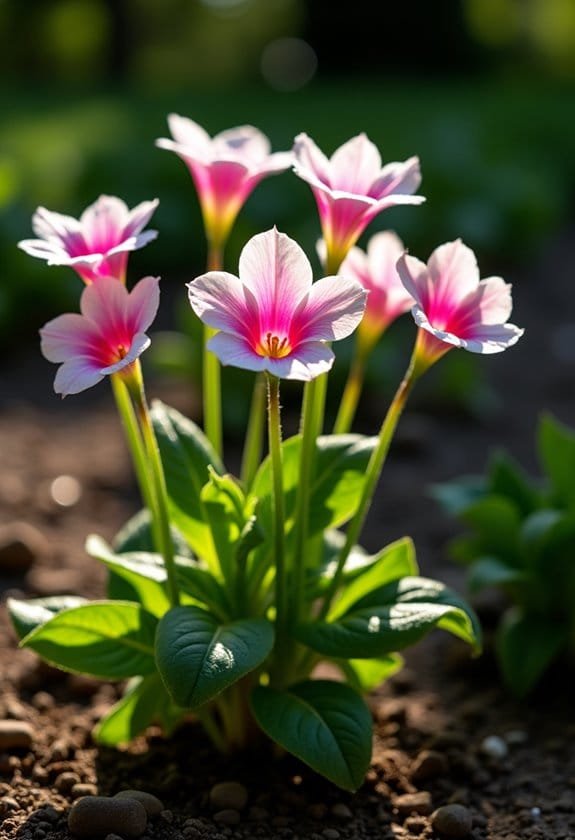
Lavatera trimestris demands specific growing conditions to flourish efficiently.
With a preference for full sun, it needs at least 6 hours of direct sunlight daily, while fertile, well-drained soil is essential to prevent waterlogging that can lead to root rot.
Maintaining a consistent moisture level, along with temperatures between 65-70°F during germination, sets the foundation for its vibrant growth and stunning blooms.
Light
For best growth and stunning blooms, Lavatera trimestris flourishes in full sun, needing no less than 6 to 8 hours of direct sunlight each day. The light intensity effects play a significant role in determining both the plant's vigor and flowering potential.
In sunny, wind-protected locales, Lavatera displays lush, vibrant blooms from June to September, thriving under ideal light duration impacts. However, insufficient sunlight can lead to leggy growth, where the plant stretches disproportionately and fails to produce abundant flowers, ultimately diminishing its aesthetic appeal.
During periods of intense heat, providing partial shade during the hottest hours can bolster plant health—encouraging better flower production without sacrificing liveliness. Regular monitoring of light conditions is important to guarantee that Lavatera receives adequate exposure to maintain its healthful glory.
For gardeners in less sunny regions, artificial lighting solutions can be advantageous, enabling the replication of natural sunlight to stimulate due growth and flowering. Employing grow lights allows for the controlled delivery of light needed to complement outdoor conditions, guaranteeing Lavatera's vibrant performance throughout its growing season, even when nature isn't as cooperative.
Soil
A well-drained soil rich in organic matter is essential for Lavatera trimestris to thrive. This plant flourishes in a fertile soil composition that promotes vigorous growth. A pH level between 6.0 and 7.0 is ideal for optimal nutrient absorption, ensuring that the roots can efficiently take in crucial elements.
To prepare the garden bed, growers should focus on loosening and aerating the soil. This technique encourages healthy root development, allowing Lavatera to establish a strong foundation.
Incorporating organic amendments, such as compost, can considerably enhance soil fertility and improve drainage, consequently creating better conditions for Lavatera growth. Compost not only enriches the soil but also promotes beneficial microorganisms that support plant health.
It's imperative to implement effective drainage techniques, as regular soil moisture is necessary; however, overly wet conditions can lead to root rot—an unfortunate fate for this vibrant plant.
Proper soil preparation and maintenance are fundamental to nurturing Lavatera trimestris, ensuring it receives the nutrients it requires while avoiding detrimental wetness. Therefore, achieving a harmonious balance in soil conditions will foster an environment in which this annual lavatera can truly flourish.
Water
Well-drained soil provides the foundation for Lavatera trimestris, but consistent moisture is key to its vigorous growth. This annual requires regular watering, especially during dry spells, to flourish and display its vibrant blooms.
Gardeners should employ effective watering techniques, as maintaining ideal moisture levels is vital. It's imperative to monitor these levels closely because, while the plant prefers well-drained soil, overly wet conditions can lead to detrimental root rot.
To enhance moisture retention without waterlogging, consider watering early in the morning or late in the afternoon. This approach minimizes evaporation and allows the water to deeply penetrate the soil. During particularly hot summer months, increased watering may be necessary to bolster drought resilience and prevent stress, keeping the plant healthy and robust.
Moreover, understanding the delicate balance between sufficient hydration and soil drainage fosters a thriving environment for Lavatera trimestris. Healthy plants not only appear more vigorous but also produce more blooms, enhancing any garden's aesthetic appeal.
Consequently, careful attention to watering practices forms an indispensable part of Lavatera care, ensuring that this beautiful plant can reach its full potential.
Temperature
When it comes to growing Lavatera trimestris, temperature plays an essential role in its success. To achieve optimal germination conditions, seeds thrive best at temperatures ranging from 65-70°F (18-20°C).
When starting seeds indoors in March, gardeners must guarantee these controlled temperatures are maintained for the best sprout rates. The beauty of Lavatera lies in its robust growth phases, which require specific heat levels. Once the soil temperature rises consistently above 70°F in mid-May, direct sowing outdoors becomes possible in prepared seed beds.
During germination, maintaining the ideal temperature is critical; this influences both the sprouting and healthy development of the plants. Typically, Lavatera seeds take around 14-21 days to germinate, making temperature stability essential for success.
As the plants progress, they demand full sun exposure, needing at least six hours of direct sunlight each day to flourish and produce striking blooms. Therefore, temperature not only affects the initial stages of growth but also supports the vibrant and robust nature of Lavatera trimestris as it matures, establishing it as a stunning choice for any garden enthusiast.
Pollinator Criteria
Lavatera trimestris serves as a vibrant haven for various pollinators, particularly honeybees and butterflies, drawn to its nectar-rich, saucer-like flowers.
These blooms not only provide essential sustenance but also offer visual markers that enhance pollination efficiency through guided navigation for feeding insects. This harmonious relationship encourages extensive pollination that benefits both the Lavatera and the wider ecosystem.
While primarily appealing to specific pollinators, its strategic blooms play a significant role in boosting local biodiversity and ecological health. Additionally, its flowering period coincides with other plants like Guelder Rose, which also attracts various pollinators, creating a harmonious ecosystem in garden spaces.
Attracted Pollinators
Many gardeners find that Lavatera trimestris, or Annual Mallow, is a magnet for pollinators, thanks to its abundant and vibrant blooms. The plant features bright, saucer-like flowers that come in stunning shades of pink and white, attracting bees with their rich nectar content.
During the blooming period, which spans from June to September, these blooms support local bee populations, catering to their unique nectar preferences. Bee behavior around Lavatera is particularly intriguing; many species are drawn in by the accessible pollen and nectar, making this plant a crucial resource in garden design aimed at fostering biodiversity. Additionally, Great Burnet's deep red bottlebrush flowers provide an alternative source of nectar during the latter summer months, enhancing the sustenance available for these essential pollinators.
The bushy growth habit of Lavatera, alongside its continuous flowering, enhances its appeal to a variety of pollinators, including butterflies. Additionally, incorporating plants like Common Cowslip can further enhance garden biodiversity by attracting different varieties of pollinators during early spring.
However, it's worth noting that while Lavatera attracts a diverse array of bees, it doesn't considerably entice beneficial insects like ladybugs or lacewings. This specific nectar preference showcases the importance of selecting plants that cater to particular pollinators, ensuring a thriving ecosystem.
Pollination Method
While numerous plants rely on various pollination methods, Lavatera trimestris primarily attracts pollinators through its accessible, nectar-rich flowers. The vibrant, saucer-like blooms offer an abundant nectar production, appealing particularly to native bees. These bees play an indispensable role in the plant's pollination strategies, ensuring effective cross-pollination.
Notably, while Lavatera's flowers cater to various pollinators, they fail to attract beneficial insects like ladybugs or lacewings, which play different ecological roles.
Pollination is essential for Lavatera's reproductive success, as it fosters seed production necessary for their ongoing life cycle. Once pollinated, the flowers develop seeds that are capable of self-seeding, enabling the plant to propagate itself for subsequent seasons. This natural seed dispersal process allows Lavatera to thrive in diverse habitats, increasing its chances of survival and adaptation.
Moreover, cultivating Lavatera in gardens can greatly enhance local biodiversity, as it provides important resources for a variety of pollinators throughout the growing season.
Care & Maintenance
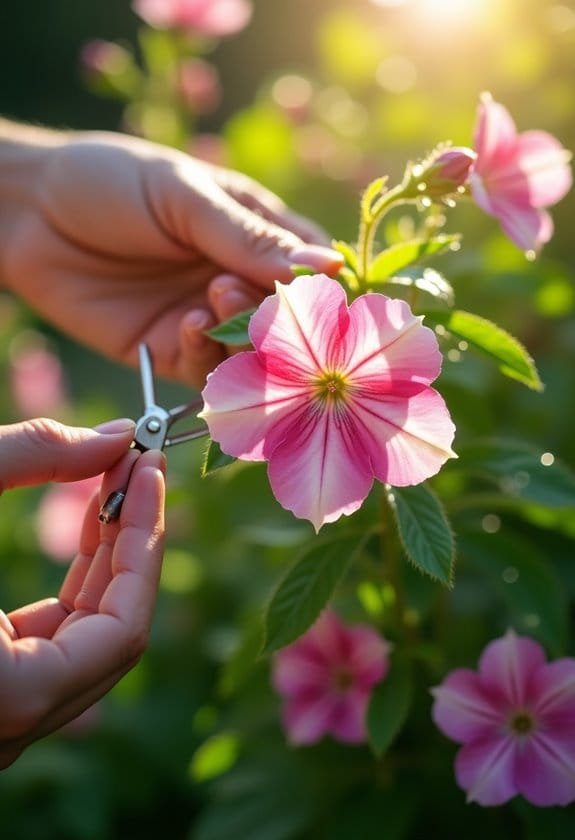
When caring for Lavatera trimestris, proper planting and ongoing care are vital for vibrant growth and extended flowering.
This species flourishes in full sun and well-drained, fertile soil, making it important that gardeners guarantee at least six hours of direct sunlight daily while monitoring moisture levels to prevent root rot.
Companions like salvia or nepeta can enhance garden aesthetics and support biodiversity, creating a harmonious ecosystem that benefits both plants and pollinators.
Planting Tips
To secure Lavatera trimestris thrives, it's vital to plant it in full sun with well-drained soil. This vibrant annual flourishes when given the right conditions, requiring planting depth of about 1/4 to 1/2 inch to support robust root growth.
Spacing requirements are also significant; gardeners should confirm at least 12 to 18 inches between each plant, allowing for ample airflow and reducing the risk of disease.
When planting, it's advantageous to prepare the soil with organic matter to enhance drainage and nutrient content. Utilizing effective fertilization techniques further encourages thriving growth.
Applying a slow-release fertilizer before planting guarantees a steady supply of nutrients, while a liquid fertilizer in midsummer boosts flowering vigor. Regular watering maintains moisture, but growers must exercise caution, as overly wet conditions can lead to root rot, a common pitfall for this adaptable plant.
Additionally, deadheading spent blooms enhances overall plant appeal, encouraging Lavatera to produce more flowers throughout the season. This method also supports an environment that attracts various pollinators and wildlife, enriching the garden ecosystem.
These steps combined create a flourishing environment, ultimately enabling Lavatera trimestris to showcase its stunning aesthetic in any garden landscape.
Ongoing Care
Ongoing care for Lavatera trimestris involves a few key practices that guarantee its vibrant growth and flowering. First, these plants flourish in full sun, though offering part shade in hotter climates can mitigate stress, ensuring robust health.
To support their development, proper fertilizer application is indispensable. A slow-release fertilizer should be introduced prior to planting, while a liquid fertilizer mid-summer promotes continued growth and abundant blooms.
In addition to fertilization, regular deadheading blooms is essential for extending the flowering period. By removing spent flowers before they form seeds, gardeners can encourage Lavatera to produce more blooms and attract a plethora of pollinators. This not only enhances the aesthetic appeal of the garden but also contributes to a thriving ecosystem.
Furthermore, employing effective pruning techniques in spring invigorates perennial varieties. By cutting back damaged or dead branches, the plant can redirect energy towards new growth, fortifying its overall structure and liveliness.
Maintaining well-drained soil is equally important; overly wet conditions lead to root rot, threatening the plant's existence. By adhering to these care practices, Lavatera trimestris can consistently exhibit its radiant display through the growing season.
Suggested Companions
Lavatera trimestris thrives when paired with specific companion plants that enhance growth and resilience. Marigold benefits, including their ability to deter pests like aphids and nematodes, make them an ideal partner for lavatera. These vibrant annuals attract beneficial insects such as ladybugs and hoverflies, which help maintain a balanced ecosystem in the garden.
Zinnia interactions further complement lavatera's robust stature; their bright blooms not only enchant but also contribute to biodiversity.
The tall growth habit of lavatera serves as an excellent backdrop for shorter flowering annuals like petunias and alyssum. This annual layering creates visual interest and adds depth to garden beds.
Regular deadheading of lavatera promotes continuous blooming, while simulating similar practices with companion plants can extend the flowering period throughout the season.
Moreover, maintaining soil moisture is critical. Mulching with organic materials around lavatera not only retains moisture but also suppresses weeds, enhancing overall soil fertility as it decomposes. Additionally, including thorny structures akin to those found in Chaenomeles speciosa can offer added pest deterrence in the garden.
Common Issues
Lavatera trimestris, while generally robust, does face common issues that every gardener should acknowledge.
Pests like aphids and spider mites can emerge, necessitating effective treatments such as insecticidal soap, while diseases like mallow disease can compromise the plant's health, leading to yellowing leaves and black spots that require prompt removal of affected specimens.
Additionally, the risk of root rot underscores the importance of well-drained soil and proper watering practices, ensuring the plant thrives in its ideal environment.
Pests/Diseases
When it comes to pests and diseases, lavatera plants can face a few challenges despite their overall resilience. These beautiful flowering plants often attract unwanted guests like aphids, whiteflies, and spider mites. Employing effective pest management strategies, such as vigorous water sprays or the application of insecticidal soaps, can mitigate these infestations.
While relatively few, these pests require vigilant monitoring to guarantee healthy plant growth.
A more serious concern is mallow disease, which manifests through distressing symptoms such as yellowing leaves and unsightly black spots. Disease prevention techniques are essential in this regard; maintaining good garden hygiene practices will greatly reduce the risk of infection.
Immediate removal and disposal of infected plants are vital to preventing the disease's spread, as composting such specimens may inadvertently exacerbate the issue.
Encouraging biodiversity within the garden, through the cultivation of companion plants, not only enriches the ecosystem but also offers remarkable biodiversity benefits by naturally deterring common pests that threaten lavatera species.
This holistic approach fosters a healthier environment, guaranteeing that lavatera thrives amid potential challenges, thereby creating a flourishing and picturesque landscape.
Solutions
To effectively address the challenges lavatera plants may encounter, implementing practical solutions can make all the difference. For instance, guaranteeing well-draining soil is essential to prevent root rot; soil amendments, such as organic matter, can enhance drainage while enriching the soil's nutrient profile.
Incorporating companion planting can offer additional benefits, as neighboring plants may naturally deter pests, mitigating infestations from aphids, whiteflies, and spider mites. Employing pest management techniques, like water sprays or insecticidal soap, proves effective against these common threats.
Preventive measures against mallow disease include maintaining garden hygiene by swiftly disposing of affected plants, thereby minimizing the likelihood for spreading the disease. Regular deadheading not only extends the blooming period but also reduces unwanted seed formation.
When transplanting lavatera, spacing plants 1 to 1.5 feet apart allows for peak air circulation, considerably reducing the chances of fungal diseases.
Summary
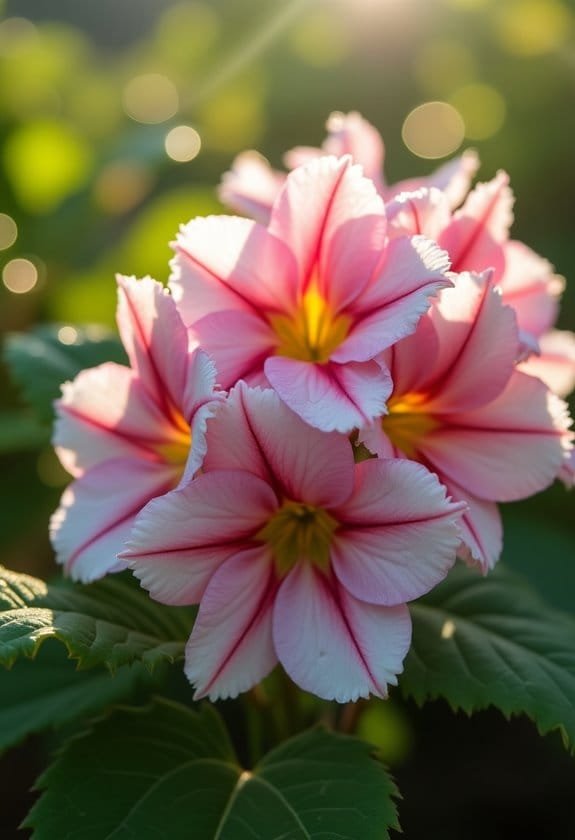
Known as Annual Mallow, Lavatera trimestris captivates gardeners with its vibrant pink, hibiscus-like flowers that bloom from June to September. Standing between 16 to 20 inches tall, this mounding plant is ideally suited for borders and container arrangements, contributing a splash of color to summer gardens.
Its compact growth habit makes it an excellent choice for diverse garden designs, enhancing both aesthetics and functionality.
Requiring full sun and well-drained soil, Lavatera thrives in average soil fertility and needs regular watering without additional fertilization.
Gardeners can expect germination to occur within 14 to 21 days when seeds are sown at ideal temperatures of 65 to 70°F, with direct sowing recommended in late spring.
As a non-toxic plant, Annual Mallow provides a safe environment for children and pets, further increasing its appeal.
In addition to its beauty, Lavatera varieties play an essential role in attracting pollinator habitats, with bees particularly drawn to their abundant nectar.