Linaria purpurea, or Purple Toadflax, captivates with its delicate, two-lipped flowers that bloom from May to June, exhibiting vibrant purple to pink hues. This short-lived perennial typically reaches heights between 30 to 70 cm, thriving in well-drained, sandy loam soils with at least six hours of sunlight daily. Adaptable and drought-tolerant, Purple Toadflax enhances garden biodiversity by attracting essential pollinators like bees. Proper care involves seasonal pruning and controlled spacing for ideal air circulation. Despite its beauty, it can be prone to pests and diseases, hinting at the importance of vigilant maintenance. There's more to discover about this enchanting species.
Main Points
- Purple Toadflax, or Linaria purpurea, is a short-lived perennial that blooms from May to June, attracting numerous pollinators, particularly bees.
- This plant thrives in full sun and well-drained sandy loam soils, requiring at least six hours of direct sunlight daily.
- Regular deadheading and autumn pruning maintain its vigor, promote blooming, and prevent overcrowding in gardens.
- Native to Italy, Purple Toadflax adapts well to diverse environments, enhancing local flora but may be invasive in some regions, like the UK.
- It pairs effectively with drought-tolerant plants like Echinacea and Salvia, enriching biodiversity and contributing to a sustainable garden ecosystem.
Introduction
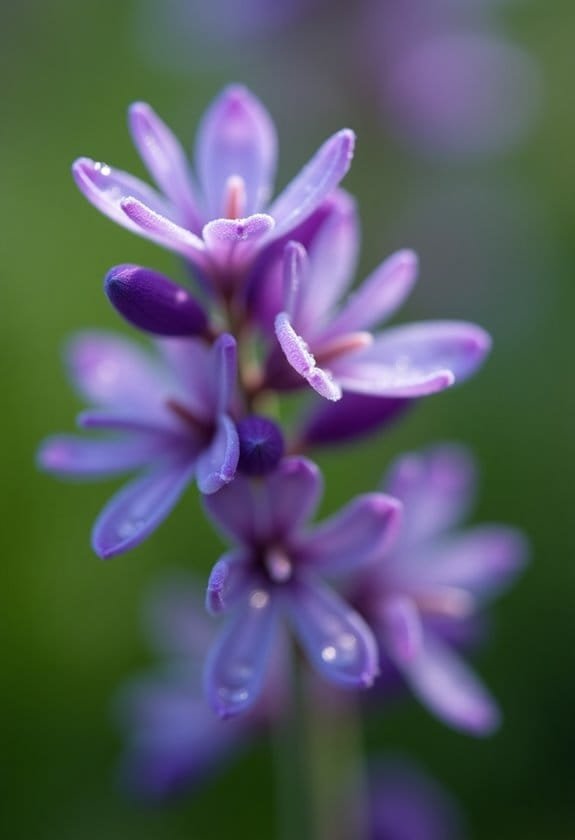
Linaria purpurea, widely recognized as Purple Toadflax, emerges as an enchanting perennial that enhances gardens with its slender leaves and stunning racemes of purple to pink flowers.
This resilient species thrives in sunny environments and well-drained soil, attracting numerous pollinators, particularly bees, during its vibrant blooming season in May and June. The Nettle-Leaved Bellflower is another perennial that shares similar growth habits while offering exquisite bell-shaped blooms that contribute to garden biodiversity.
Understanding its growth habits and ecological contributions can enrich both gardening practices and the natural landscapes it occupies.
Common Name
Commonly referred to as Purple Toadflax, this hardy perennial captivates gardeners with its unique flower shape and vibrant color. Scientifically known as Linaria purpurea, this plant originates from Italy and has successfully adapted to various regions, including parts of western North America such as California and British Columbia.
Its common name, "Toadflax," derives from the flower's intriguing resemblance to a toad's snout, alongside its preference for moist, nutrient-rich habitats.
Featuring delicate, small purple blooms that resemble snapdragons, Purple Toadflax flourishes from May to June, attracting essential pollinators, particularly bees. This characteristic not only enhances garden biodiversity but also contributes to the visual appeal of ornamental landscapes. Additionally, it supports the stability of garden ecosystems by attracting beneficial pollinators like bees, which are essential for healthy plant growth.
As a drought-tolerant species, Purple Toadflax demonstrates remarkable resilience, making it a practical choice for gardeners mindful of water conservation. Additionally, its deer-resistant nature offers protection for more vulnerable plants in the garden, combining functionality with aesthetic charm.
Notably, like Creeping Buttercup, Purple Toadflax can adapt to various soil types and conditions, showcasing its ability to thrive even in diverse environments. Its versatility means that homeowners can confidently plant Linaria purpurea in diverse settings, establishing it as a popular option for beautiful and sustainable landscapes. With these qualities, Purple Toadflax stands out as a formidable contender in ornamental gardening choices.
Scientific Name
The scientific name for Purple Toadflax is Linaria purpurea, a species that belongs to the Plantaginaceae family. This herbaceous perennial exhibits a remarkable adaptability, thriving in full sun conditions while flourishing in moist, nutrient-rich environments.
Typically growing to heights between 30 and 70 cm, Linaria purpurea displays slender linear leaves measuring 2-5 cm long. Its inflorescence consists of spiky racemes adorned with 1-2 cm long flowers, notable for their five distinct lobes, dual lips, and a unique spur. While the predominant hue ranges from light to medium purple, softer shades of pale pink may occasionally grace these floral charms.
Native to Italy, Purple Toadflax has gracefully made its way to western North America, where it's often found in vibrant displays, especially within Botanical Gardens, offering delightful visual novels to onlookers.
As a short-lived perennial with a lifespan of 2-3 seasons, its flowering splendor primarily captivates audiences in May and June, enchanting those who appreciate the subtle beauty of nature's artistry.
Through its lifespan, Linaria purpurea stands as a demonstration of resilience and the intricate dance of ecosystems, making it a valuable addition to any garden landscape.
Overview
Known as Purple Toadflax, Linaria purpurea stands out as a striking perennial that enhances gardens with its vibrant blooms and resilience. This hardy plant typically reaches a height of 30 to 70 cm and showcases slender, linear leaves that create an elegant backdrop for its flowers.
From May to June, it produces racemes of snapdragon-like blossoms in hues ranging from light to medium purple, enchanting both human admirers and essential pollinators like bees.
Native to Italy, Purple Toadflax has made its way to western North America, where it thrives in moist, nutrient-rich soils. While it enriches local biodiversity during its extensive flowering season, it's worth noting that this species is considered a weed in some regions, such as the UK.
Its adaptability allows it to flourish in various conditions, whether basking in full sun or finding solace in dappled shade. Additionally, its deer resistance makes it an appealing choice for garden enthusiasts. Moreover, like common knapweed, Purple Toadflax demonstrates invasive tendencies in certain environments, highlighting the importance of monitoring its growth.
For those interested in gardening insights, a WordPress.com account can facilitate site uses to foster community sharing and knowledge exchange surrounding this remarkable plant.
Key Features
Linaria purpurea, or Purple Toadflax, typically grows to an impressive height between 30 to 70 cm and captivates with its delicate, snapdragon-like flowers. Blooming from May to June, the plant showcases an enchanting palette of light to medium purple, complemented by its distinct five-lobed structures. Its slender, linear leaves, measuring 2 to 5 cm, and raceme flowering inflorescence not only add visual appeal but also enhance the garden's vertical dynamics. Additionally, it thrives in well-drained soils and can coexist with various species, much like Horseshoe Vetch(Hippocrepis comosa), which similarly contributes to biodiversity in chalk grassland ecosystems.
Growth Size
Growing to a height of 30-70 cm (1-3 feet), Purple Toadflax can even reach up to 4 feet in shaded conditions. This plant showcases distinctive growth habits characterized by its clumping nature.
Individual clumps of Purple Toadflax can expand to approximately 36 inches tall and 24 inches wide, providing significant visual interest in garden spaces through its seasonal changes.
The slender, linear leaves, measuring 2-5 cm long, play an essential role in preventing crowding, allowing for ample spacing requirements among multiple specimens to thrive.
Although it's a short-lived perennial, lasting 2-3 seasons, the gradual shift into a woody base necessitates thoughtful management and the introduction of younger plants for continued vibrancy.
Flowering mainly occurs in May and June, when the plant bursts forth with clusters of striking, snapdragon-like flowers that range in hues from soft pink to vibrant purple.
The timing of these blooms harmonizes with the garden's seasonal rhythm, allowing gardeners to appreciate an evolving tableau of color as the seasons progress.
Consequently, understanding its growth size is essential for effective cultivation and visual impact in any floral arrangement.
Appearance
Purple Toadflax captivates with its delicate, airy appearance and eye-catching flowers. Reaching heights of 30 to 70 cm (1 to 3 feet), this plant features slender, linear leaves that measure 2 to 5 cm long.
The leaf structure contributes considerably to its overall visual effect, as the foliage creates a soft, wispy texture that enhances garden aesthetics. Additionally, this plant's ability to attract pollinators supports local ecosystems, much like other flowering plants in the garden.
The flowers, resembling small snapdragons, bloom in racemes and showcase flower colors ranging from light to medium purple. Each flower, ranging from 1 to 2 cm in length, displays five distinct lobes accompanied by a unique spur, distinguishing them within ornamental gardens.
The two-lipped structure of the blooms not only adds visual interest but also attracts various pollinators, particularly bees, highlighting the plant's contribution to local biodiversity. Additionally, companion planting with species like creeping thyme can enhance the beauty and health of the garden by suppressing weeds.
Flowering Season
The enchanting flowering season of Toadflax typically spans from early May to late June, showcasing a stunning display of vibrant purple, pink, or bicolor flowers that charm any garden. Each inflorescence features small racemes, with individual blooms measuring about 1-2 cm long, characterized by five lobes and a prominent spur reminiscent of snapdragon blossoms.
While the primary flowering duration occurs in late spring, gardeners may enjoy an extended season by employing the technique of deadheading. This involves removing spent flowers, which encourages the growth of new side-stems and promotes further blooming. Given ideal conditions, Purple Toadflax may surprise observers by continuing to produce delightful flowers into the early fall, creating an ongoing spectacle of color.
Moreover, the plant's prolific nature shines through in its ability to engage in seed propagation. Upon flowering, it produces numerous seed pods, leading to an abundance of volunteer seedlings in subsequent years. Additionally, this plant can thrive in various soil types, including well-draining soil, which is essential for optimal growth and development.
Consequently, Purple Toadflax not only enhances immediate garden aesthetics but also offers the potential for self-renewal, ensuring its enthralling blooms can reappear with little effort from the gardener.
Growing Requirements
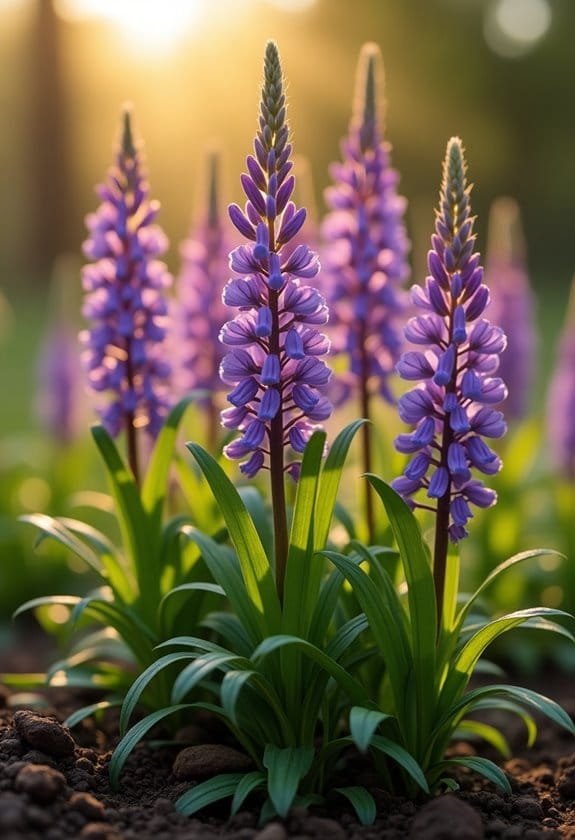
To guarantee robust growth and vibrant blooms of Linaria purpurea, understanding its specific growing requirements is essential.
This perennial prefers well-drained light sandy loam and benefits from full sun, although it can thrive in dappled shade under certain conditions.
Adequate spacing, proper soil composition, and attention to water needs will greatly influence its adaptability and overall presence in garden spaces.
Light
Light (Growing Requirements)
Six hours of direct sunlight is best for Linaria purpurea, as it greatly enhances the plant's growth and flowering potential. With maximum sunlight exposure, this perennial thrives, producing vigorous stems and vibrant blooms. The plant's adaptability to well-drained soils further supports its success in sunny locations.
In sunny locations, it flourishes, demonstrating impressive drought tolerance, particularly during prolonged dry spells. While Linaria purpurea can adapt to dappled shade, reduced light can trigger significant shading effects, resulting in diminished flowering and a leggy, unattractive appearance.
To achieve robust growth, gardeners should prioritize full sun environments, as they greatly support the plant's biological processes. Established specimens often reveal the benefits of adequate light adaptation, showcasing increased flower production and a longer blooming season.
The interplay between sunlight exposure and the plant's overall health can't be overstated; without sufficient light, the flowers may appear lackluster, and vigorous growth would wane. Therefore, for those cultivating Purple Toadflax, creating a sun-drenched garden spot is essential. Additionally, tormentil is known for its beneficial association with pollinators, making it an excellent companion plant to enhance biodiversity in the garden.
Soil
Quality soil is fundamental for Linaria purpurea, as it flourishes best in well-drained, light sandy loam. This soil type not only supports water drainage but also facilitates essential soil nutrition, which is imperative for the vibrant growth and flowering of the plant.
Maintaining effective drainage techniques can prevent root rot, a common issue when this species is subjected to overly saturated conditions.
Linaria purpurea thrives in diverse soil types, yet it performs exceptionally well in nutrient-rich environments enhanced with organic matter. Such richness aids in supporting vigorous, healthy growth.
Additionally, achieving a slightly alkaline to neutral pH balance, ideally around 6.0 to 7.5, fosters ideal health for the plant, ensuring it receives the necessary chemical signals for flourishing.
Gardeners should regularly test their soil to adjust its pH and add organic materials. This proactive approach not only promotes robust development of Linaria purpurea but also contributes to the overall liveliness of the garden.
Water
Watering plays a noteworthy role in the successful growth of Linaria purpurea. This resilient plant demonstrates remarkable drought adaptations, allowing it to thrive in well-drained, sandy loam soil. Perennial Sowthistle, another drought-tolerant plant, showcases how deep root systems can help sustain plants during dry spells.
Although it can withstand dry periods, regular watering during its initial growth is essential to develop a robust root system. Employing effective watering techniques can greatly enhance moisture retention, particularly in the early stages of establishment.
Ideally, the soil should dry out between waterings, as overwatering can lead to detrimental root rot, impeding the plant's liveliness. During the flowering season, from May to June, consistent moisture further enhances blooming, resulting in more vibrant and prolonged displays.
Given Purple Toadflax's preference for sunny locations, gardeners can aid moisture retention by providing dappled shade, which creates a microclimate that buffers the plant from heat extremes. Additionally, the plant's ability to retain moisture in soil is vital for its overall health and blooming success.
Finally, understanding Linaria purpurea's unique water requirements allows cultivators to enjoy its stunning floral qualities without excessive care. Through informed watering strategies, one can create the best conditions for this beautiful perennial, fostering both health and longevity in the garden.
Temperature
For ideal growth of Linaria purpurea, temperatures play a significant role. This perennial flourishes best in USDA zones 3 to 9, demonstrating remarkable temperature tolerance that allows it to adapt to diverse climatic conditions.
It thrives in full sun to partial shade, needing at least six hours of sunlight daily, which promotes its robust development. Additionally, similar to the needs of white clover, Linaria purpurea benefits from proper sunlight exposure for optimal growth.
Linaria purpurea can withstand seasonal temperature fluctuations, enduring light frosts and continuing to bloom from May until the first frost in cooler climates. This capacity for resilience means it can flourish where other plants might struggle.
However, moderate watering is vital, especially during prolonged dry spells, to maintain healthy blooms and prevent stress from extreme heat.
Although capable of tolerating poorer soils, the plant performs effectively in light sandy loam with good drainage. It is important to ensure that the soil pH is balanced, typically around 6.0 to 7.0, for optimal plant health.
It's essential to acknowledge that overly rich soils can lead to excessive growth, creating a weedy appearance.
Proper temperature management enhances its blooming potential, making it an ideal choice for gardeners seeking vibrant color, even in less-than-perfect conditions. Additionally, Linaria purpurea can benefit from well-drained soils, similar to Germander Speedwell, which supports its overall health.
Consequently, understanding and accommodating its temperature needs guarantees Linaria purpurea's enduring beauty in gardens.
Pollinator Criteria
Purple Toadflax (Linaria purpurea) captivates pollinators, especially small bumblebees, with its vibrant tubular flowers that are engineered for efficient foraging. During the blooming season from May to June, these resilient blossoms provide crucial nectar and pollen, effectively promoting pollination as bees navigate their intricate openings. Consequently, the plant not only sustains local bee populations but also enhances the overall biodiversity within its ecosystem, proving itself a significant ally in ecological conservation. Additionally, similar plants like Common Rockrose serve as vital nectar sources, further supporting pollinator health. In early spring, the nearby Henbit Deadnettle blooms, offering early-season nectar that complements the foraging needs of emerging pollinators.
Attracted Pollinators
The vibrant flowers of Linaria purpurea play an integral role in attracting various pollinators, especially small bumblebees. These delightful blooms, which flourish from May to June, produce a rich nectar that serves as a crucial food resource during a critical period when few other plants are in bloom.
The pollinator attraction strategies employed by Purple Toadflax include its visually appealing, snapdragon-like flowers that markedly entice pollinators, motivating them to visit frequently and promoting effective pollination. Additionally, the plant's self-seeding nature fosters the development of dense patches over time, thereby enhancing habitats for numerous pollinators, as these clusters encourage their continual presence throughout the growing season. Water Plantain, which similarly attracts pollinators, highlights the vital role of plants in supporting local ecosystems.
This ongoing engagement with local pollinators not only supports biodiversity but also contributes fundamental ecological benefits, maintaining healthy ecosystems. Moreover, this helps mitigate the alarming decline in pollinator populations observed globally, creating a more resilient environment.
Essentially, Linaria purpurea exemplifies how strategic floral design and reproductive efficiency can harmoniously coexist, underscoring the importance of such plants in nurturing the delicate balance of nature and supporting the intricate web of life. In addition, like Vipers Bugloss, it serves as a vital nectar source, enhancing local biodiversity by attracting a range of pollinators and beneficial insects.
Pollination Method
Pollinator criteria play an essential role in the reproductive success of Linaria purpurea. The plant's distinctive flower morphology, characterized by elongated spurs similar to snapdragons, entices pollinators, particularly small bumblebees. These bees are attracted to the vibrant purple blooms from May to June, a critical window when they seek sustenance. The structure of the flowers facilitates easy access to nectar, enhancing pollinator behavior that fosters effective pollination.
Moreover, this design encourages a specific visiting pattern among pollinators, guaranteeing the efficient transfer of pollen between flowers. As bumblebees forage, they inadvertently partake in the pollination process, contributing considerably to the biodiversity impact of the surrounding ecosystem. The availability of consistent food during the blooming period supports various bee species, which in turn bolsters local populations.
The self-seeding nature of Purple Toadflax guarantees a sustained presence in the landscape, continuously attracting and supporting pollinators over successive growing seasons. This ongoing relationship not only promotes the species' viability but also enriches the ecological tapestry, highlighting the intricate connections between plant morphology, pollination methods, and biodiversity sustenance. Additionally, plants like selfheal contribute significantly to local ecosystem biodiversity, enhancing food sources for pollinators in the same habitats.
Through these interactions, Linaria purpurea plays a pivotal role in its environment.
Care & Maintenance
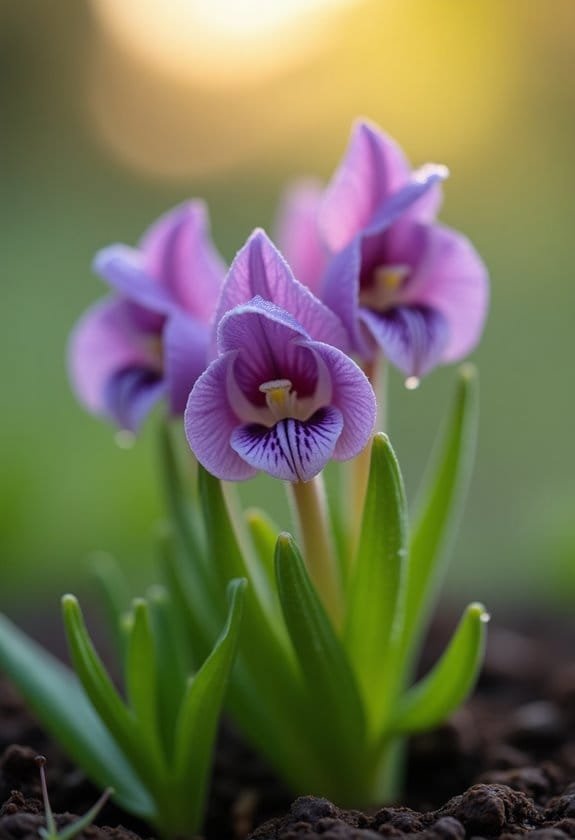
When caring for Linaria purpurea, gardeners should focus on strategic planting and ongoing maintenance to guarantee vibrant growth.
This perennial flourishes best in sunny environments with well-drained sandy loam soil, but its resilience allows for thriving in partial shade as well.
Incorporating practices like regular deadheading and seasonal cutting back not only prolongs its blooming period but also encourages new growth, making care an engaging experience full of blossoming possibilities.
Planting Tips
For ideal growth and blooming of Purple Toadflax (Linaria purpurea), careful attention to planting conditions is essential. Start by selecting a location with well-drained, sandy loam soil and plenty of sunlight, as this encourages vibrant flowers from May through June.
Employ effective sowing techniques by spacing seeds four inches apart and planting them at a depth of merely half an inch. This measure facilitates adequate airflow, promoting healthy root development while allowing the plant's height of up to three feet to flourish.
To enhance bloom management, regularly deadhead spent flowers, preventing uncontrolled self-seeding and extending the flowering period through continual side-stem production. Additionally, prune back the plants in autumn to sustain their vigor, addressing the tendency to become woody at the base over time.
It's also critical to monitor seed spacing and prevent overcrowding, as the plants self-seed abundantly. Clipping seed-bearing tops not only controls unwanted spread but also preserves the garden's aesthetic appeal.
Therefore, with diligent attention to these planting tips, the Purple Toadflax can become a picturesque and resilient addition to any garden landscape.
Ongoing Care
Caring for Purple Toadflax (Linaria purpurea) is essential to guarantee its continued vibrancy and resilience in the garden.
Regular deadheading, a critical pruning technique, prevents excessive self-seeding and encourages the production of new flowering side-stems, extending the plant's blooming period.
Seasonal cutting back during the autumn rejuvenates established specimens, enhancing their vigor and reducing the spread of unwanted seedlings.
To maintain ideal growth, it's important to recognize the plant's adaptability to both sun and shade.
Therefore, strategic positioning should consider exposure to sunlight. According to a thoughtful fertilization schedule, organic compost can be applied in spring to nourish the soil, promoting lush growth throughout the season.
Moreover, introducing young plants to replace aging specimens every few years is important since individual plants typically last only 2-3 seasons before becoming woody.
While volunteer seedlings may arise, they greatly contribute to maintaining the garden's visual appeal with minimal effort required on the gardener's part.
Consequently, effective ongoing care for Purple Toadflax enhances its longevity and beauty, ensuring it continues to thrive gracefully alongside its chosen companions in the landscape.
Suggested Companions
Creating a vibrant garden landscape often hinges on the selection of suitable plant companions for Purple Toadflax (Linaria purpurea). This striking perennial flourishes alongside drought-tolerant plants such as Echinacea and Rudbeckia, which thrive in similar soil and light conditions. Incorporating these species not only diversifies color combinations but also enhances the overall resilience of the garden.
Furthermore, planting Purple Toadflax near pollinator-friendly flora like Salvia and Monarda invites bees and other beneficial insects, ultimately increasing biodiversity and promoting companion benefits. Regularly deadheading the toadflax extends its blooming season and creates necessary space for neighboring plants to grow without becoming overcrowded, ensuring a thriving ecosystem.
In garden planning, spacing companions 12 to 18 inches apart is essential. This promotes adequate air circulation and sunlight access, fostering healthy growth for all plants involved.
Mixing in ornamental grasses or dark-leaved varieties can enhance visual appeal and provide structural integrity to garden beds featuring Purple Toadflax, elevating the landscape's design while also emphasizing the delicate beauty of the toadflax. An artful blend of plants leads to thriving, harmonious garden spaces that delight both the eye and the ecosystem.
Common Issues
When cultivating Linaria purpurea, gardeners may encounter several common issues, particularly regarding pests and diseases that can compromise the plant's health.
Among these, infestations from aphids or fungal infections typically present challenges during the warmer months, necessitating regular monitoring and appropriate intervention strategies.
Effective solutions, such as introducing beneficial insects or applying organic fungicides, play an essential role in sustaining vibrant blooms and overall garden health.
Pests/Diseases
Pests and diseases can pose challenges to gardeners cultivating Linaria purpurea, commonly known as Purple Toadflax. While this resilient plant generally withstands pest infestations, gardeners may occasionally notice aphids, small sap-sucking insects that can cause substantial leaf damage, resulting in stunted growth and reduced vigor.
Employing effective aphid management strategies, such as introducing natural predators or utilizing insecticidal soaps, can mitigate these issues.
In addition to pest concerns, fungal diseases like powdery mildew may thrive in humid conditions, leading to compromised foliage and overall health. As a result, practicing fungal disease prevention through adequate air circulation and proper cultural techniques is essential for maintaining the vitality of Purple Toadflax.
Moreover, root rot symptoms can arise in poorly drained soils, manifesting as wilting or yellowing leaves. Ensuring excellent drainage is paramount, as this plant's longevity hinges on its root health.
Curiously, Purple Toadflax often attracts beneficial insects that naturally combat pests, thus enhancing its role within an organic ecosystem. Regular monitoring and thoughtful garden management can further safeguard these delicate beauties against common challenges.
Solutions
Addressing common issues with Purple Toadflax can considerably enhance its growth and flowering potential. Regularly employing deadheading techniques to remove spent flowers and seed pods is fundamental; this practice not only prolongs the blooming period but also curtails excessive self-seeding, a prevalent trait of this vibrant perennial.
Furthermore, clipping back seed-bearing tops before maturation effectively limits seed dispersal, ensuring a more controlled blossoming environment.
In addition to these maintenance practices, companion planting is a strategic way to improve overall garden dynamics. When positioned alongside contrasting foliage shapes, Purple Toadflax achieves aesthetic balance and minimizes the undesirable herringbone effect often seen in mass plantings.
This diversity not only enriches the visual appeal but also enhances biodiversity within the garden ecosystem.
Cultivated in sunny spots or partial shade, Purple Toadflax proudly showcases seasonal colors, with autumn foliage reflecting delightful pink hues in ideal light.
Given its short-lived nature—typically lasting two to three seasons—the introduction of new young plants is crucial for maintaining vigor and ensuring a continuous display of these stunning blooms, creating a thriving and colorful environment.
Summary
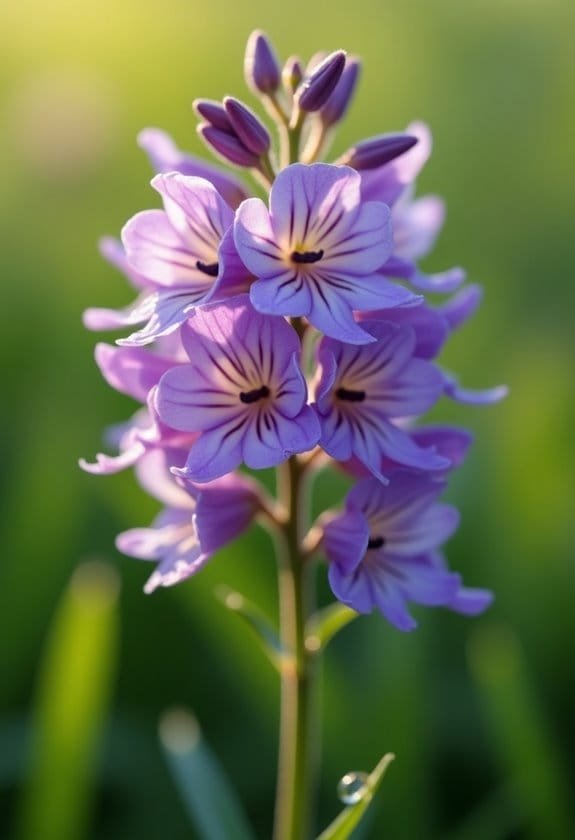
Linaria purpurea, or Purple Toadflax, stands out as a resilient perennial that flourishes in a range of environments. Thriving in USDA zones 3 to 4 and reaching heights of 1 to 3 feet, this hardy plant features slender leaves and striking racemes of purple flowers that bloom from early July until frost.
Its extensive blooming period not only provides vibrant color but also attracts essential pollinators like bees and butterflies, highlighting its significant ecological impact.
The plant's ability to self-seed allows for naturalized growth, although proper gardening techniques such as deadheading can help manage its spread, ensuring it doesn't overwhelm neighboring flora.
In addition, Purple Toadflax exhibits remarkable drought tolerance and adaptability to both sunny and shaded conditions, making it a versatile addition to various garden plans.
Its deer-resistant nature enables it to coexist harmoniously with more vulnerable species, enhancing overall garden resilience.