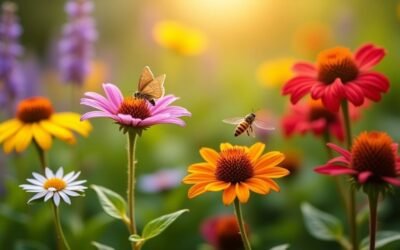
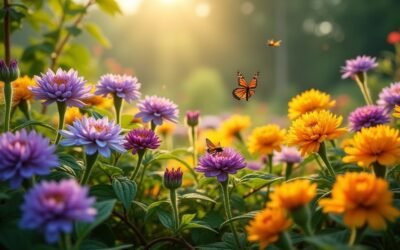
Persicaria amplexicaulis, popularly referred to as Red Bistort, is an alluring perennial from the Polygonaceae family, recognized for its vibrant, candle-shaped floral panicles which bloom from mid-July through late October. Growing to impressive heights of 100 to 120 centimeters, it flourishes in rich, well-drained loamy soils, ideally with 50 centimeters of spacing for peak health. This plant not only enhances aesthetic appeal but actively attracts pollinators like bees and butterflies, crucial for ecological balance. To guarantee successful growth and bloom, proper care, including monitored moisture and disease prevention, is essential. Further insights await those interested in cultivating this striking botanical treasure.
Main Points
- Persicaria amplexicaulis, also known as Red Bistort, features dense bushy growth and vibrant flower panicles in pink, red, and white.
- This plant thrives in rich, well-drained loamy soils, requiring consistent moisture without waterlogging to prevent root rot.
- It attracts pollinators like bees and butterflies with its abundant nectar during the prolonged flowering season from mid-July to late October.
- Regular maintenance includes light spring fertilization, ensuring adequate airflow to prevent issues like powdery mildew, and dividing plants every 3-4 years.
- Common cultivar names include 'Firetail' for bright pink blooms and 'Taurus' for deep red flowers, enhancing garden aesthetics and biodiversity.
Introduction
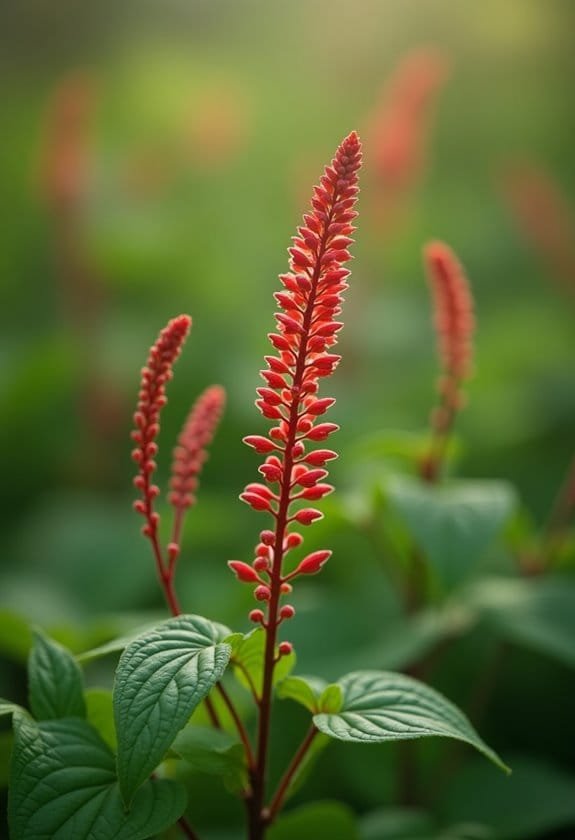
Persicaria amplexicaulis, commonly referred to as Red Bistort or Mountain Fleece, captivates gardeners and botanists alike with its striking appearance and robust nature.
This perennial plant, native to the Himalayan region, showcases bushy clumps that can reach heights of 100-120 cm, adorned with leaves that elegantly clasp the stem, echoing its Latin name's meaning.
Blooming from mid-July to late October, it displays delicate flowers in varied shades, enriching both sunny and shaded landscapes with its vivid presence.
Common Name
Known for its striking beauty, Persicaria amplexicaulis is commonly called Red Bistort or Mountain Fleece. This designation not only highlights its vibrant flower clusters but also reflects its native habitats in mountainous regions, particularly the Himalayas. The common name "Fleece" evokes the plant's bushy, tufted appearance, reminiscent of soft fleece fabric, which makes it particularly appealing in garden landscapes.
In addition to Red Bistort and Mountain Fleece, the plant is also referred to as Firetail Mountain Fleece and Blood Red Bistort. These alternative names emphasize the striking red hues of its inflorescences, enchanting gardeners and nature enthusiasts alike. Various cultivars exist under the common name Red Bistort, such as 'Firetail,' 'Sara,' and 'Taurus,' each showcasing differing flower colors and growth traits, which contribute to their individual allure. This extended blooming period makes it a valuable addition to pollinator gardens.
The common name is deeply tied to its thriving conditions in moist, elevated environments. Like Devils Bit Scabious, this plant thrice serves as a nectar source for pollinators, enhancing the ecological tapestry of gardens.
Persicaria amplexicaulis thrives in such settings, flourishing in gardens as a robust perennial that adds unparalleled beauty and character, transforming landscapes into vibrant tapestries of color and texture.
Scientific Name
With its scientific designation of Persicaria amplexicaulis, Red Bistort stands out as a compelling member of the Polygonaceae family. This plant's genus name, "Persicaria," derives from the Latin term for "peach," a nod to the distinctive shape of its leaves. Meanwhile, the species name "amplexicaulis" translates to "clasping stem," aptly describing how the leaves embrace the stem, creating an enchanting visual effect.
Native to the diverse Himalayan region, ranging from Afghanistan to China, Red Bistort thrives in lush, moist meadows and the dappled light of woodland edges. The plant typically reaches a height of 100-120 cm, presenting an impressive spectacle. Its flowering season, stretching from mid-July to late October, reveals a delightful array of colors, including shades of white, pink, and red.
Over time, Persicaria amplexicaulis has undergone various classifications, including synonyms like Polygonum amplexicaule and Polygonum speciosum, reflecting its historical taxonomy. These names highlight the evolving understanding of this plant's unique characteristics, allowing enthusiasts and botanists alike to appreciate its beauty and ecological significance more fully.
Overview
Red Bistort, or Mountain Fleece, enchants garden enthusiasts and nature lovers alike with its striking appearance and ecological benefits.
This perennial plant, scientifically known as Persicaria amplexicaulis, originates from the Himalayan region, flourishing in fresh to moist meadows and woodland edges. Typically growing to a height of 100-120 centimeters, it forms bushy clumps adorned with dense, vibrant green foliage that creates a lush backdrop for its flowers.
From mid-July to late October, candle-shaped flower panicles emerge, offering a sensational display of colors, including striking reds, delicate pinks, and soft whites. Notable cultivars like 'Firetail' boast bright pink blooms, while 'Taurus' impresses with deep red flowers, enchanting all who encounter them.
Red Bistort favors nutrient-rich, humus-filled loamy soils and thrives in sunny to partially shaded areas, making it adaptable in diverse gardening conditions.
Beyond its ornamental beauty, Red Bistort plays an essential role in supporting biodiversity. Its abundant nectar and pollen attract a variety of pollinators, including bees and butterflies, enhancing the ecological balance in gardens and natural habitats alike.
Therefore, it stands as both a visual masterpiece and an ecological asset.
Key Features
Persicaria amplexicaulis, commonly referred to as Red Bistort, impressively reaches heights of 100 to 120 centimeters, creating dense, bushy clumps adorned with lush green foliage.
Its flowering season extends from mid-July to late October, revealing an enchanting display of flowers in hues of white, pink, and red, dependent on the specific cultivar.
With its distinctive leaf growth habit, where leaves clasp around the stem, this plant not only captivates the eye but also adapts well to various garden environments.
Growth Size
Typically reaching heights of 100-120 cm (3-4 feet), Persicaria amplexicaulis showcases a vigorous growth habit that enhances its appeal in gardens. This tall perennial plant forms bushy clumps, creating a dense and vibrant display that captures attention throughout the growing season.
The robust structure allows it to thrive in various garden settings, making it an excellent choice for borders or mass plantings. Each plant requires approximately 50 cm (20 inches) of spacing to guarantee peak development and room for growth.
When planted correctly, Persicaria amplexicaulis generates a lush backdrop of oval to heart-shaped green leaves, which serve as the perfect canvas for its striking floral display. Blooming from mid-July to late October, the flowers appear in multiple colors, including white, pink, and red, further elevating the overall visual impact.
Its bushy nature not only adds depth to garden designs but also provides a habitat for pollinators. As the clumps expand, they contribute to the landscape's texture and color, enriching the ecosystem.
Appearance
This striking perennial plant stands out in gardens with its robust structure and visually appealing features. Typically reaching heights of 100-120 cm, Persicaria amplexicaulis forms dense, bushy clumps that create a substantial visual impact.
Its medium green foliage consists of oval to heart-shaped leaves, which lend texture and contrast to surrounding plants.
The dramatic quality of this plant becomes especially pronounced during its flowering phase. Though the blooming period is an upcoming topic, it's essential to recognize that these red flowers—along with their counterparts in pink, purple, and white, depending on the cultivar—provide a vivid, eye-catching display.
Each flower emerges in distinctive candle-shaped panicles, which not only serve to enhance the plant's ornamental appeal but also attract a variety of pollinators, including bees and butterflies, thereby enriching biodiversity in any garden setting.
Additionally, certain varieties exhibit a stunning transformation in autumn, as their foliage shifts to vibrant red and orange hues, adding seasonal interest.
Consequently, Persicaria amplexicaulis not only enriches landscape aesthetics but also contributes to ecological significance, making it a valuable choice for gardening enthusiasts.
Flowering Season
Blooming brilliantly from mid-July to late October, Persicaria amplexicaulis offers gardeners an impressive flowering season that spans several months. This flowering perennial thrives in moist soil, making it an excellent choice for those seeking to enliven their gardens with vibrant colors.
The blossoms exhibit a striking range of hues, from delicate whites and soft pinks to deep, resplendent reds. Many varieties display unique shades, enhancing their appeal in diverse landscapes.
The flower panicles are candle-shaped, creating a visually enchanting display as they become densely packed with blossoms during their peak bloom. Heights can vary considerably, with smaller cultivars like 'Orange Field' reaching about 70 cm, while taller varieties, such as 'Firetail', can soar up to 140 cm.
To maximize the beauty of this flowering season, regular deadheading is essential; it not only encourages continued blooming but also extends the overall period of garden vibrancy.
In the hands of dedicated gardeners, Persicaria amplexicaulis transforms outdoor spaces, providing a stunning floral spectacle that enriches the garden experience, while further enhancing its ecological diversity and attractiveness.
Growing Requirements
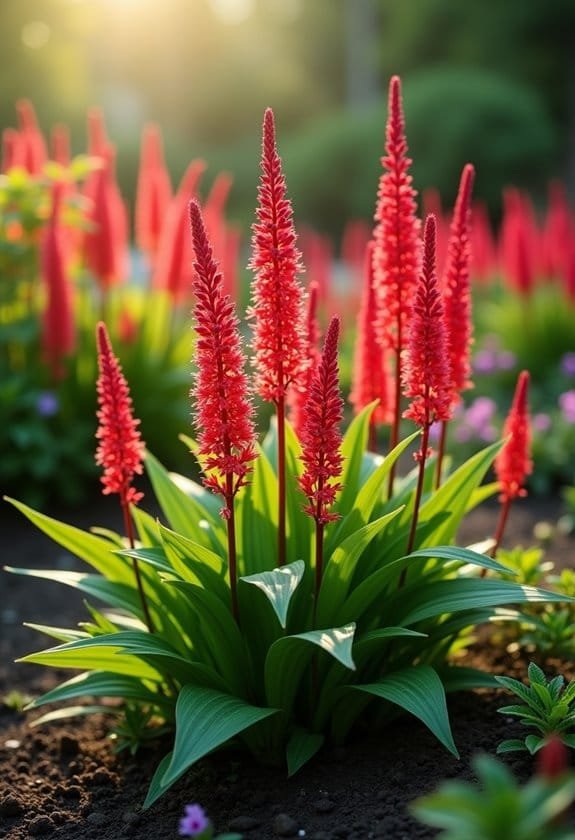
To cultivate Persicaria amplexicaulis successfully, gardeners must provide specific growing conditions that cater to its unique needs.
This resilient plant flourishes in well-drained, moist loamy soils, ideally enriched with nutrients and humus, while also appreciating full sun to part shade for peak growth.
Consistent watering and attention to spacing, typically 90-120 cm apart, will guarantee this striking perennial reaches its full potential without competing for essential resources. Additionally, it is important to monitor for toxic plants in the surrounding area to ensure safe gardening practices.
Light
For ideal growth and flowering, Persicaria amplexicaulis thrives best in full sun to partial shade. This botanical marvel flourishes when it receives ample light throughout the day, particularly during hotter summer months.
While it can indeed tolerate some shade, this plant truly benefits from sunnier locations, which stimulate its vibrant blooms and robust health. Additionally, the ability of Calluna vulgaris to withstand varying environmental conditions underscores the importance of selecting appropriate light exposure for optimal plant performance.
Furthermore, choosing a planting site in a wind-protected area enhances moisture retention in the soil around the plant, creating a prime microenvironment. Adequate light exposure is essential, as it not only promotes flowering but greatly contributes to the overall vigor of the plant.
Gardeners should note that while Persicaria amplexicaulis demonstrates adaptability to varying light conditions, it achieves its finest performance with balanced light distribution. A planting area that incorporates both full sun and partial shade will encourage strong growth and abundant flowering, mitigating stress on the plant.
Consequently, for top results, carefully evaluating the sunlight exposure in different areas of the garden can yield a thriving display of this stunning perennial, highlighting its resilience and beauty in even the most diverse gardening conditions. Additionally, ox-eye daisy provides valuable companionship to the garden, supporting pollinators and enhancing biodiversity.
Soil
Persicaria amplexicaulis thrives in nutrient-rich, deep loamy soils that maintain a fresh to moist environment. This plant prefers well-drained soil, as it guarantees adequate aeration for healthy root development. Ideally, the soil should be rich in humus, allowing for improved moisture retention and nutrient availability vital for growth.
While consistently damp conditions are essential, established specimens can withstand occasional drought, showcasing their resilience.
Gardeners should note that sandy soils may require amendments—adding compost can greatly enhance both nutrient content and soil structure, fostering a more hospitable habitat for red bistort.
However, caution must be exercised to avoid waterlogged conditions; excess moisture can lead to root rot, severely impacting plant health.
Regular fertilization is generally unnecessary, as red bistort adeptly adapts to varying soil conditions. Still, incorporating mature compost or a light application of flower fertilizer granules can optimize growth, especially in poorer soils.
Water
Maintaining the right moisture level is crucial for red bistort's health and growth. This plant thrives in consistently moist soil, which facilitates ideal nutrient uptake and supports robust development. Additionally, plants like red bistort attract diverse pollinator species, further enhancing the ecosystem around them.
Gardeners should guarantee well-draining conditions to prevent waterlogging, a condition that can severely hinder growth. During the initial establishment phase, newly planted red bistort requires constant moisture; however, mature specimens exhibit remarkable resilience and can endure occasional drought conditions without considerable detriment.
Red bistort flourishes in fresh to moist loamy soils. Incorporating organic amendments like compost in sandy substrates can greatly enhance moisture retention, hence benefiting plant vitality.
Gardeners need to monitor soil moisture levels, particularly during dry spells, to maintain the necessary dampness for this plant's thriving environment. Although established red bistort can withstand short bouts without water, overwatering should be avoided, as the soil's complete desiccation is detrimental to the plant's health.
Additionally, red bistort is tolerant of a range of soil types, making it adaptable to various garden conditions, which further supports its resilience to drought when established.
Achieving a balance between moist soil and preventing excessive water will culminate in a flourishing garden. Consequently, meticulous attention to watering practices guarantees that Persicaria amplexicaulis remains vibrant, contributing its beautiful presence to any landscape.
Temperature
Optimized for a range of temperate climates, Red Bistort thrives best in hardiness zones 4 to 8, showcasing its adaptability. This perennial plant flourishes in temperatures that maintain consistent moisture in the soil, a crucial factor for its growth and well-being.
Red Bistort performs admirably under full sun to partial shade, requiring some shade during hot summer months to mitigate heat stress. Additionally, water quality is essential to ensure the plant receives the necessary hydration without the risk of developing rot due to excessive moisture.
In cooler climates, where temperatures typically remain moderate, Red Bistort can establish itself effectively, utilizing the ample moisture available. These conditions help create a consistently moist environment, fundamental for preventing stress that could hinder its development.
The plant prefers moisture-retentive soils that sustain its root system without becoming waterlogged, as excess water can lead to rot and decline in health.
With a moderate growth rate, Persicaria amplexicaulis suits regions where the climate helps maintain its moisture needs efficiently. Furthermore, maintaining proper soil moisture is essential in fostering plant health and preventing diseases such as root rot.
By understanding and catering to these temperature requirements, gardeners can create a supportive environment that allows Red Bistort to thrive, enriching their landscapes with vibrant color and texture.
Careful management of these factors fosters both plant energy and aesthetic appeal, making it a prized addition in garden designs.
Pollinator Criteria
In evaluating the pollinator criteria for Persicaria amplexicaulis, it's crucial to recognize the diverse range of pollinators it attracts, particularly bees and butterflies. These creatures are essential for the reproductive success of the plant, efficiently transferring pollen through their foraging activities from mid-July to late October when the flowers bloom. Consequently, the plant's vibrant colors and dense flower clusters not only enhance visual appeal but also create an inviting haven for these indispensable ecological allies. Additionally, similar to Common Yarrow, native plants play a vital role in supporting local ecosystems by providing essential food sources for various pollinators. The attraction of pollinators significantly enhances biodiversity, contributing to the overall health of the ecosystem.
Attracted Pollinators
Persicaria amplexicaulis, commonly known as Red Bistort, stands out as a prime choice for attracting a plethora of pollinators. Its rich nectar production and vibrant, nectar-rich flowers, which bloom from mid-July to late October, effectively draw in a variety of insects, particularly bees and butterflies. The flowers, beautifully displayed in shades of red, pink, purple, and white, create a visually appealing landscape that enchants both pollinators and gardeners alike.
Moreover, the bushy, clump-forming growth habit of Red Bistort provides essential shelter for these pollinators, fostering safe environments that are critical for their survival. As a significant nectar provider, this plant supports the life cycles of various pollinators, playing an important role in maintaining ecological balance. Additionally, similar to tormentil, Red Bistort contributes to local biodiversity by offering vital resources for pollinators, which are essential for healthy ecosystems.
In addition, plants like Red Bistort enhance habitats by providing nectar sources that can support emerging pollinators in spring, bridging gaps in food availability during critical life stages.
By incorporating Red Bistort into garden settings, gardeners can enhance biodiversity and directly contribute to sustaining local pollinator populations, which are instrumental in ensuring plant reproduction.
In a world increasingly challenged by habitat loss, planting Red Bistort not only beautifies spaces but also symbolizes a commitment to nurturing the intricate web of life that depends on these essential interactions.
Pollination Method
The pollination method of Red Bistort involves a mutualistic relationship with various bees and butterflies, which are drawn to the plant's abundant nectar and pollen.
During its flowering season, spanning from mid-July to late October, Red Bistort provides a consistent food source for these pollinators, whom seek nourishment in its candle-shaped flower panicles. The flora displays vibrant colors, ranging from white to pink and deep red, enhancing its visibility to these essential insects, thereby facilitating their foraging activities. Notably, similar to Sea Holly, Red Bistort's reproductive success is heavily reliant on pollinator interactions, as these relationships promote effective cross-pollination and robust genetic diversity.
The habitat of Red Bistort—lush meadows and woodland edges—further supports a diverse array of pollinator species, as these ecosystems are rich in plant life.
This dense vegetation not only attracts numerous bees and butterflies but also encourages biodiversity within the local environment. As pollinators visit the flowers to sip nectar, they unintentionally transfer pollen from one bloom to another, promoting cross-pollination, which is crucial for genetic diversity in plant populations. Additionally, Red Bistort's growth habits and native pollinator support make it an important species for maintaining local ecological balance.
Care & Maintenance
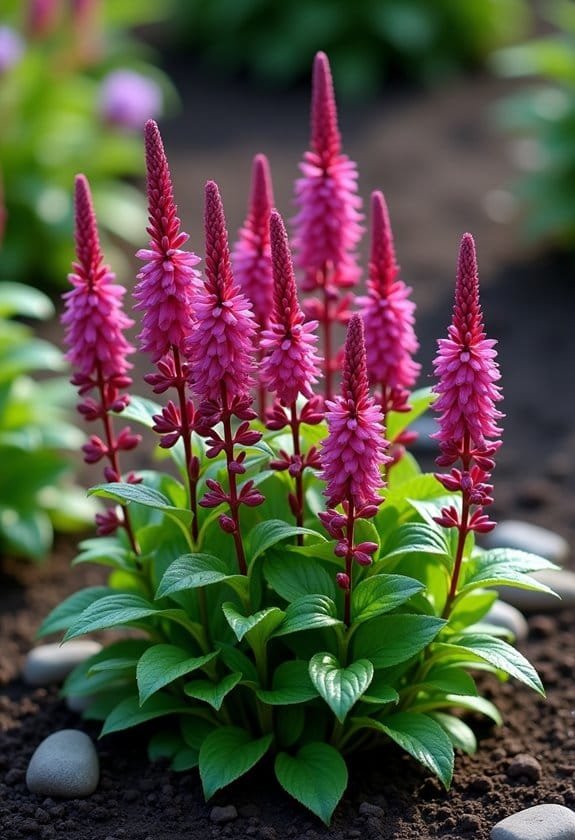
When cultivating Persicaria amplexicaulis, gardeners should prioritize well-drained, moist loamy soils, choosing sites that offer full sun to partial shade for ideal growth.
Ongoing care involves ensuring new plants remain consistently moist, while established ones can withstand intermittent dryness. A light application of compost in spring can enhance nutrient-poor soils and supports healthy growth by promoting consistent moisture management.
Meanwhile, wise companions such as Astilbe or Heliopsis can further beautify the garden and promote a flourishing environment for the red bistort. Additionally, incorporating plants that attract pollinators like bees can enhance the ecological balance of the garden.
Planting Tips
Choosing the right location and soil type is essential for successfully planting red bistort (Persicaria amplexicaulis). This resilient plant flourishes in loosened, fresh to moist loamy soils and thrives in areas that receive either full sun or partial shade, ideally shielded from strong winds. Brooklime, for instance, also demonstrates excellent adaptability in similar wetland environments where moisture is key.
By planting in the spring, around mid-May, or in the autumn, particularly September, gardeners can maximize the plant's growth potential. It's vital to maintain a minimum spacing of 50 cm between individual plants, allowing essential airflow around the stem and throughout the foliage, which promotes healthy development.
Newly established red bistorts require consistently moist conditions; however, once settled, they can endure brief periods of drought without excessive consequences, though stagnant water should be avoided to prevent waterlogging.
While regular fertilization isn't mandatory, integrating mature compost or flower fertilizer granules can greatly enhance nutrient availability, especially in less fertile soils.
In addition, dividing the plant every 3-4 years not only fortifies its health but also provides ample opportunities for propagation, enriching the garden with more specimens that showcase the striking beauty of its vibrant blooms and diverse plant parts. Agrimony, known for its ecological significance, can also be a beneficial companion plant in moisture-retentive areas to attract a variety of pollinators.
Ongoing Care
Ongoing care for red bistort (Persicaria amplexicaulis) is vital to guarantee the plant remains vibrant and healthy throughout its growing season. This perennial thrives in fresh to moist, nutrient-rich loamy soils and requires consistent watering, particularly when newly planted.
While established plants can endure occasional drought, it's important to avoid waterlogged conditions, as these may lead to detrimental root rot.
Minimal pruning is necessary; however, cutting back spent blooms through deadheading can greatly encourage prolonged flowering, typically extending from mid-July to late October.
In addition, though fertilization isn't mandatory, applying mature compost or flower fertilizer granules in spring can enhance growth in poorer soils, giving the plant a much-needed boost.
To maintain vigor and health, division is the recommended propagation method, ideally performed every 3 to 4 years. This not only rejuvenates the plant but also helps to prevent overcrowding that can stunt growth. Regular care practices such as maintaining soil moisture are essential for the effective growth of similar perennial herbs like common valerian.
Suggested Companions
Creating a harmonious garden landscape often involves selecting the right companions for red bistort (Persicaria amplexicaulis). This perennial thrives within mixed perennial borders, where its lush, bushy growth complements neighboring plants effectively.
Pairing red bistort with Chinese anemone and asters creates vibrant arrangements, showcasing a delightful contrast in textures and colors, while ornamental grasses add architectural interest, balancing the overall visual appeal.
Furthermore, situating red bistort alongside baneberry and phlox encourages beneficial pollinators, which greatly enhances the biodiversity of the garden ecosystem. However, gardeners must exercise caution; careful placement is essential to prevent red bistort from overshadowing smaller companions. Such overshadowing diminishes light availability, which can negatively impact their growth conditions.
Given its hardy nature and minimal maintenance needs, red bistort serves as an ideal companion for gardeners aiming for low-care landscaping solutions.
To optimize the potential of these perennial borders, diligent planning and thoughtful spacing will lead to a lively, interconnected plant community, where each species contributes to the landscape's beauty and ecological health.
Ultimately, the right companions not only enrich the garden visually but also support a thriving environment that nurtures all forms of life.
Common Issues
When cultivating Persicaria amplexicaulis, gardeners often encounter a few notable challenges that can affect its health and aesthetic appeal.
Overly wet soil can lead to root rot, while powdery mildew may flourish in humid conditions, underscoring the importance of proper spacing to facilitate airflow.
Additionally, the plant's tendency to self-seed and the presence of high levels of oxalic acid further complicate its care, particularly regarding safety and potential spreading in the garden.
Pests/Diseases
Despite being largely resistant to pests and diseases, Persicaria amplexicaulis, known as red bistort, can still face some common issues in the garden.
In humid conditions, it may encounter powdery mildew, a fungal disease that manifests as a white, powdery coating on leaves, typically thriving where airflow is restricted. To combat this, gardeners should guarantee sufficient space around the plants for air circulation and proper sunlight exposure.
Occasionally, aphids may invade red bistort, resulting in distorted plant growth. These small sap-sucking pests weaken the plant by draining nutrients; therefore, regular inspections are essential. Maintaining the presence of beneficial insects, such as ladybugs, can naturally mitigate aphid populations.
Moreover, if the soil remains excessively waterlogged, red bistort may suffer from root rot, a troublesome fungal infection that compromises the root system. Consequently, utilizing well-drained soil is significant in preventing such diseases.
Finally, slugs and snails can become problematic for young plants, as they feed on tender foliage. Barriers, like copper tape or organic pest control methods, may effectively protect emerging shoots from these destructive pests.
Solutions
Addressing common issues with Persicaria amplexicaulis requires attentiveness and proactive measures. This stunning mountain fleece, averaging 60 cm tall, flourishes in nutrient-rich, well-drained soils, but may falter in sandy conditions. Amending such soils with compost enhances moisture retention, boosting nutrient availability.
While established red bistort plants tolerate occasional drought, newly planted varieties demand consistently moist soil to prevent wilting and subsequent stress. As a result, diligent watering practices during the first growing season are vital for vibrant growth.
In addition, spacing newly planted specimens 50 cm apart guarantees they've enough room to develop without competing for light and resources, which reinforces healthy growth.
Minimal pruning is typically needed for red bistort, although deadheading spent flowers appreciably promotes extended blooming periods from mid-July to late October. This effectively adds to the visual appeal of any garden.
Importantly, while red bistort holds minimal toxicity risks for humans, it's wise to be cautious for pets, particularly cats, due to the presence of oxalic acid. Selecting pet-friendly areas for cultivation is thus an essential consideration for conscientious gardeners, guaranteeing a beautiful display without compromising safety.
Summary
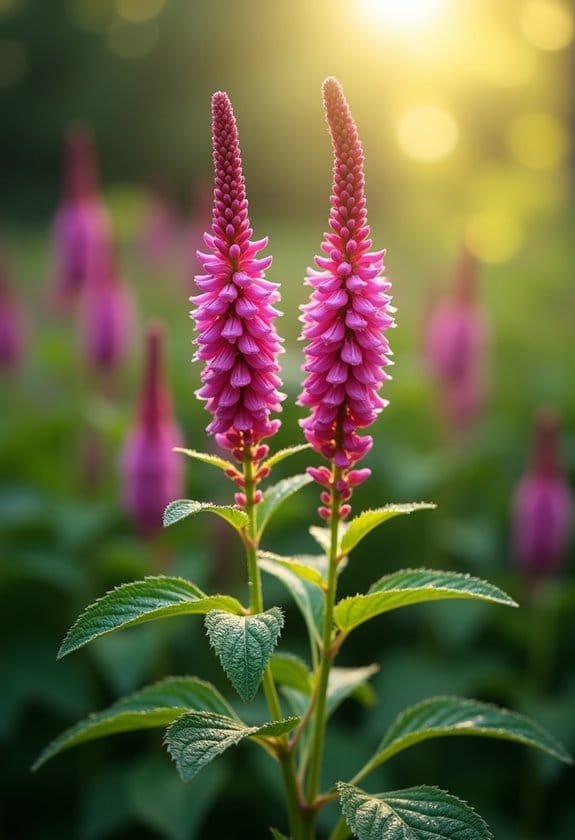
Persicaria amplexicaulis, also known as Red Bistort or Mountain Fleece, is a striking perennial that brings color and ecological benefits to gardens. Native to the Himalayas, this clump-forming plant flourishes in fresh to moist meadows and woodland edges, reaching heights of 100-120 cm.
From mid-July to late October, it showcases lovely blooms that range from pristine white to deep red, adding a vibrant touch to any landscape.
This versatile species thrives in nutrient-rich, well-drained loamy soils, tolerating both sunny and shady conditions, making it a fitting choice for diverse garden settings.
The plant's unique feature is its leaves, which embrace the stem, creating an appealing aesthetic. While not toxic to humans or pets, caution is advisable due to the presence of oxalic acid, which can be harmful in excessive quantities.
Importantly, Persicaria amplexicaulis serves a significant role in supporting local ecosystems by attracting bees and butterflies, invaluable allies in maintaining pollinator populations.
Its striking appearance, adaptability, and beneficial qualities make Red Bistort an exceptional addition to any pollinator-friendly garden.