Actaea japonica, or Japanese Baneberry, is a enthralling perennial, typically reaching about 18 inches in height, thriving in the shaded woodlands of Cheju Island, Korea, and parts of North America. This elegant plant exhibits glossy, ternately-compound leaves that shift from purple to green and produces striking white flowers in late summer, followed by toxic white berries, often likened to "doll's eyes." Preferring moist, well-drained soils and part to full shade, it plays an essential role in local ecosystems by attracting pollinators while also posing health risks due to its toxic compounds. Discovering its multifaceted nature reveals even more intriguing aspects.
Main Points
- Actaea japonica, known as Cheju Island Japanese Baneberry, thrives in shaded environments and can reach a height of about 18 inches.
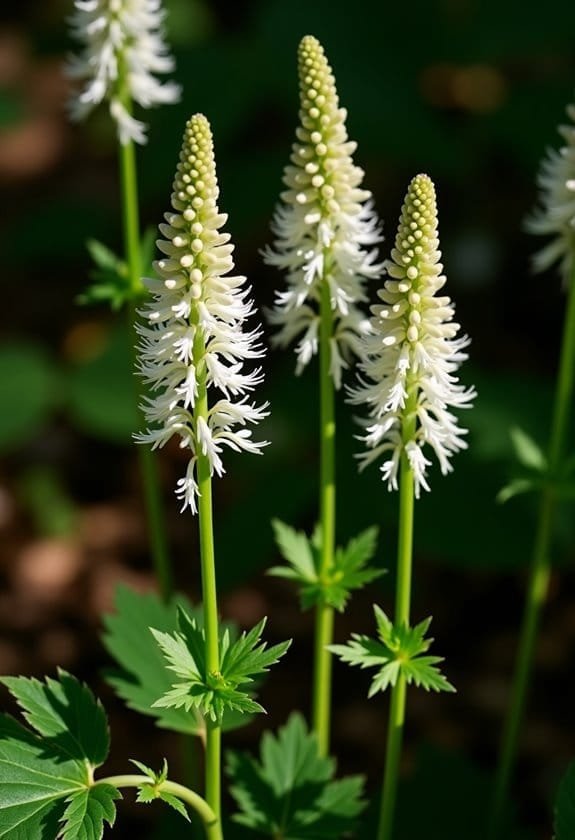
- This plant features glossy, ternately-compound leaves and produces elegant, white bottlebrush flowers in late summer.
- The berries resemble "doll's eyes" and are highly toxic, posing health risks to humans and pets if ingested.
- It prefers moist, well-drained, organic-rich soils and requires consistent moisture while being protected from excessive sun exposure.
- Actaea japonica attracts various pollinators and contributes to ecosystem biodiversity, while its toxicity serves as a natural defense against herbivores.
Introduction
Actaea japonica, commonly referred to as Cheju Island Japanese Baneberry, represents an enchanting addition to any garden.
This perennial plant, native to Korea and specifically Chejudo Island, boasts glossy leaves that shift from purple to green, enhancing its visual appeal throughout the growing season.
With its elegant white bottlebrush flowers blooming in late summer, this species not only thrives in shaded woodland areas but also contributes remarkably to ecological biodiversity.
Common Name
Known for its striking appearance and fascinating characteristics, Cheju Island Japanese Baneberry is an enthralling plant that hails from Chejudo Island in Korea. Its common name both honors its geographic origin and subtly warns of its nature, as "baneberry" indicates the toxic properties of its berries.
This member of the Actaea genus is distinguished by its glossy, compound leaves that undergo a vibrant transformation from purple hues in spring to a rich green as summer approaches.
One of the most notable features of this plant includes its stunning white bottlebrush flowers, which bloom in late summer and add noticeable ornamental appeal to shaded garden areas. While the flowers are visually alluring and invite admiration, the berries that follow are quite dangerous for humans if ingested, emphasizing the plant's medicinal lore.
Interestingly, these toxic berries pose no threat to birds, showcasing a unique ecological adaptation. The juxtaposition of beauty and risk within Cheju Island Japanese Baneberry serves as a poignant reminder of nature's complexity.
In cultivating this plant, gardeners must remain aware of its intoxicating allure, balancing its aesthetic contributions with respect for its inherent dangers.
Scientific Name
The scientific name for Japanese baneberry is Actaea japonica, reflecting its classification within the Actaea genus and the Ranunculaceae family. This species, with its distinctive ternately-compound leaves, grabs the eye while also posing significant safety concerns due to its toxicity. Belonging to a highly toxic plant genus, Actaea japonica serves as a reminder of nature's duality—beauty coupled with danger.
Native to Cheju Island in Korea, this plant has found its way into various garden settings, particularly in North America, offering gardeners an enchanting option for shaded, moist environments rich in nutrients.
Typically reaching a mature height of about 18 inches, Actaea japonica thrives in woodland gardens, where it contributes to biodiversity while enhancing the landscape with its striking white bottlebrush flowers that bloom in late summer.
The inclusion of this remarkable species not only adds ornamental value but also emphasizes the importance of understanding the complexities associated with plants in the family Ranunculaceae. Such awareness allows gardeners to appreciate both the attractions and the caution necessary when engaging with the natural world.
Consequently, Actaea japonica stands as a fascinating yet cautionary tale in the botanical sphere.
Overview
Originating from the lush terrain of Chejudo Island in Korea, Actaea japonica, or Cheju Island Japanese Baneberry, stands out as a notable perennial plant in shaded gardens. This species thrives in nutrient-rich, moist soils, typically reaching up to 18 inches in height. Its glossy, ternately-compound leaves serve as a striking backdrop for the plant's enchanting white bottlebrush flowers, which bloom in late summer, creating a mesmerizing visual display.
Falling within the Actaea genus, Actaea japonica boasts ornamental appeal while harboring toxicity, similar to its relative, Actaea pachypoda, commonly known as white baneberry. The allure of its delicate white flowers and unique foliage contributes considerably to the biodiversity of shaded garden environments, making it a cherished choice for woodland gardens.
Despite its aesthetic charm, the plant requires careful handling due to its potentially harmful berries, underscoring the importance of awareness when cultivating these species. Its hardiness in USDA Zone 4 allows Actaea japonica to flourish in various climates, enhancing the beauty and diversity of shaded landscapes, while inviting gardeners to appreciate both its allure and caution.
Key Features
Actaea japonica stands out with its striking growth size, typically reaching around 18 inches in height, while showcasing glossy, ternately-compound leaves that shift from purple to green as they mature.
This perennial thrives in shaded, moist environments, making it a visually appealing addition to any garden.
In late summer, it produces elegant racemes of white, bottlebrush-like flowers that not only enhance its ornamental value but also attract pollinators, creating a dynamic and vibrant landscape element.
Growth Size
With a typical mature height of around 18 inches, Cheju Island Japanese Baneberry showcases its impressive growth potential, especially when cultivated. Originally, the form of Actaea japonica was believed to grow to only about 8 inches, but consistent cultivation has remarkably enhanced its growth size, enabling it to thrive in woodland gardens.
The plant flourishes in shaded environments, requiring consistent moisture to achieve its full potential. During late summer, burgeoning racemes of distinctively white bottlebrush flowers emerge, marking a notable highlight in its developmental cycle. These flowers not only contribute to the enchanting appearance of the plant but also indicate its vigorous growth.
Equally important, the glossy, ternately-compound leaves exhibit a mesmerizing evolution, starting with rich purple hues in spring before shifting into lush green. This adaptation not only underscores the plant's resilience but also enhances its visual appeal throughout the growing season.
Consequently, the combination of its height, flowering habits, and leaf coloration contributes to the impressive growth size of Actaea japonica, making it a fascinating addition to shaded garden spaces. Essentially, its growth characteristics reflect a hardy, aesthetically pleasing nature.
Appearance
Boasting a striking appearance, Cheju Island Japanese Baneberry showcases glossy, ternately-compound leaves that shift from vibrant purple in spring to lush green as the season progresses. Growing to about 18 inches in height, this plant develops branching stems, each potentially adorned with three leaves or a combination of three compound leaves alongside a flower stalk.
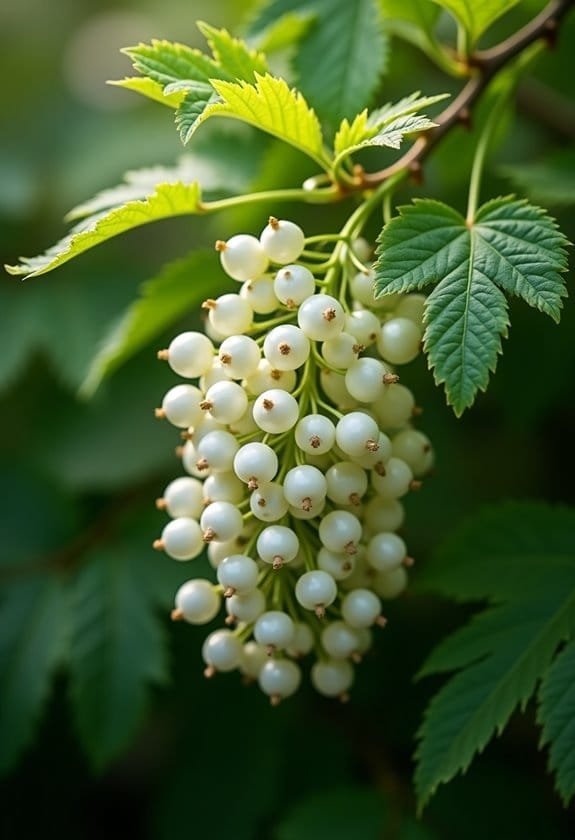
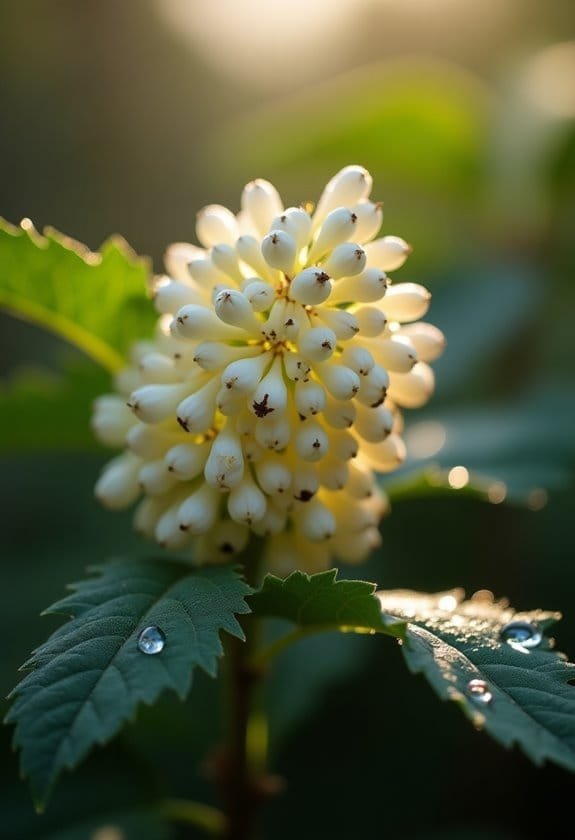
Commonly called dolls eyes due to its toxic, pearly white berries that contain black stigmas, Actaea japonica presents an air of allure mixed with caution. These ellipsoid clusters of berries are indeed fascinating but should be appreciated from a distance, underscoring the plant's dangerous beauty.
Often confused with black cohosh, Baneberry thrives in moist, nutrient-rich settings, particularly in shaded dry streambeds, making it a splendid addition to woodland gardens.
Its unique leaf structure and berry formation highlight its ornamental value, offering gardeners an exceptional choice for shaded areas. As summer wanes, the plant's overall aesthetic transforms, hinting at the complex interplay between beauty and toxicity in nature, revealing why it captivates yet cautions those who admire it.
Flowering Season
Flourishing in late summer, Actaea japonica reveals its enchanting white bottlebrush flowers from July to September. These exquisite blossoms emerge in long racemes, presenting an ethereal display that captivates the eye, particularly in shaded garden spots.
Each stalk, dense with numerous small flowers, creates a feathery appearance, drawing attention and admiration.
During this flowering season, pollination plays an essential role, leading to the subsequent production of berries, which notably enhance the plant's ornamental value. The flowers not only attract various pollinators, contributing to local biodiversity but also possess intriguing properties.
The compounds found in Actaea japonica can have dangerous effects; they may lead to cardiac arrest if ingested. Surprisingly, they also exhibit an immediate sedative effect, which is why the plant holds the term "bane" in its common name.
Thus, the flowering period of Actaea japonica isn't merely a time for aesthetic appreciation. It encompasses ecological dynamics and a fascinating interplay of biological functions, reminding us of nature's complexity and beauty.
As these blooms flourish, they weave a delicate balance of allure and caution, enriching both gardens and the understanding thereof.
Growing Requirements
Actaea japonica thrives under specific growing conditions that echo its natural habitat, requiring part shade to full shade to flourish.
This plant demands moist, well-draining, and nutrient-rich soil, with an emphasis on high organic content to guarantee peak health and growth.
Furthermore, it thrives in USDA hardiness zones 4 to 8, allowing garden enthusiasts across diverse climates to cultivate this elegant species successfully.
Light
When cultivating Actaea japonica, it's essential to reflect on its light requirements for ideal growth. This remarkable plant thrives in part-shade to full shade conditions, making it exceptionally suited for woodland gardens or shady borders. Its light preferences offer substantial shade benefits, as lower light levels help prevent stress and promote more robust growth.
Actaea japonica exhibits fascinating growth adaptations that allow it to flourish in cooler, shaded settings. Emerging in early spring, the plant prepares for flowering by leveraging the minimal sunlight available during the late summer. In these conditions, it develops healthy foliage and vibrant flowers, attracting various pollinators while retaining moisture in its rich, well-drained soil.
Moreover, protecting the roots from excessive sun exposure is essential, as they're sensitive to heat and can suffer in direct sunlight. Consequently, maintaining consistent moisture is vital, particularly during dry spells, ensuring these plants continue to thrive.
Soil
Successful cultivation of Actaea japonica also hinges on understanding its soil requirements. This enchanting plant thrives in moist, rich soils that are well-drained, since such conditions provide essential nutrients for ideal growth.
A mixture that boasts high organic content proves beneficial, guaranteeing adequate moisture retention for healthy root development and robust plant vigor. To achieve this, incorporating soil amendments such as compost or organic matter is necessary; these enrich the soil and enhance its fertility.
Actaea japonica flourishes best in soils with a pH range of 5.5 to 7.0, a sweet spot that guarantees the nutrient balance is just right, allowing for the proper availability of essential minerals critical for growth.
Consistent moisture levels, particularly during the growing season, are paramount in preventing drought stress, which can stifle the plant's development.
Water
Consistently moist conditions are vital for the healthy growth of Actaea japonica. This striking plant thrives in environments where regular watering maintains its ideal growing conditions, which often aligns with rich, well-drained soils and high organic content.
Water conservation strategies, such as incorporating organic mulch, greatly enhance moisture retention and help suppress competing vegetation. During dry spells, particularly in the early spring when new growth emerges and late summer when flowering occurs, adherence to specific watering frequency guidelines becomes essential.
Typically, a deep watering once or twice a week suffices, ensuring the top inch of soil stays consistently moist. However, care must be taken to avoid overwatering, as this can lead to dire consequences like root rot, stressing the importance of well-drained soil.
To optimize conditions for Actaea japonica, gardeners should adopt moisture retention techniques, which may include arranging adjacent plants that share similar water needs. By paying attention to these nuances in watering regime, garden enthusiasts can greatly foster the health and vibrancy of this intriguing species, ultimately yielding a flourishing display throughout the growing season.
Temperature
Actaea japonica thrives in temperatures typical of USDA hardiness zone 4, demonstrating impressive cold tolerance that allows it to flourish in cooler climates. This perennial plant actively engages with its environment, showing remarkable temperature adaptations that enable it to manage challenging conditions.
While temperature fluctuations can impact many plants, Actaea japonica withstands cooler temperatures, emerging in early spring and maintaining growth through the late summer chill.
The plant's preference for consistent moisture complements its cold tolerance; moisture availability is essential for ideal development, especially when temperatures drop. Temperature effects can be detrimental in harsh conditions, but Actaea japonica benefits from its natural habitat's shaded areas, which protect it from excessive sunlight, reducing stress and potential damage.
Moreover, this species thrives in nutrient-rich, well-drained soils, reinforcing its resilience against varying temperature conditions. The intricate balance between temperature and moisture allows the root system to remain healthy, ultimately supporting the plant's overall vigor.
Pollinator Criteria
Actaea japonica captivates a variety of pollinators, particularly bees and butterflies, with its delicate, feathery white flowers arranged in striking racemes.
These blooms not only offer a crucial food source during late summer, when floral resources diminish, but also feature structural traits that facilitate easy access for pollen-collecting insects. Additionally, the plant's ability to produce up to 26,000 seeds helps ensure ongoing support for these pollinators and the broader ecosystem.
As pollinators engage with these flowers, they play an essential role in the plant's reproduction by transferring pollen, ultimately leading to the formation of berries. Furthermore, the presence of diverse flora, such as Salad Burnet, can enhance the overall health of the ecosystem by supporting a wider range of pollinators.
Attracted Pollinators
While many plants struggle to attract pollinators, Actaea japonica excels at enticing a diverse range of species with its fragrant white bottlebrush flowers. The plant's striking blooms emit an appealing aroma, drawing in bees and butterflies, who are particularly drawn to its rich nectar. This attraction occurs late in summer, aligning perfectly with the foraging habits of these pollinators as they seek essential food resources during their peak activity periods.
The dense raceme arrangement of Actaea japonica's flowers allows easy access for pollinators to gather nectar efficiently while transferring pollen between blossoms. Such structural adaptations enhance its pollinator attraction, maximizing the chances for cross-pollination and genetic diversity.
Additionally, the shade-loving nature of the plant promotes habitat diversity, creating an ideal environment where various insect species can thrive, supporting a robust ecosystem. Notably, plants like Ramsons contribute to biodiversity in native habitats, enhancing ecosystem health through their extensive colonies that support pollinator populations.
Interestingly, birds also contribute to the lifecycle of Actaea japonica by consuming its berries, thereby aiding in seed dispersal. This indirect relationship not only supports the plant's reproductive success but also reinforces the intricate connections among the diverse pollinators that depend on it, highlighting the interconnectedness of ecosystems.
Pollination Method
Typically, small bees and flies play an essential role in the pollination of Actaea japonica due to their attraction to the plant's fragrant white flowers. These pollinators are drawn by the intoxicating flower aromas, which serve as an invitation to indulge in the plentiful nectar.
During the late summer flowering period, when pollinators are most active, the plant employs effective pollination techniques to enhance fertilization success. The flowers of Actaea japonica are arranged in long racemes, presenting an attractive visual structure that signals availability to potential visitors from a distance. Additionally, the structure of the flowers resembles that of other pollinator-friendly species, further enhancing their appeal to various insects.
Insect behaviors, such as the frequent visits of bees and flies, facilitate the transfer of pollen, which is a crucial process for the development of ellipsoid berries. These berries usually ripen by mid to late summer, ultimately leading to seed production necessary for species propagation in its native habitat. Additionally, like white clover, Actaea japonica benefits from the presence of essential pollinators, showcasing the importance of such species in ecological health.
Without successful pollination, the production of these berries would be jeopardized, highlighting the interdependent relationship between the plant and its pollinators.
The intricate dance of colors, fragrances, and movements showcases nature's delicate balance and mutual benefit, emphasizing the significance of preserving these ecological dynamics.
Care & Maintenance
Actaea japonica thrives best with specific care and maintenance practices that enhance its natural beauty and health.
When planted in moist, well-drained soil under a shaded canopy, it can flourish effortlessly, provided it receives regular watering—especially during its vital growth periods in spring and late summer.
Incorporating mulching, balanced fertilization, and timely pruning not only supports vigorous growth but also cultivates a visually appealing display for any woodland garden.
Planting Tips
When planning to plant Actaea japonica, it's important to select a location that offers part-shade to full shade, as this perennial thrives in such environments.
Ideally, the soil should be rich and well-drained, with a consistent moisture level to guarantee robust growth and flowering.
For effective planting methods, consider spacing the plants approximately 18 to 24 inches apart. This spacing not only accommodates their mature size but also allows for adequate airflow, minimizing the risk of rot from excess moisture.
As the species emerges in early spring, monitoring growth becomes crucial to making necessary adjustments.
Mulch plays a key role in a healthy planting environment. A 2 to 3-inch layer of organic mulch around the base can greatly enhance moisture retention, while also moderating soil temperature, ensuring the best root conditions.
Additionally, maintaining a debris-free area around the plants enhances airflow, which is essential in preventing fungal issues.
Ongoing Care
Maintaining a vibrant Actaea japonica requires diligence and proper care. This plant thrives in moist, well-drained, nutrient-rich soils, necessitating a consistent moisture level to avoid waterlogging, which can lead to root rot. A sensible fertilization schedule, involving a balanced slow-release fertilizer in early spring, can greatly enhance growth, ensuring the soil remains enriched with essential nutrients.
Pruning techniques play an important role in keeping the plant healthy and visually appealing. Regularly removing dead or damaged leaves encourages new growth and minimizes the risk of diseases.
Additionally, mulching around Actaea japonica not only helps retain moisture but also suppresses weeds, maintaining stable soil temperatures, which is critical during seasonal adjustments.
Actaea japonica prefers part-shade to shaded environments, making it an excellent addition to woodland gardens. As the seasons shift, monitoring the plant's condition is essential; it may require adjustments in watering or mulching to adapt to changing conditions.
Suggested Companions
Choosing the right companions for Actaea japonica can elevate both its beauty and health in the garden. Companion plants like Chelone (Turtle Head) and Dicentra (Bleeding Heart) thrive in similar shaded, moist environments, offering contrasting textures and colors that enhance Actaea's presence. Additionally, Geum rivale serves as a beneficial neighbor, as its extended blooming period attracts various pollinators that can enhance the overall ecosystem vitality.
Aspidistra (Cast Iron Plant) is especially beneficial, as it tolerates low light and dry conditions, complementing the baneberry's growth habits and ensuring a resilient garden structure.
Incorporating Pyrrosia (Tongue Fern) adds a lush, green backdrop that echoes the shade-loving nature of Actaea japonica, creating a harmonious visual effect.
Additionally, planting Pulmonaria (Lungwort) nearby enhances biodiversity. Its early spring flowers attract essential pollinators, supporting a thriving ecosystem before the baneberry begins to bloom.
For an intriguing aesthetic combination, consider introducing macabre plants like Heliconia (Pig Butt Arum) alongside Actaea japonica. This not only amplifies visual appeal but also fosters a unique woodland garden atmosphere. Furthermore, the strategic use of plants like Horseshoe Vetch can enhance biodiversity support by attracting valuable pollinators to the garden.
Common Issues
Actaea japonica faces several common issues that can compromise its health and vibrancy.
Pests like aphids and slugs, along with diseases such as leaf spots, often thrive in humid environments, necessitating vigilant monitoring and potentially fungicidal treatments to protect the plant's lush foliage.
Additionally, the plant's toxicity poses a significant risk to pets and children, making careful management essential to prevent accidental ingestion and guarantee a thriving garden ecosystem.
Pests/Diseases
Common issues faced by Actaea japonica include a variety of pests and diseases that can jeopardize its overall health. Among these, aphids and spider mites stand out, as they're particularly attracted to the tender, new growth of the plant. These sap-sucking insects can lead to yellowing leaves and stunted growth if not managed properly.
Additionally, in humid conditions, Actaea japonica may fall victim to fungal infections like powdery mildew, which manifests as a white, powdery coating on leaves, severely inhibiting photosynthesis.
To effectively combat these challenges, implementing robust pest management strategies is essential. Regularly inspecting the plants for signs of aphids and maintaining healthy air circulation through proper pruning are beneficial practices.
Moreover, fungal disease prevention involves ensuring adequate spacing between plants to promote airflow. Another crucial factor is drainage solutions; root rot often develops due to poorly drained soils. Consequently, it's imperative for gardeners to choose planting sites that avoid waterlogging, allowing Actaea japonica to thrive.
Solutions
Addressing the pests and diseases mentioned earlier is key to maintaining the health of Actaea japonica. To ascertain robust growth, gardeners should prioritize plant toxicity awareness, particularly because these baneberry plants contain harmful compounds potentially dangerous to humans and pets. Consequently, it's vital to plant them in areas sheltered from curious children and animals. The addition of native plants like the Wild Service Tree can enhance the local ecosystem, benefiting overall biodiversity.
To achieve ideal growing conditions, employing moisture retention techniques is paramount. Maintaining consistently moist, nutrient-rich soil encourages vigorous growth, preventing stress that can arise from dryness, which often leads to vulnerability against pests. Amending the soil with organic matter can improve water retention while guaranteeing proper drainage, creating a healthy environment reminiscent of its natural woodland habitat.
Regular monitoring for pests, such as aphids, alongside vigilant observation for diseases like powdery mildew, forms an effective pest prevention strategy. Using insecticidal soap or neem oil can deter pests without harming the plant.
Additionally, ascertaining that Actaea japonica is planted in part shade to full shade can further reduce stress and enhance its health. Wild cherry trees (Prunus avium) can be planted nearby to provide a beneficial habitat for various pollinators. By following these practices, gardeners can nurture this enchanting perennial, guaranteeing it flourishes while remaining a safe addition to any landscape.
Summary
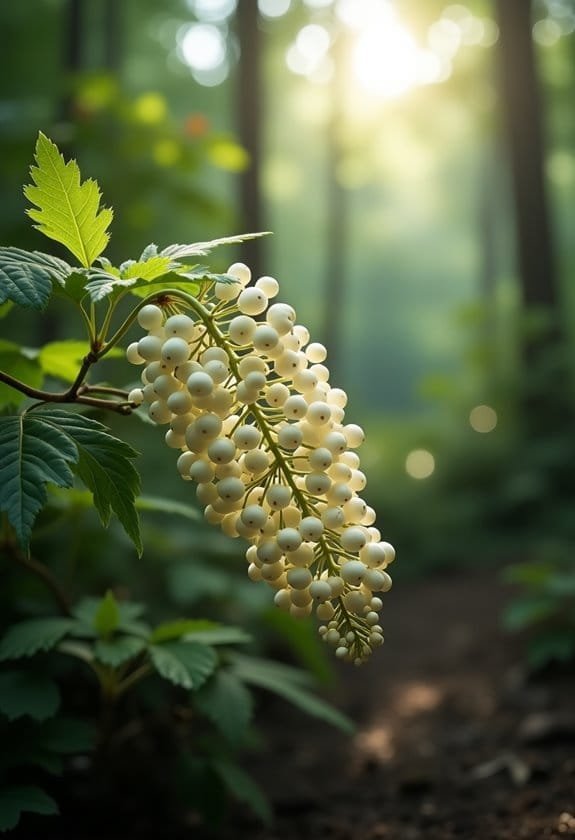
Found in the shaded woodlands of Korea, Actaea japonica, or Cheju Island Japanese Baneberry, is a striking perennial plant distinguished for its glossy, ternately-compound leaves and elegant white bottlebrush flowers that bloom in late summer.
This species particularly thrives in moist, nutrient-rich, well-drained soils, making it an excellent candidate for woodland gardens and shaded borders. With a mature height of approximately 18 inches, Actaea japonica exemplifies significant adaptations to cold, flourishing best in USDA Zone 4 conditions.
While its beauty captivates many gardeners, it's crucial to acknowledge the plant toxicity of its berries, which can pose health risks, especially to humans. This characteristic aligns with common traits found in the Actaea genus, where toxic compounds serve as natural defenses.
The cultivation of this plant necessitates careful management to maintain consistent moisture and ideal light conditions, ensuring the health and vibrancy of specimens. Significantly, the genetic diversity within Actaea japonica contributes to its resilience, offering potential advantages in adapting to environmental changes.
Ultimately, this alluring plant combines aesthetic appeal with important ecological considerations, providing both beauty and a cautionary tale for those who admire its stunning features.