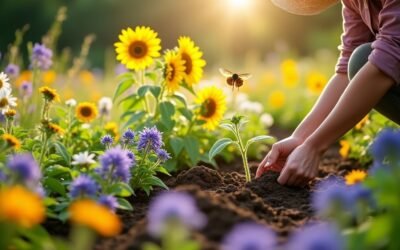
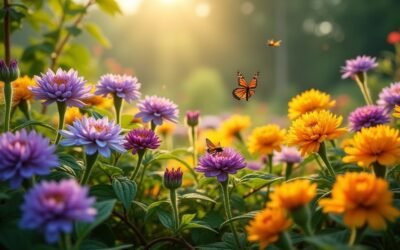
Amsonia tabernaemontana, or Eastern Bluestar, is a enthralling perennial found in Central and Eastern United States, reaching heights of 2 to 3 feet and a spread of approximately 3 feet. Thriving in well-drained, moist soils, it flourishes in both full sun and partial shade, blooming from April to May with clusters of light blue, star-like flowers that attract key pollinators like butterflies and hummingbirds. With its foliage changing from vibrant green to brilliant yellow in fall, this clump-forming plant supports local ecosystems and resists deer. Gardeners should remain vigilant for aphids and guarantee adequate drainage for peak growth. Insights await regarding its ecological significance.
Main Points
- Eastern Bluestar (Amsonia tabernaemontana) is a native perennial known for vibrant blue flowers and striking yellow foliage in fall.
- It prefers well-drained, moist soils and thrives in full sun to medium shade, with a growth height of 2 to 3 feet.
- The plant attracts various pollinators, serving as an essential host plant that enhances local biodiversity and ecological networks.
- Maintenance includes deadheading, monitoring for aphids, and ensuring critical drainage to prevent root rot in wet conditions.
- Resistant to deer and adaptable to USDA hardiness zones 4 to 9, making it a resilient choice for diverse landscapes.
Introduction
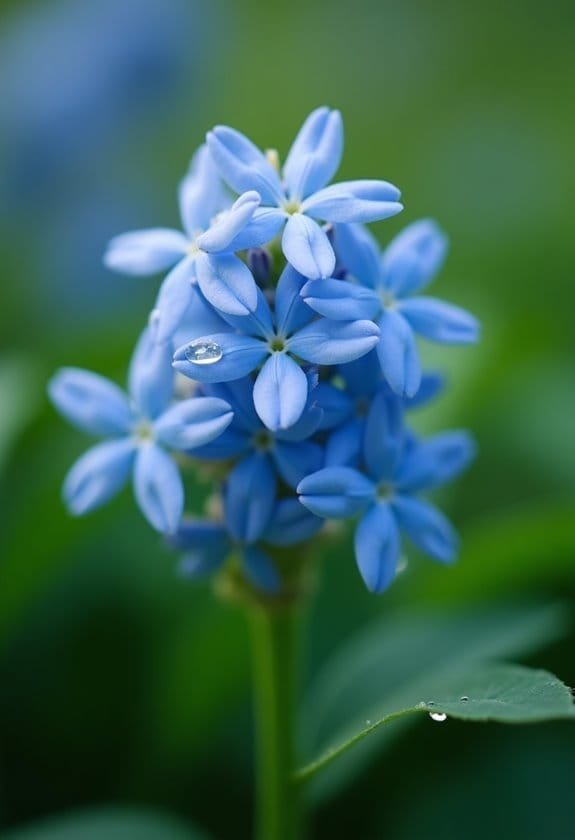
Amsonia tabernaemontana, commonly referred to as Eastern Bluestar, captures attention with its vibrant foliage and striking blue flowers.
This perennial, native to the Central and Eastern United States, adapts seamlessly to diverse habitats, from moist woodlands to rain gardens, enhancing any landscape.
As it shifts through the seasons, its beauty and low-maintenance nature provide both visual appeal and practical benefits for gardeners.
Common Name
Known for its striking appearance, the Eastern Bluestar is a beloved choice among gardeners. This herbaceous perennial, botanically recognized as Amsonia tabernaemontana, features enchanting star-like blue flowers that bloom vibrantly in late spring. These blossoms, which emerge atop sturdy stems, create a breathtaking display, drawing the attention of both gardeners and pollinators alike.
In addition to its beautiful flowers, the Eastern Bluestar is also known by several other names, including Blue Dogbane and Blue Star Flower. Each of these designations reflects a unique characteristic or aspect of the plant. Its dense, shrub-like form provides a lush backdrop in gardens, ensuring visual interest throughout the year.
The foliage, which exhibits a rich green hue during the warmer months, transforms into striking yellow colors in the fall, enhancing its garden aesthetics.
Cultivating Eastern Bluestar, or Amsonia tabernaemontana, isn't only a feast for the eyes but also supports biodiversity. By attracting pollinators, it plays an important role in sustaining local ecosystems, making it an essential addition to any garden aimed at fostering environmental health and beauty.
Scientific Name
Belonging to the Apocynaceae family, the scientific name for the Eastern Bluestar is Amsonia tabernaemontana. This native herbaceous perennial thrives primarily in the wet, sandy woods across the Central and Eastern United States, where it can often be found gracing the understory with its lush green leaves. The species name tabernaemontana reflects a rich history in botanical nomenclature, linking it to the diverse flora characteristic of its native habitat.
Amsonia tabernaemontana typically reaches a height of 2 to 3 feet, showcasing a clump-forming growth habit that makes it a popular choice for landscaping and garden designs.
In the spring, this eye-catching plant reveals its stunning light blue, star-like flowers that bloom from April to May, creating a striking contrast against its verdant foliage.
As the bright flowers emerge, they not only captivate onlookers but also attract pollinators, enriching the ecological tapestry of its surroundings.
Understanding the scientific classification of Amsonia tabernaemontana helps illustrate its significance within its ecosystem and highlights its beauty, inviting gardeners and plant enthusiasts to appreciate this remarkable species.
Overview
The Eastern Bluestar, scientifically named Amsonia tabernaemontana, is a stunning addition to any garden, celebrated for its striking blue blooms and adaptability. This native herbaceous perennial typically reaches heights of 2 to 3 feet and thrives in well-drained, moist soils, making it particularly suitable for rain gardens.
Its vibrant blue flower clusters emerge in spring, blooming from April to May, while its foliage shifts from a lively lime green to a brilliant yellow in the fall, enriching the garden throughout the seasons.
Beyond its aesthetic contributions, the Eastern Bluestar serves as a crucial host plant for numerous pollinators, most importantly hummingbirds and butterflies. By attracting these creatures, it plays a supportive role in promoting local biodiversity, which is essential for healthy ecosystems.
The spacing of 36 to 40 inches between plants fosters ample air circulation, further enhancing their resilience and visual appeal. Given its drought tolerance and adaptability, gardeners can confidently integrate this perennial into diverse garden settings. Additionally, like the Common Cowslip, it is important to maintain medium-moisture, well-drained soils to prevent common issues such as root rot.
Ultimately, the Eastern Bluestar embodies ecological harmony and beauty, inviting both pollinators and human admirers to partake in its natural splendor.
Key Features
The Eastern Bluestar, or Amsonia tabernaemontana, showcases a remarkable growth size, typically reaching heights of 2 to 3 feet while spreading approximately 3 feet wide.
Its leaves spring forth in vibrant lime green, shifting to a stunning yellow hue in the fall, while rich blue flower buds emerge in April, eventually blooming into porcelain blue flowers by late spring.
This plant not only enhances garden aesthetics but also contributes greatly to local ecosystems by attracting essential pollinators like hummingbirds and butterflies.
Growth Size
Reaching heights of 2 to 3 feet, Amsonia tabernaemontana, commonly known as Eastern Bluestar, develops a dense, shrub-like form that spreads about 3 feet wide. Native to regions such as North Carolina, this perennial showcases a robust growth size, establishing its presence in gardens and landscapes.
The plant thrives when spaced 36 to 40 inches apart, which fosters healthy growth and ideal airflow, reducing competition for resources. In late spring, vibrant lime green leaves emerge, creating a striking contrast against the backdrop of early blooming flora. However, gardeners must understand that Eastern Bluestar exhibits a slow growth rate, requiring patience as it establishes its full, bushy habit over time.
Once established, this species becomes drought-tolerant, making it an excellent choice for diverse conditions, including rain gardens. Its resilience not only enhances its adaptability to various soil types but also guarantees a sustainable landscape.
With proper care, this hardy plant will reward gardeners with stunning seasonal color changes, shifting to brilliant yellow in the fall, further enhancing its ornamental appeal. Consequently, Amsonia tabernaemontana presents an enchanting and durable option for enthusiastic horticulturists.
Appearance
Amsonia tabernaemontana captivates with its dense, shrub-like physique, typically soaring to heights of 2 to 3 feet and spreading around 3 feet wide.
This perennial plant exhibits vibrant lime green foliage in spring, showcasing a lively appearance that heralds the season of renewal. The leaves, narrow and elongated, contribute to a refined elegance, evolving to a striking yellow in fall, thereby enhancing the garden's visual narrative.
During April, Amsonia tabernaemontana presents rich blue flower buds that develop into exquisite porcelain blue blossoms throughout its blooming period, which extends from April to May.
These flowers emerge in clusters, creating a stunning contrast against the lush foliage and bringing a sense of joy and energy to landscaped spaces. Following the flowering phase, elongated seedpods develop, adding an upright semblance that continues to interest observers long after blooms have faded.
Flowering Season
In late spring, the vibrant display of Eastern Bluestar's flowers alters the landscape, enchanting onlookers with their striking beauty. This plant, belonging to the Dogbane family, typically blooms from April to May, showcasing clusters of star-like flowers that shift from rich blue buds to alluring porcelain blue blossoms. Each flower attracts a variety of pollinators, such as hummingbirds and butterflies, which are essential for the plant's reproductive success.
As the blooming period concludes, Eastern Bluestar develops elongated seed pods that add a vertical element to the garden, persisting until fall. The foliage also undergoes a dramatic transformation, changing to a brilliant yellow, therefore providing visual interest beyond the flowering season. This remarkable feature underscores the plant's year-round appeal, making it a favorite among gardeners who seek diversity in their landscapes.
For ideal growth, Eastern Bluestar thrives best in full sunlight, preferring well-drained soil. By nourishing these plants during spring or fall, gardeners can guarantee their stunning display, enhancing any landscape with vibrant colors and engaging wildlife.
Growing Requirements
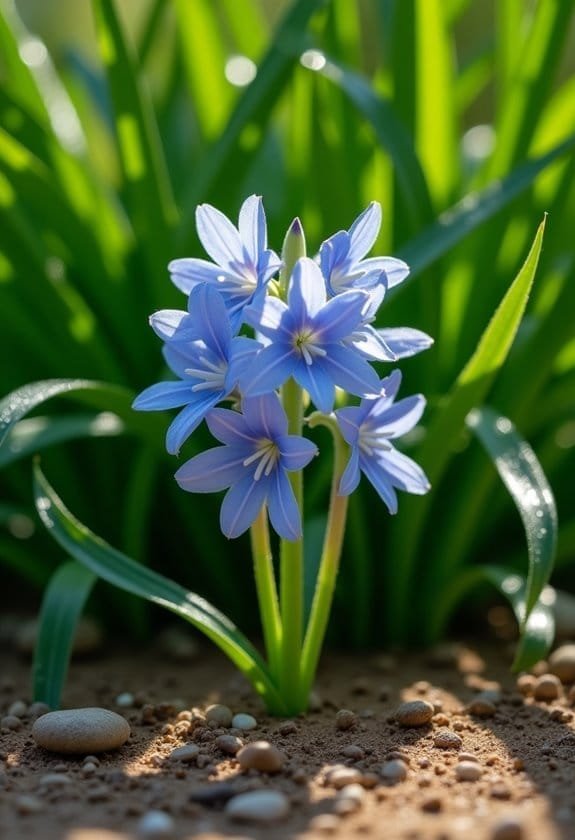
When growing Eastern Bluestar (Amsonia tabernaemontana), understanding its light, soil, water, and temperature requirements is essential for successful cultivation.
This plant flourishes in full sun to medium shade, thriving with at least four hours of sunlight daily, while its preference for well-drained, moist soils with a neutral pH guarantees peak health.
Additionally, once established, it demonstrates a remarkable drought tolerance, making it adaptable to varying environmental conditions, which enhances its versatility in garden settings.
Light
Eastern Bluestar thrives under full sun to medium shade, needing at least four hours of direct sunlight for ideal growth. This requirement influences not only the density of its foliage but also the vibrancy of its blooms during the late spring flowering period.
While the plant exhibits adaptability to varying light conditions, it may demand staking in partial shade to maintain its upright form, thereby preventing the stems from sprawling.
Intense sunlight fosters a slow, yet steady growth rate, allowing Eastern Bluestar to develop a clump-forming, bushy habit that contributes to garden aesthetics.
Additionally, the presence of this plant attracts essential pollinators, such as the delicate Coral Hairstreak and the energetic Hummingbird Moths, alongside Carpenter Bees that enthusiastically visit its enchanting flowers.
Soil
Amsonia tabernaemontana thrives in neutral soils, ideally with a pH between 6.0 and 8.0, which supports its robust growth. While this plant demonstrates tolerance to various soil conditions, it flourishes most effectively in well-drained, moist environments that permit exceptional nutrient intake.
Gardeners seeking to enhance these conditions may consider soil amendments such as organic matter or compost, which improve soil structure and promote beneficial microbial activity.
In addition, implementing appropriate drainage solutions is vital, particularly for those cultivating Eastern Bluestar in rain gardens, where soil moisture levels can become high. Conducting regular pH testing allows gardeners to monitor soil acidity and alkalinity, ensuring conditions remain favorable for growth.
Amsonia tabernaemontana, with its preference for stable environments, responds positively when provided with these ideal soil characteristics. Its ability to adapt to both full sun and partial shade—requiring at least four hours of direct sunlight daily—further complements its growth in nutrient-rich soils.
Water
Consistent moisture is crucial for the thriving of Amsonia tabernaemontana, particularly in its early growth stages. This native perennial prefers soil that remains adequately moist, ideally found in rain gardens or locations with average to moist moisture conditions.
While it demonstrates some drought tolerance once established, ensuring consistent moisture enhances its overall health and flowering potential. The plant tends to excel in organically enriched soils which provide the nutrients needed for robust growth.
Implementing effective irrigation best practices is essential for this species; utilizing drip irrigation can directly target the roots while minimizing water loss.
Employing water conservation strategies, such as mulching, greatly aids in moisture retention, helping the soil remain damp and reducing evaporation rates.
Additionally, gardeners should incorporate moisture retention techniques like regular monitoring of soil moisture levels, especially during prolonged dry spells, to keep the Eastern Bluestar resilient. Deadheading after flowering not only improves the plant's visual appeal but also contributes to moisture management by minimizing unwanted self-seeding that could strain available resources. Furthermore, selecting areas with organic-rich soils can further support the health of Amsonia tabernaemontana as it thrives in optimal conditions.
Temperature
Successful growth of Amsonia tabernaemontana also relies on suitable temperature conditions. This resilient plant thrives in USDA hardiness zones 4 to 9, which encompass a variety of temperature ranges.
Ideally, temperatures should remain above 0°F (-18°C) during winter for best frost tolerance, as this allows Eastern Bluestar to withstand cold snaps without considerable damage.
The shift from one season to another presents seasonal variations that can impact the plant's growth. During the growing season, consistent temperatures between 60°F to 75°F (15°C to 24°C) are most favorable, allowing the plant to establish itself and develop its characteristic dense, shrub-like form.
Once established, Amsonia tabernaemontana demonstrates drought tolerance, yet initial growth benefits from average to moist soil conditions complemented by these ideal temperatures.
Moreover, this perennial is hardy enough to endure frosts, allowing gardeners to plant bare-root varieties even when temperatures dip.
Understanding these temperature conditions greatly contributes to the successful cultivation of Eastern Bluestar, ensuring robust health and vibrant blooms throughout its growing season.
Consequently, gardeners must pay close attention to temperature fluctuations to enhance growth potential and blooming periods.
Pollinator Criteria
Eastern Bluestar (Amsonia tabernaemontana) captivates an array of pollinators, with hummingbirds and butterflies, particularly the Mourning Cloak, frequently visiting its vibrant blooms.
This plant engages these pollinators through its nectar-rich flowers, which facilitate cross-pollination and enhance genetic diversity within local ecosystems.
Additionally, Amsonia serves as a critical host for butterfly caterpillars, reinforcing its role in sustaining both the pollinator population and the intricate web of life surrounding it.
Attracted Pollinators
Amsonia tabernaemontana, commonly known as Eastern Bluestar, attracts a variety of pollinators, making it an excellent choice for garden enthusiasts aiming to support local wildlife.
This perennial plant blooms from April to May, showcasing light blue, star-like flowers that are particularly appealing to an array of pollinating insects during their active season. The Eastern Bluestar provides substantial pollinator benefits, as its flowers serve as a valuable nectar source for species such as carpenter bees, hummingbirds, and a host of butterflies, including the Mourning Cloak and hawkmoths. Additionally, the Eastern Bluestar thrives in full sun, which further enhances its attractiveness to pollinators.
Incorporating Eastern Bluestar into garden design not only enhances aesthetic beauty but also promotes ecological importance by cultivating habitats that bolster healthy, diverse pollinator populations. Additionally, similar to the Great Burnet, it plays a vital role in attracting vital pollinators to your garden, thus increasing biodiversity.
As a host plant for specific species, such as the Snowberry Clearwing and Coral Hairstreak, it plays a critical role in sustaining these crucial insects. By planting this native species, gardeners can create vibrant ecosystems that support essential pollinator species, ensuring the flourishing of complex ecological networks.
Ultimately, the Eastern Bluestar exemplifies a harmonious balance between ornamental appeal and ecological responsibility, enriching gardens while safeguarding local wildlife.
Pollination Method
Pollination in Amsonia tabernaemontana primarily occurs through the visits of various pollinators attracted to its vibrant blue flowers. The plant employs sophisticated pollination strategies that maximize its reproductive success.
During the blooming period from April to May, the distinctive blue clusters release a rich nectar composition that entices hummingbirds, carpenter bees, and numerous butterfly species, including the Mourning Cloak. These pollinators exhibit specific pollinator behavior, often visiting multiple flowers in a single foraging trip, thereby increasing the likelihood of cross-pollination.
As they forage for nectar, they inadvertently transfer pollen from flower to flower, facilitating fertilization and seed production. The dense, shrubby habit of Eastern Bluestar not only provides protection from herbivores, thanks to its resistance to deer, but also creates a habitat conducive to pollinator activity.
By hosting several butterfly species, the plant enhances local biodiversity, thereby playing a critical ecological role. The interconnectedness of pollinator behavior and plant reproduction underscores the importance of preserving such native species, as they contribute considerably to the health and stability of their ecosystems.
This delicate balance ultimately fosters a thriving garden environment that benefits both wildlife and plant life alike.
Care & Maintenance
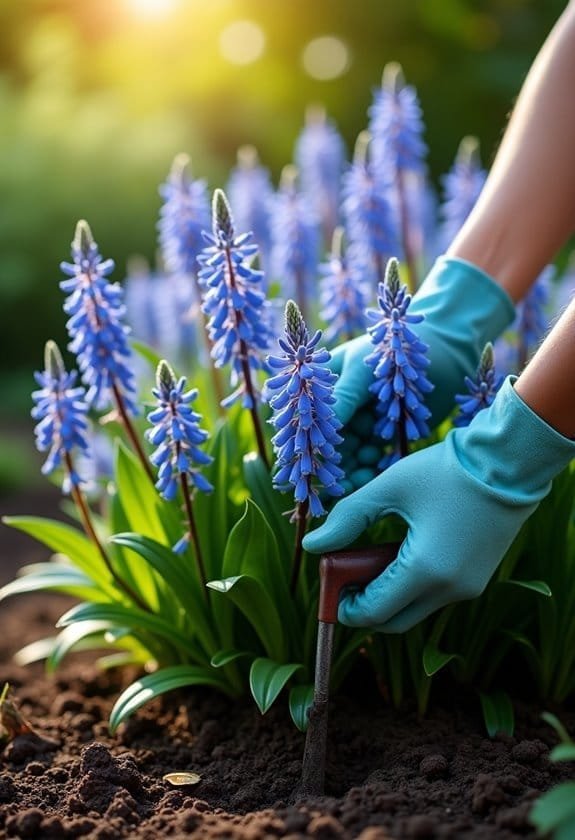
Caring for Amsonia tabernaemontana, known as Eastern Bluestar, requires attention to its sunlight needs, soil preferences, and ongoing maintenance practices.
It thrives best in locations providing at least four hours of sunlight daily while favoring well-drained, moist soils for ideal growth.
As gardeners engage in regular tasks such as deadheading and occasionally staking to maintain its form, they'll find that this perennial not only beautifies their landscape but also becomes a resilient companion in their garden design.
Planting Tips
When planting Eastern Bluestar (Amsonia tabernaemontana), timing is vital for successful establishment. Ideally, gardeners should plant during the dormant season, specifically between April to May or in October, to guarantee the best outcomes.
It's essential to adhere to the packaging guidance regarding planting depth—typically recommended at around 1 to 2 inches—and root orientation, as these factors notably impact healthy growth.
The Eastern Bluestar thrives in full sun but possesses the adaptability to tolerate partial shade, making it an excellent choice for varied garden settings. Once positioned, attention to root care is paramount; confirming the soil is well-drained yet capable of retaining moisture helps the plant acclimate.
Incorporating mulch around the base of the plant delivers multiple benefits, such as moisture retention and weed suppression during the establishment phase. This protective layer, typically 2 to 3 inches thick, nurtures the roots while allowing enough air and water penetration.
Ongoing Care
Ongoing care for Eastern Bluestar (Amsonia tabernaemontana) is fundamental to guarantee its thriving growth and vibrant display.
Regular deadheading, a significant pruning technique, should be practiced after blooming to prevent unwanted self-seeding and stimulate the plant's overall vitality. This native perennial flourishes in well-drained, moist soils, demonstrating remarkable tolerance for varying conditions, which makes it a stellar choice for rain gardens.
A thoughtful fertilization schedule, ideally applied in early spring when the plant begins to emerge, can enhance blooming and bolster foliage quality. Fertilizers rich in phosphorus promote flower production, while balanced options support overall health.
During the growing season, Eastern Bluestar prefers full to part sun exposure, requiring at least four hours of sunlight daily for peak performance.
Seasonal observations are essential for understanding the plant's needs. Though low maintenance due to its drought tolerance, careful attention during prolonged dry spells is necessary, particularly for newly planted specimens.
As autumn approaches, gardeners can revel in the spectacular change of foliage to a striking yellow, enhancing garden aesthetics while providing important shelter for wildlife during the winter months.
Suggested Companions
Pairing Eastern Bluestar (Amsonia tabernaemontana) with other native plants can transform a garden into a flourishing habitat for pollinators. Incorporating species like Swamp Milkweed and Coneflower not only attracts beneficial insects but also creates a vibrant tapestry of seasonal colors. This arrangement celebrates biodiversity, inviting hummingbirds and butterflies to a shared ecosystem where each plant reinforces the others' strengths.
For ideal growth, maintaining a mulch layer around the Eastern Bluestar is essential. This practice helps retain soil moisture and suppresses weeds, ensuring that both Eastern Bluestar and its companions thrive together. Regular deadheading after blooming prevents excessive self-seeding, keeping the garden visually appealing and well-shaped. Additionally, including plants like Guelder Rose provides a wildlife food source that supports a variety of birds during winter.
Furthermore, interplanting with drought-tolerant perennials, such as Black-eyed Susan and Beebalm, promotes sustainability. Both companions prefer similar light conditions, flourishing in sunny to medium shade areas.
This strategic plant layering not only enriches the visual dynamics of the garden but also supports the resilience of Eastern Bluestar, which thrives in average to moist soils once established. Ultimately, such thoughtful combinations of native species lead to a more harmonious and productive landscape for wildlife.
Common Issues
While Amsonia tabernaemontana exhibits considerable resilience, it can still encounter a few pest and disease challenges.
Common issues may include aphids and root rot, which can threaten its thriving foliage and overall health if not promptly addressed.
Understanding these potential problems equips gardeners with the knowledge to take proactive measures, ensuring this exquisite perennial continues to flourish in their landscapes.
Pests/Diseases
Eastern Bluestar (Amsonia tabernaemontana) generally sails through garden challenges due to its strong resistance to pests and diseases. This resilient plant enjoys an inherent advantage, as its sap is toxic to mammalian herbivores, effectively deterring deer and other browsing animals from wreaking havoc.
Occasionally, however, gardeners may encounter aphids, which, although they can be a nuisance, rarely inflict considerable harm on the plant's overall health or growth.
To guarantee ideal pest resistance strategies, gardeners should implement regular maintenance practices, such as vigilant monitoring for aphids and other potential infestations.
Additionally, disease prevention techniques are essential, particularly given that fungal diseases can arise in persistently wet conditions. Consequently, ensuring proper drainage is crucial; it greatly minimizes risk while promoting a thriving environment for Eastern Bluestar.
Incorporating routine maintenance tips, like deadheading spent blooms, fosters not only a better aesthetic but also encourages healthy growth. Furthermore, understanding that some native plants, like Herb Robert, can become invasive is important for maintaining garden biodiversity.
Solutions
Addressing common issues with Eastern Bluestar requires a proactive approach to guarantee its continued health and aesthetic appeal. Implementing effective planting strategies is essential; these resilient plants thrive best in well-drained, moist soils while tolerating diverse conditions. Positioning them to receive at least 4 hours of sunlight daily enhances their growth, as insufficient light can lead to weak, leggy stems. In areas with partial shade, staking can provide needed support.
Seasonal maintenance practices like deadheading are important for promoting vigorous blooming and preventing unwanted self-seeding. By routinely trimming spent flowers, gardeners can encourage the plant's energy to focus on producing new blooms rather than setting seeds.
Although Eastern Bluestar is remarkably resilient and requires low maintenance, consistent pest prevention strategies remain advisable. Regular monitoring for potential infestations allows for early intervention, which is necessary despite the plant's natural resistance to herbivores due to its toxic sap.
These thoughtful care techniques guarantee not only the plant's longevity but also its stunning visual appeal in gardens, reinforcing the importance of diligence in maintaining Eastern Bluestar's health.
Summary
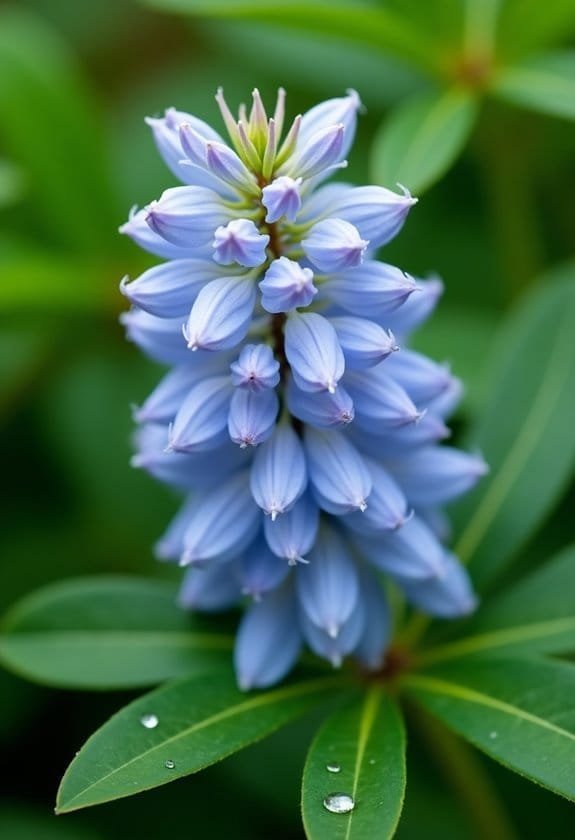
Amsonia tabernaemontana, commonly known as Eastern Bluestar, consistently captivates gardeners with its beautiful light blue star-like flowers that bloom from April to May. This native perennial reaches heights of 2 to 3 feet, with a spread of about 3 feet, thriving in conditions ranging from full sun to medium shade.
Its preference for well-drained, moist soils makes it an excellent candidate for landscape design, particularly in rain gardens.
With its vibrant foliage evolving to a brilliant yellow in fall, Eastern Bluestar not only enhances aesthetic appeal but also offers significant cultural and ecological contributions. This plant supports a variety of pollinators, including hummingbirds and butterflies, thereby reinforcing the importance of biodiversity.
Its presence in landscapes fosters ecological balance while serving as a resilient option for gardens. Importantly, the plant's resistance to deer deters common foragers, making it a smart choice for deer-prone areas.
Amsonia tabernaemontana's adaptability across USDA hardiness zones 4-9 allows it to flourish along woodland edges and well-drained forest slopes.