Anchusa azurea, or Large Blue Alkanet, enchants with its brilliant blue flowers and distinct biennial or short-lived perennial nature, reaching heights of up to five feet. Thriving in well-drained, moderately fertile soils, it flourishes in full sun to partial shade, making it a versatile garden choice. This species, native to the Mediterranean region, attracts essential pollinators like bees and butterflies, fostering local biodiversity. Careful maintenance is necessary, as it can be susceptible to pests and requires good drainage to prevent soil rot. Its aesthetic allure and ecological contributions make it a compelling addition to any landscape, opening pathways to further exploration.
Main Points
- Botanical Profile: Anchusa azurea, commonly known as Large Blue Alkanet, reaches up to 5 feet with vibrant blue tubular flowers blooming from late spring to early summer.
- Growth Requirements: Thrives in moderately fertile, well-drained soil under full sun to partial shade, preferring soil pH between 6.0 and 8.0.
- Hardiness Zones: Suitable for growing in USDA hardiness zones 3 to 8, showing drought tolerance once established.
- Pollinator Friendly: Attracts essential pollinators like long-tongued bees and butterflies, supporting local biodiversity during its extensive flowering period.
- Care and Maintenance: Requires staking for support, regular deadheading to manage self-seeding, and vigilant monitoring for pests and diseases such as powdery mildew.
Introduction
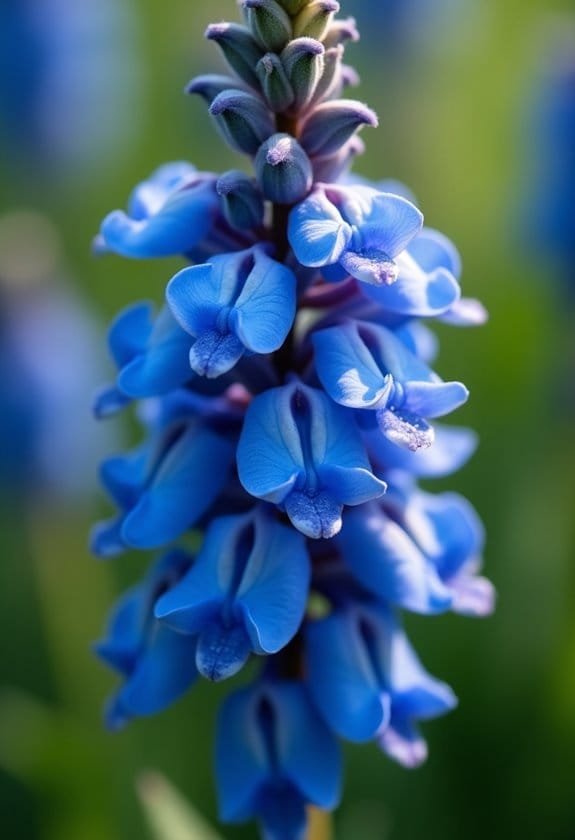
Anchusa azurea, commonly referred to as Large Blue Alkanet or Italian Bugloss, is a striking biennial or short-lived perennial that reaches heights of 3 to 5 feet.
Known for its vibrant blue flowers, which bloom from late spring to early summer in loose clusters, this plant captivates garden enthusiasts and nature lovers alike.
Its adaptability to various soil types and conditions, coupled with its fascinating historical uses, underscores its significance in horticulture and cultural practices.
Common Name
Often called the Italian bugloss or large blue alkanet, this stunning plant has captured the attention of gardeners and nature enthusiasts alike. Its bright blue flowers can create a striking focal point in any garden, embodying the beauty of the sky itself. The name "azurea," derived from Latin, translates to "sky blue," perfectly encapsulating the vibrant hue that distinguishes this species.
The Italian bugloss, or large blue alkanet, showcases a unique combination of charming aesthetics and rich botanical heritage. Additionally, it's often referred to as blue bugloss, further highlighting its fascinating color and flowering behavior.
With the ability to reach up to 3 feet in height, this plant possesses a robust presence, making it an ideal choice for borders or naturalized areas.
Anchusa azurea's various common names reflect its popularity across diverse regions, revealing how different cultures embrace its striking beauty. Understanding these names aids in the plant's identification, as it's sometimes pronounced "an-CUE-sah."
Ultimately, the Italian bugloss stands as a demonstration to the wonders of nature, inviting a deeper appreciation for its underlying diversity and visual allure.
Scientific Name
The scientific name of the large blue alkanet is Anchusa azurea, which is classified under the Boraginaceae family. This classification highlights its relation to various other plants known for their distinctive characteristics. The name "azurea," derived from Latin, directly translates to "sky blue," emphasizing the plant's striking blue flowers. These eye-catching blooms are often clustered, forming a vibrant display that attracts pollinators and gardeners alike.
Native to the Mediterranean region, Anchusa azurea thrives across central and southern Europe, as well as parts of western Asia. It exhibits an upright growth habit, reaching impressive heights of up to 120 cm (4 feet).
The stems and leaves of this species are covered in fine hairs, which can irritate the skin, necessitating cautious handling, especially for those unfamiliar with the plant's attributes.
Often referred to as "Italian Alkanet," this plant not only captivates with its dazzling blue flowers but also adds a layer of complexity to gardens and natural landscapes. Its striking presence and rich heritage make Anchusa azurea a remarkable species worthy of exploration and appreciation within its native habitats and beyond.
Overview
Known for its striking beauty, Anchusa azurea, or Italian bugloss, enchants gardeners and nature enthusiasts alike. This biennial or short-lived perennial, which can reach heights of up to 5 feet, showcases stunning clusters of bright blue flowers that bloom from late spring to early summer. The enthralling blossoms electrify gardens, presenting an inviting spectacle for pollinators. Additionally, its extensive flowering period can attract a variety of pollinators like bees that are essential for ecosystem health.
Anchusa azurea thrives best in full sun, demanding well-drained, moderately fertile soils for ideal growth. Though it tolerates light shade, this plant's resilience becomes apparent in its drought tolerance once established.
Native to the diverse landscapes of Europe, North Africa, and Asia, alkanet commonly flourishes in arable fields, waste areas, and roadsides. Remarkably, its adaptability allows it to thrive in hardiness zones 3 to 8, making it suitable for various climates. The plant is known for attracting essential pollinators, similar to Campanula glomerata, supporting local biodiversity in gardens.
While this plant's ability to self-seed adds to its allure, it must be cultivated with care, as favorable conditions can lead to invasive tendencies. The Italian bugloss serves not only as an aesthetic enhancement but also plays an important role in supporting local ecosystems, making it a cherished addition to any garden endeavor.
Key Features
Anchusa azurea showcases several impressive features that contribute to its popularity among garden enthusiasts.
Standing between 3 and 5 feet tall, this perennial plant captivates with its rich, deep blue flowers, blooming in loose clusters for about four weeks from late spring to early summer.
Its robust growth habit, along with its striking appearance, invites both admiration and ecological benefits, as it attracts essential pollinators like bees and butterflies.
Growth Size
Typically reaching heights of 3 to 5 feet (90-150 cm), Anchusa azurea showcases a bristly, upright growth habit that's sparsely branching. The blue alkanet's structure features narrow, lanceolate leaves, approximately 1 to 2 inches wide, which are covered with long hairs that can prick the skin upon contact. This distinctive growth habit not only enhances the plant's resilience but also contributes to its striking presence in garden landscapes.
During late spring, Anchusa azurea enters a vibrant phase, producing large, brilliant blue flowers that can reach up to 1 inch in size. These stunning blossoms emerge in loose clusters and typically last for about four weeks, attracting pollinators and garden enthusiasts alike.
While this species can self-seed, gardeners should be aware that its vigorous growth may necessitate staking to prevent overreaching, especially under prime conditions.
A notable cultivar, Anchusa azurea 'Loddon Royalist,' offers particularly rich gentian-blue flowers, drawing even more attention to its impressive stature. The combination of size, growth habit, and spectacular blooms makes blue alkanet an exceptional choice for adding height and color to any garden setting.
Appearance
The striking appearance of Anchusa azurea, also called Large Blue Alkanet, is hard to miss in any garden. This remarkable plant showcases vibrant deep blue flowers, often regarded as some of the most intense hues found in nature.
Typically reaching heights of 3 to 5 feet (90 to 150 cm), its upright growth is complemented by narrow, lanceolate leaves. These leaves, resembling elongated ovals, not only contribute to the plant's elegance but also serve practical purposes, such as water retention and maximizing sunlight exposure.
Each flower exhibits a tubular shape, shifting from delicate pink or purple buds to the vivid ultramarine blossoms that capture admiration. The flower clusters are specifically designed for efficient pollinator attraction, their throat densely tufted with white hairs to provide texture and enhance visual appeal.
However, it's important to note that the plant's bristly exterior, covered with long hairs, can cause skin irritation, cautioning handlers. Therefore, while Anchusa azurea offers striking beauty, it also demands respectful interaction.
Ultimately, its stunning features make it an exceptional addition to any landscape, inviting curiosity and appreciation for nature's artistry.
Flowering Season
There's something enchanting about the flowering season of Anchusa azurea, which usually spans from late spring to early summer. This intriguing period typically lasts around four weeks, with flowering occurring from March to June in southern Europe. The plant showcases vibrant blue flowers that emerge in loose clusters, creating a stunning visual spectacle that delights gardeners and nature enthusiasts alike.
As the buds develop, they undergo a remarkable color change—beginning as delicate shades of pink or purple before maturing into an intense ultramarine blue. Such a transformation isn't only visually appealing but also indicative of the plant's health and liveliness during the flowering season.
Gardeners often engage in deadheading, a practice where spent flowers are removed, as it promotes continuous blooms and curtails unwanted self-seeding. This proactive approach not only prolongs the season of splendor but also encourages further growth and rejuvenation of the plant.
Anchusa azurea, with its exquisite blooms and charming lifecycle, enriches any garden setting, embodying the beauty and resilience of nature. Consequently, its flowering season becomes a celebration of life, color, and ecological harmony.
Growing Requirements
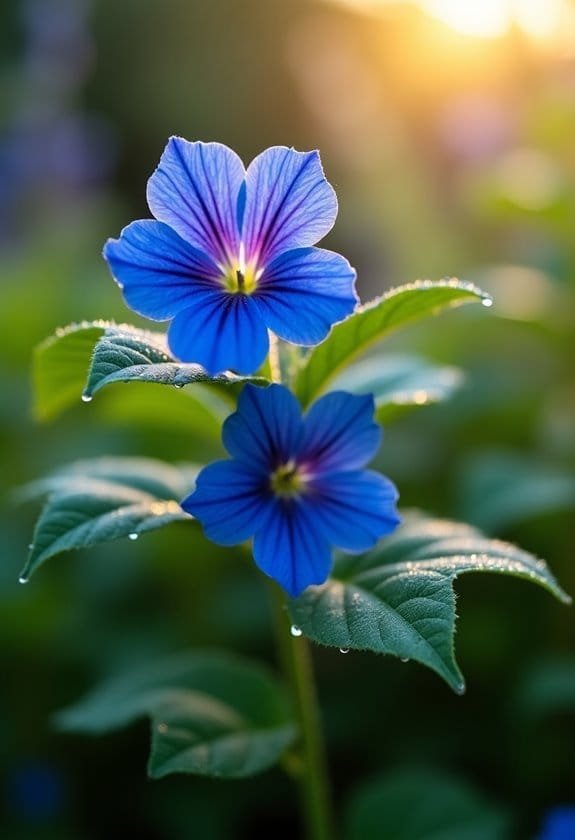
Anchusa azurea flourishes best under the warm embrace of full sun to partial shade, creating a vibrant display in any garden.
It demands well-drained, moderately fertile, and consistently moist soils, particularly during its formative growth stages, helping to establish a robust root system.
Adequate watering and thoughtful mulching not only guarantee the plant's resilience but also enhance its visual appeal, making it a worthy addition to diverse landscapes.
Light
For ideal growth and vibrant blooms, providing Anchusa azurea with at least six hours of direct sunlight each day is vital. This stunning plant thrives in full sunlight, which is essential for its best growth and impressive flowering during the warmer months.
While it can tolerate light shade, extended periods away from direct light could lead to diminished flowering and reduced overall vigor, impacting its aesthetic appeal. Bugloss (Anchusa arvensis) also shares a preference for full sun conditions, highlighting the importance of sunlight in the growth of many related species.
In choosing a location, gardeners should aim for bright, sunny spots that avoid heavy clay or poorly draining soil. Being established, Anchusa azurea exhibits drought tolerance, allowing it to withstand dry spells with relative ease. However, during its first growing season, regular watering can greatly enhance its establishment and guarantee that it thrives. By accommodating its sunlight and water needs, gardeners can cultivate a healthy environment for this striking perennial.
Ultimately, recognizing the importance of full sunlight not only fosters the growth of Anchusa azurea but also enhances the beauty of garden spaces, as their charming blue flowers command attention and admiration throughout the season. Additionally, like Salad Burnet, it can thrive in various soil conditions, which can further benefit gardeners looking to diversify their plantings.
Soil
What kind of soil does Anchusa azurea prefer for ideal growth? This plant thrives best in moderately fertile, well-drained soils that facilitate proper moisture retention without leading to waterlogging.
Excess moisture can result in detrimental soil rot, so ensuring good drainage is vital. While Anchusa azurea can endure heavy clay soils, it flourishes in well-aerated conditions where air circulation allows for optimal growth.
The ideal pH level for the soil ranges between 6.0 and 8.0, accommodating both acidic and alkaline environments. Establishing this plant in suitable soil not only supports its growth but also enhances its remarkable drought tolerance; once rooted, it requires considerably less frequent watering, particularly during drier periods.
To further assist in moisture retention, especially in arid climates, mulching around the base of the plant is highly recommended. This practice not only helps to maintain soil moisture but also protects the root system during colder months, promoting overall plant health.
Fundamentally, providing Anchusa azurea with the right soil conditions is a vital step in cultivating this vibrant specimen, ensuring it thrives beautifully in its garden setting.
Water
To thrive effectively, Anchusa azurea requires a careful balance of moisture, especially during its establishment phase. Initially, this vibrant plant demands regular watering to support its growth and development. The soil must remain consistently moist but well-drained, as excessive moisture can lead to root rot, compromising the plant's health. Therefore, maintaining the right level of water is vital.
During the establishment phase, diligent gardeners should consider mulching around the base of the plant. This technique not only helps retain soil moisture but also creates a microenvironment that can safeguard against drought conditions.
Once Anchusa azurea is established, it demonstrates impressive drought resilience, allowing it to endure longer periods without water. Consequently, the need for frequent watering diminishes, particularly during warmer months when it can tolerate light shade.
Nevertheless, it's important to monitor moisture levels during extreme weather, ensuring this stunning bloom continues to flourish. By understanding and addressing the water requirements of Anchusa azurea, caretakers can cultivate an environment that fosters vibrant foliage and blooms, ultimately allowing this plant to exhibit its full potential in gardens and landscapes.
Temperature
Anchusa azurea flourishes in a range of temperate climates, particularly thriving in hardiness zones 3 to 8. This plant prefers full sun exposure, which supports its vibrant growth and distinctive azure flowers.
While it flourishes in direct sunlight, it can also tolerate light shade, especially during hot summer months when intense heat can stress less resilient species. The ability to manage varying light conditions allows gardeners flexibility in their planting schemes.
An exceptional feature of Anchusa azurea is its drought tolerance once established. Although the large blue alkanet requires moderate watering during its growth phase to maintain healthy foliage and blossoms, it can withstand periods of low moisture without compromising vigor.
For maximum performance, conditions should include moderately fertile, well-drained soils that retain some moisture, yet guarantee that the roots never encounter rot.
Growing up to 5 feet tall, it's crucial to plan for adequate space and structural support in garden layouts.
Pollinator Criteria
Anchusa azurea attracts a variety of pollinators, particularly long-tongued bees and butterflies, thanks to its vibrant blue flowers rich in nectar.
The flower's tubular structure facilitates easy access for these pollinators, promoting diverse interactions during the peak blooming period from late spring through early summer. Additionally, like Vipers Bugloss, this plant's extended flowering season supports local pollinator populations and enhances biodiversity in its habitat. The ability of these plants to thrive in well-drained soils further aids in establishing robust environments for pollinator activity.
Attracted Pollinators
The Large Blue Alkanet is a magnet for pollinators, drawing in a diverse range of bees and butterflies with its striking blue flowers. These vibrant blooms, featuring a tubular structure, offer accessible nectar and pollen, attracting both local and visiting species.
Flowering from late spring to early summer guarantees pollinators have a reliable food source during their most active months, fostering an environment rich in biodiversity. Additionally, the extended blooming period aligns with pollinator activity, ensuring numerous insects benefit from the plant's nectar.
Gardeners who choose to cultivate Anchusa azurea not only enhance the aesthetic value of their gardens but also promote essential ecosystems. By providing a haven for important insects, they contribute to the overall health and sustainability of local environments.
For those in Italy, a simple email address inquiry can yield indispensable tips on cultivating this plant effectively, as they may share insights on how to cut back the foliage to encourage fuller blooms and healthier plants.
Moreover, the bristly texture of the leaves offers shelter for beneficial insects, further enriching the ecosystem. Additionally, like the Rough Hawkbit, Anchusa azurea serves as a vital nectar source for various pollinators, enhancing urban biodiversity.
Therefore, Anchusa azurea serves as a significant player in supporting pollinator populations, making it a valuable addition to any garden enthusiast's repertoire.
Pollination Method
Garden enthusiasts will appreciate that the pollination method of Anchusa azurea greatly relies on its striking blue flowers and their appealing characteristics.
These bright blooms attract various pollinators, particularly bees and butterflies, which seek the nectar and pollen nestled within. The flower morphology of Anchusa azurea—especially its tubular structure—encourages foraging by long-tongued bees, creating a perfect alliance for effective pollination.
This intricate design facilitates access, allowing pollinators to efficiently gather resources while inadvertently transferring pollen.
Pollination typically occurs during late spring to early summer, aligning beautifully with the plant's four-week flowering period. The vivid coloration of Anchusa azurea enhances its visibility, acting as a beacon for pollinators, thereby promoting successful pollination and subsequent seed production. Additionally, like the Common Poppy, the vibrant flowers of Anchusa azurea serve as vital resources for beneficial insects throughout the growing season.
As these beneficial insects traverse the blossoms, their actions contribute substantially to ecosystem interactions, as the presence of the plant aids in sustaining diverse insect populations. Notably, similar to Stinking Chamomile, Anchusa azurea's bloom attracts pollinators, showcasing its importance in promoting pollination within the garden ecosystem.
Ultimately, the delicate dance between Anchusa azurea and its pollinators illustrates the intricate web of life within garden landscapes.
This relationship not only fosters plant reproduction but also bolsters ecosystem health, offering a flourishing environment for numerous species.
Care & Maintenance
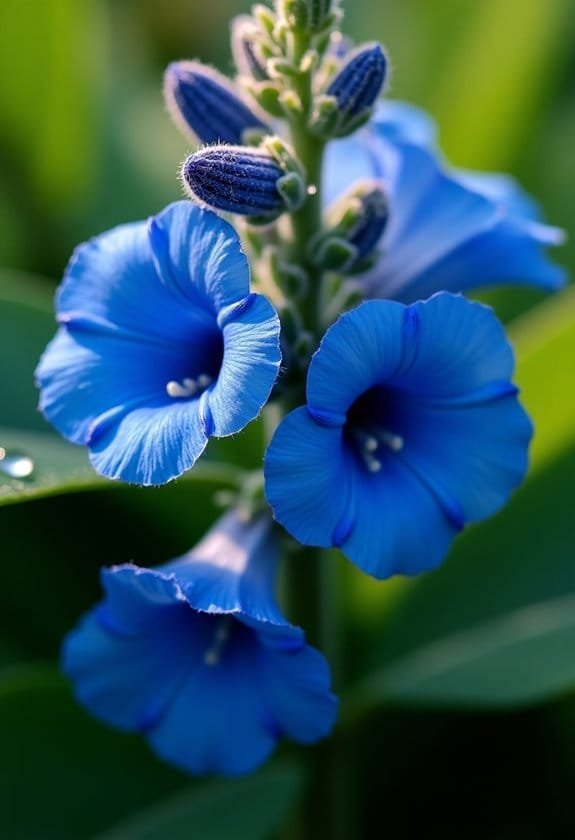
When cultivating Anchusa azurea, proper care and maintenance are essential to guarantee vibrant growth and prolonged blooming.
Regular practices, such as deadheading and cutting back the plant after flowering, not only enhance its aesthetic appeal but also promote overall health by preventing overcrowding.
Additionally, selecting compatible companions within the garden can create a harmonious ecosystem that supports the plant's well-being and maximizes its ornamental potential.
Planting Tips
Successful cultivation of Anchusa azurea hinges on a few key planting tips that guarantee vibrant growth and longevity. First, plant this beautiful species in well-drained, moderately fertile soil; good drainage is critical to prevent crown rot, a condition that could compromise the plant's health.
Ideally, select a site that receives full sun, though the plant can tolerate light shade, especially during hotter summer months when excessive heat might stress its growth.
When considering plant spacing, aim for approximately 18 to 24 inches apart. This spacing not only promotes healthy air circulation but also prevents overcrowding, which can lead to diseases.
Additionally, integrating companion planting strategies, such as pairing with other drought-tolerant perennials, can enhance the garden's biodiversity and appeal.
Routine seasonal care is essential; deadheading spent flowers encourages continuous blooming while limiting self-seeding, extending the plant's aesthetic contribution.
Furthermore, to maintain vigor, it's advisable to divide the clumps every 2-3 years, ensuring that each section has ample resources for robust growth.
Finally, cutting back the plant to the crown after flowering prepares it for renewed energy in the upcoming seasons.
Ongoing Care
For maintaining the vibrancy of Anchusa azurea, ongoing care is crucial. Employing effective deadheading techniques throughout the blooming period encourages continuous flowering and minimizes self-seeding, guaranteeing the plant remains visually stunning.
After flowering ends, cutting the plant back to the crown not only extends its longevity but also promotes healthy regrowth, preparing it for subsequent growing seasons. Red clover's ability to fix nitrogen in the soil can be beneficial for companion planting with Anchusa azurea.
Dividing Anchusa azurea every 2-3 years greatly enhances vigorous growth and prevents overcrowding, which can stifle its ability to thrive. Adequate spacing allows for ideal air circulation, creating healthier specimens.
Additionally, gardeners should remain vigilant with pest management, monitoring for common threats like leaf-mining flies and powdery mildew, although major diseases are seldom a concern.
For taller varieties, staking may be necessary to provide essential support, preventing them from bending or breaking in windy conditions—a fate that no lush bloom deserves.
This attention to detail guarantees that each plant can flourish, displaying its remarkable blue flowers to their fullest potential, complementing any garden space beautifully. Overall, these ongoing care practices contribute greatly to the lasting health and allure of Anchusa azurea. Furthermore, the extensive root system of Anchusa azurea enhances soil health, similar to how it benefits the soil when growing alongside other plants like Yarrow.
Suggested Companions
Choosing the right companions for Anchusa azurea can considerably enhance both its beauty and health in the garden. Companion planting not only elevates garden aesthetics but also promotes a thriving ecosystem.
For ideal growth, it's advisable to pair Anchusa azurea with sun-loving plants like salvias, rudbeckias, and echinaceas. These species bring a vibrant color palette while thriving in well-drained soil, ensuring a harmonious environment.
To attract valuable pollinator visitors, consider incorporating flowering companions such as lavender and catmint. These pollinator attractors offer bees and butterflies essential foraging opportunities, contributing to a dynamic garden ecosystem.
However, it's critical to avoid planting Anchusa azurea near aggressive spreaders, which can lead to resource competition and invasive growth due to its self-seeding nature.
Additionally, integrating taller companions such as hollyhocks or delphiniums can provide structural support and enhance visual intrigue, creating an engaging layered effect. Echinacea purpurea, with its immune-boosting properties, can also be a beneficial addition to the garden ecosystem.
Maintaining proper spacing between Anchusa azurea and its companions facilitates adequate airflow, reducing the risk of moisture-related issues like powdery mildew.
Thoughtful companion choices consequently enrich the garden, fostering health, beauty, and ecological balance.
Common Issues
Anchusa azurea, while generally resilient, can face several common challenges that affect its health and appearance.
Leaf-mining flies may occasionally damage the foliage, and in humid conditions, the plant can succumb to powdery mildew, creating unsightly and detrimental effects.
Effective management involves ensuring good drainage to prevent crown rot, while vigilant monitoring and deadheading practices help maintain vigorous growth and discourage invasiveness.
Pests/Diseases
Gardeners should be aware that Anchusa azurea can face several common pests and diseases that may impact its health.
One significant concern is crown rot, especially prevalent in poorly drained soils. This fungal disease leads to plant decline and potential death if not addressed promptly. Symptoms identification is critical; gardeners should watch for wilting or discolored plant bases.
Another issue involves leaf-mining flies, which burrow into the leaves, creating visible trails and holes that can compromise the plant's vigor. While these pests aren't overly damaging, effective pest management guarantees they don't escalate into major issues.
In humid conditions, gardeners may also notice powdery mildew, which manifests as a white, powdery coating on leaf surfaces. This fungal infection diminishes the plant's aesthetic appeal and can affect overall health.
Consistent monitoring for such pests, along with maintaining good air circulation, greatly aids in disease prevention.
Although not prone to severe pest problems, careful attention to soil drainage and the removal of affected parts can effectively manage these minor ailments, ultimately guaranteeing that Anchusa azurea thrives in the garden.
Solutions
Addressing the common issues that may arise with Anchusa azurea is essential for maintaining its health and beauty. One significant concern is crown rot, which thrives in overly moist conditions. To combat this, make certain well-drained soil that can adequately support the plant's nutrient requirements.
In landscape design, regular deadheading promotes continuous blooms while limiting self-seeding, preventing Anchusa from becoming invasive and overtaking adjacent plants.
For taller varieties, staking might be necessary, especially in windy environments. Proper support helps prevent the plants from toppling over, thereby preserving their elegant stature.
It's equally important to monitor for pests like leaf-mining flies, which can compromise their vigor. Addressing any pest infestations swiftly will keep plants looking their best.
After flowering, cutting back the plant to the crown fosters fresh growth, extending its lifespan and enhancing its overall aesthetics for the next season.
Through proper plant propagation techniques, gardeners can thrive on their success, making certain healthy and vibrant displays in both garden beds and borders. Ultimately, attention to these solutions guarantees that Anchusa azurea can flourish, contributing splendidly to the landscape. Additionally, understanding the potential for invasive species management is crucial for maintaining balance in diverse environments.
Summary
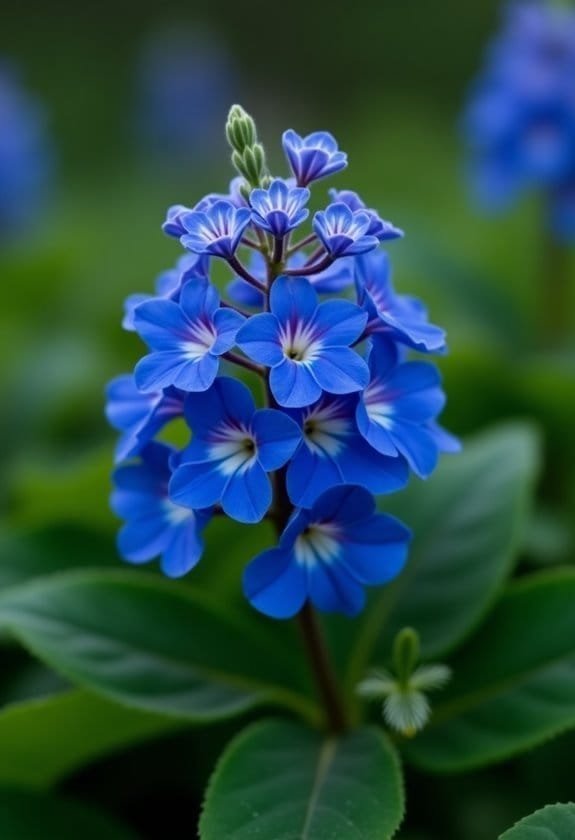
One may find Anchusa azurea, commonly known as Italian bugloss or large blue alkanet, to be an enchanting addition to any garden due to its stunning bright blue flowers that bloom from late spring to early summer.
This robust biennial or short-lived perennial can reach heights of 3 to 5 feet, thriving in full sun and well-drained, moderately fertile soils. Its cultural significance extends beyond its beauty; historically, the plant's roots were utilized to produce a vibrant natural dye, reflecting its utilitarian aspects.
However, gardeners should be mindful of its self-seeding behavior, which can lead to invasive growth if not properly managed. Effective invasion management practices, such as deadheading spent blooms and dividing the plant every 2 to 3 years, are crucial for maintaining its desired presence in landscapes.
This plant not only adds visual allure but also plays a critical role by attracting beneficial pollinators, including bees and butterflies, which are essential for ecosystem health.
Anchusa azurea, suitable for USDA zones 3 to 8, serves as a reminder of nature's interconnectedness, balancing beauty, utility, and responsibility in garden cultivation.