Wild Angelica, or *Angelica sylvestris*, is a enchanting perennial plant that thrives in the moist environments of Europe, often reaching heights of 1 to 2 meters. Its hollow, ridged stems exhibit a subtle purple tint, while clusters of delicate white or pink flowers form robust umbels during the blooming season from July to September. Preferring rich, damp soils, this species supports a diverse array of pollinators, enhancing ecosystem importance. However, proper care is essential, as unchecked growth can threaten native flora. Understanding its complex interactions within ecosystems opens the door to deeper insights about this intriguing plant and its ecological significance.
Main Points
- Wild Angelica (*Angelica sylvestris*) is a perennial plant found in moist environments across Europe, thriving in damp meadows and wet woodlands.
- The plant features hollow, ridged stems and produces white or pink flowers in umbels during its flowering season from July to September.
- It prefers rich, moist soils and requires full sun or partial shade for optimal growth, with regular watering essential.
- Wild Angelica attracts pollinators, enhancing biodiversity, but can outcompete native species if unchecked, necessitating management strategies.
- Historically, it has culinary and medicinal uses, with care involving regular watering, pruning, and pest management to sustain plant health.
Introduction
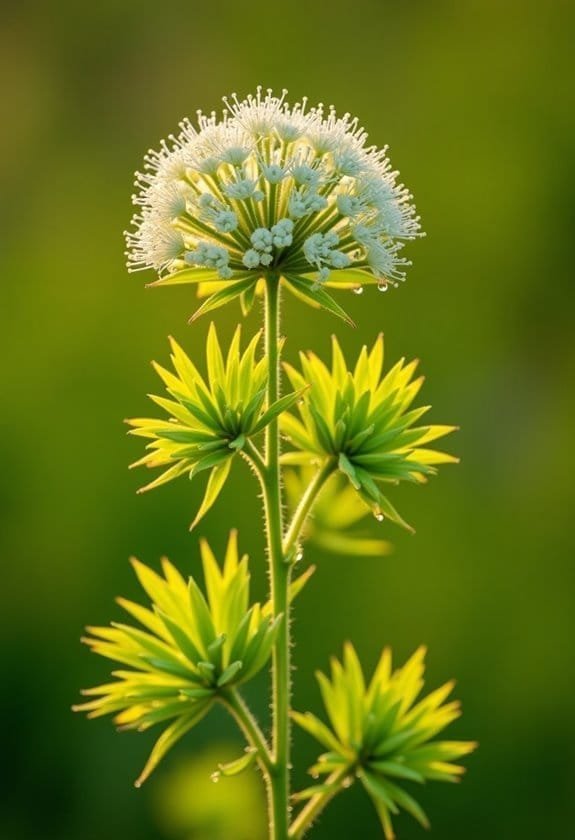
*Angelica sylvestris*, widely known as Wild Angelica, is an impressive perennial plant that can reach heights of up to 2 meters.
Found primarily in moist habitats across Europe, its striking hollow stems and delicate white or pinkish flowers arranged in umbels create a notable presence in meadows and woodlands.
Beyond its aesthetic appeal, this species plays a crucial role in sustaining diverse insect life, making it an essential component of its ecosystem.
Common Name
In the wild, this species is commonly known as Wild Angelica, reflecting its natural growth beyond cultivated gardens. This name encapsulates its essence, as *Angelica sylvestris* thrives in damp meadows, ditches, and wet woodlands. The plant effortlessly reaches heights of up to 2 meters, showcasing its robust character amidst the flora of its environment.
Wild Angelica's hollow, ridged stems, often tinged with purple, stand as a representation of its adaptability and resilience in its native habitats.
The prominence of Wild Angelica becomes particularly evident during its flowering period from July to September. During this time, the plant produces stunning, rounded umbels of flowers that can be strikingly white or, at times, delicately pinkish. These flowers serve not only as a visual delight but also attract various pollinators, contributing to the rich tapestry of woodland biodiversity. Additionally, Wild Angelica plays a key role in supporting pollinator diversity and promoting healthy ecosystems during its blooming season.
Scientific Name
The scientific name for Wild Angelica, *Angelica sylvestris*, encapsulates its identity within the plant kingdom. Belonging to the Apiaceae family, often referred to as the carrot family, it shares common characteristics with various well-known herbs. The specific epithet *sylvestris* highlights its natural habitat, indicating a fondness for growth in woodland and damp environments where it thrives.
As a perennial species, *Angelica sylvestris* typically reaches impressive heights of 1 to 2 meters, displaying a stately form amid its surroundings. The plant features distinct purple-tinged, hollow stems, which, along with its striking white to pinkish flowers, create a gorgeous display.
These flowers, organized in robust umbels, bloom from July to September, attracting an array of pollinators.
Wild Angelica is prevalent across various regions, particularly in Europe, where it plays an important ecological role in wet habitats. Its presence not only enriches these ecosystems but also signifies the interconnectedness of plant species.
Understanding the scientific designation of Angelica allows for better appreciation of its complex life cycle and contributions to biodiversity.
Overview
What makes *Angelica sylvestris*, or Wild Angelica, remarkable is its towering presence and ecological significance in temperate regions, especially across Europe. This impressive perennial plant can reach heights of up to 2 meters, making it a striking feature in various landscapes.
Wild Angelica flourishes in damp meadows, ditches, and wet woodlands, where it contributes to the biodiversity of these habitats, attracting numerous pollinators with its robust, rounded umbels of white or pink flowers that bloom from July to September.
Identifiable by its distinctive purple stems, which are hollow, Wild Angelica also showcases lower leaves that are intricately divided, a characteristic that adds to its unique appearance. As the plant matures, it produces flattened, oval fruits complete with membranous wings, aiding in its reproduction.
Historically, this species was cultivated for its culinary uses, with parts of the plant still finding roles in food preparation and even dyeing processes today. Hence, Wild Angelica serves not only as a functional component of its ecosystem but also as a link to human culture, fulfilling both ecological and historical narratives in the regions it inhabits.
Key Features
*Angelica sylvestris* stands out in the botanical world, often reaching impressive heights of up to 2 meters, showcasing its robust and hollow stems that can exude a charming purple hue.
Its delicate white or pink flowers bloom from July to September, forming rounded umbels that not only attract pollinators but also add visual interest to its damp habitats, such as meadows and wet woodlands.
This species captivates observers with its intricate lower leaves, which are elongated and distinctly divided, further enhancing its unique appearance while thriving in moist, rich soils near water sources.
Growth Size
Wild Angelica, or Angelica sylvestris, typically reaches impressive heights of 1 to 2 meters, showcasing its tall and robust nature. This wild plant demonstrates notable adaptability in various habitats, thriving in moist soils often found near riverbanks and meadows. The hollow, ridged stems, which occasionally sport a purple tinge at the nodes, contribute to its striking stature.
The leaves of Wild Angelica are remarkably structured, featuring large, divided lower leaves that exhibit a unique shape—measuring less than 1.5 times longer than they're wide. In contrast, the upper leaves display strongly inflated petioles, enhancing their ability to capture sunlight while providing structural support.
As the growing season progresses, the plant's flowering umbels form, presenting rounded clusters of tiny white or pink flowers, each measuring around 2 mm. These delicate blossoms attract various pollinators, further enhancing the plant's ecological significance.
Following pollination, Wild Angelica produces flattened, oval fruits with thin membranous wings, measuring approximately 4 to 5 mm in length. Such effective reproductive strategies illustrate the plant's robust growth cycle and its essential role in maintaining local biodiversity.
Appearance
Standing tall from 1 to 2 meters, Angelica sylvestris showcases impressive physical characteristics that contribute to its unique identity in the wild. Its robust, hollow stems often display a purple hue, standing out against the green foliage.
The leaves of wild angelica are particularly distinctive, with lower leaves finely divided and exhibiting a shape less than 1.5 times longer than wide. This contrasting leaf architecture not only enhances the plant's visual appeal but also allows it to thrive in its preferred habitats, often found in heavy, clay-rich soils.
The upper leaves possess strongly inflated petioles that lend a striking structure to the plant, further emphasizing its graceful stature. While the flowering season will reveal small white or pinkish flowers arranged in rounded umbels, the pre-flowering appearance remains equally engaging.
As the wild angelica grows, its overall form exudes a verdant vigor, harmonizing with the ecosystems it inhabits. Finally, the flattened oval-shaped fruits, measuring around 4-5 mm long and adorned with thin membranous wings, reflect the plant's adaptability and resilience, completing its engaging profile in nature.
Flowering Season
During the flowering season, which typically spans from July to September, Angelica sylvestris displays its most enchanting features. During this period, the plant showcases robust, rounded umbels adorned with tiny white to pink flowers, creating a visually striking spectacle against its verdant backdrop.
Each umbel, consisting of 15 to 40 rays measuring between 2 to 8 cm, forms a delicate yet intricate arrangement. These moderate-sized flowers are hermaphroditic, cleverly attracting a diverse array of pollinators, such as bees and butterflies, which greatly contribute to the plant's reproductive success.
The flowering process exhibits a staggered blooming pattern; the central umbels produce fruit first, while the peripheral ones retain their flowers longer. This sequential unfolding not only enhances the plant's allure but also guarantees extended opportunities for pollination and subsequent seed maturation.
As the flowers shift, they develop into ripe fruits that turn brown, characterized by their flattened, oval shape and broad lateral wings, signaling successful reproduction.
In light sandy soils, Angelica sylvestris thrives, further emphasizing its adaptability and resilience as it bursts forth in nature's grand display, marking a vibrant chapter in the seasonal cycle.
Growing Requirements
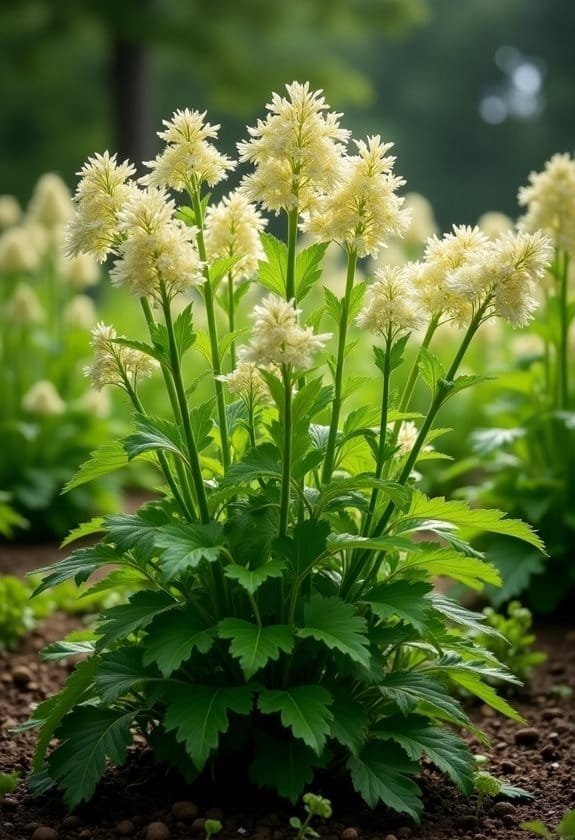
*Angelica sylvestris* flourishes under specific growing conditions, greatly influenced by light, soil, and water requirements.
This adaptable plant thrives in moist, rich soils, often found near water sources, while requiring exposure to either full sun or partial shade to bolster its growth.
Regular watering guarantees that the plant's preference for consistently moist conditions is met, allowing it to thrive within a range of diverse environments. Brooklime is another plant that also requires consistently saturated conditions, showcasing similar habitat preferences. Additionally, these moisture-rich environments are vital for supporting surrounding biodiversity, including various pollinators.
Light
Most plants, including Angelica sylvestris, thrive best with an adequate amount of sunlight. This wild angelica exhibits a unique balance in its light preferences, requiring moderate sunlight exposure while demonstrating significant shade tolerance.
Typically found in open woods, hedgerows, and fields, it flourishes in settings where it can receive both sun and partial shade. While it thrives under conditions of abundant light, the plant can adapt to environments that provide some cover, making it a resilient addition to various landscapes.
With heights reaching up to 2 meters, Angelica sylvestris can effectively accentuate natural gardening schemes. It's essential to understand the implications of light in this plant's growth; too much direct sunlight can stress the plant, especially in regions with intense heat.
Conversely, insufficient light can impede its robust development, leading to weaker stems and reduced flowering potential. Therefore, garden enthusiasts should aim for a harmonious balance in sunlight exposure, ensuring that Angelica sylvestris receives the right mix of light and shade. Moreover, like Horseshoe Vetch, this plant also benefits from well-drained soil, which is crucial for its overall health and growth.
Soil
What conditions make the ideal soil for *Angelica sylvestris*?
This remarkable plant can thrive in a diverse range of soil types, including sandy, loamy, and clay soils. However, it prefers moist, rich soils typically found in damp meadows and marshy areas. Such environments support *Angelica sylvestris*, allowing it to flourish and reach its full potential.
It's essential to guarantee that the soil remains well-draining, as waterlogged conditions can greatly hinder growth and lead to root rot.
While the specific pH isn't critical, maintaining a neutral to slightly acidic soil is generally advantageous for peak growth. The incorporation of organic matter into the soil notably enhances both fertility and moisture retention.
Organic matter retains moisture, which is especially beneficial for *Angelica sylvestris*, given its affinity for moist conditions. By enriching the soil with organic material—such as compost or well-rotted manure—gardeners can create the perfect environment that nurtures the plant's development.
Ultimately, understanding these soil requirements enables both amateur and seasoned horticulturists to cultivate this hardy herb successfully, harnessing nature's resources to yield vigorous, healthy specimens.
Water
For successful growth of *Angelica sylvestris*, gardeners must guarantee consistent moisture in the soil. This plant flourishes in moist, rich soils and often resides in habitats like freshwater marshes and water meadows. To promote ideal growth, one must implement effective water retention strategies.
Maintaining high water availability is essential, as wild angelica tolerates both standing and flowing water conditions, creating lush environments critical for its development. Gardeners should be diligent in utilizing appropriate irrigation methods, especially during the scorching heat of summer when the risk of drought is heightened.
Techniques such as drip irrigation or soaker hoses can provide a steady moisture supply while conserving water. Additionally, mulch serves as an effective moisture management technique, reducing evaporation and enhancing soil texture.
As *Angelica sylvestris* exhibits a remarkably low tolerance for dry conditions, a careful balance of water is key to its survival and productivity. Observing signs of wilting or browning foliage can act as signals for gardeners to adjust their watering regime, ensuring the plant receives the hydration necessary for robust growth and vibrant blooming.
Fundamentally, water management is critical to cultivating this remarkable species successfully.
Temperature
Consistent water availability forms a foundation for the successful growth of *Angelica sylvestris*, but temperature also plays a significant role in its development. This robust perennial thrives best in cooler temperatures, typically found in its natural habitats such as marshes and woodlands.
Its temperature preferences generally range from 15°C to 25°C (59°F to 77°F), allowing for peak growth and flowering between July and September.
*Angelica sylvestris* possesses impressive temperature tolerance, enabling it to withstand occasional fluctuations beyond these ideal ranges. This resilience supports its viability in diverse environments, from rich, loamy soils to sandy and clay substrates, highlighting the plant's adaptability. Additionally, this species can benefit from the presence of pollinators, which enhances its reproductive success and overall contribution to the ecosystem.
Annealing in sunlight, this wild angelica appreciates partial to full sun but can tolerate shade, particularly in wetter areas, which expands its growth potential.
Its capacity to endure temperature fluctuations reflects a remarkable evolutionary adaptation, making it better suited for survival in varying climatic conditions.
Pollinator Criteria
*Angelica sylvestris* actively attracts a diverse array of pollinators, including adult wasps and various bees, thanks to its enticing aroma and abundant nectar.
The plant's flowering period from July to September aligns perfectly with peak insect activity, ensuring its importance in local ecosystems.
Attracted Pollinators
Often attracting a diverse array of insect pollinators, Angelica sylvestris boasts a generalized pollination system that enhances its reproductive success in various habitats. The plant's robust, rounded umbels of white or pink flowers provide abundant nectar, enticing bees, moths, and other insects during their peak activity from July to September. This timing maximizes pollinator diversity, creating a dynamic relationship where both the plant and its visitors thrive.
The hollow stems and unique leaf structure offer excellent feeding perches, amplifying the plant's appeal and inviting numerous pollinators to linger.
However, while its nectar availability supports these beneficial insects, A. sylvestris also poses challenges to local ecosystems. As an invasive species in certain regions, it may overshadow native flora, disrupting the delicate balance among plants and their specialized pollinators.
The ecosystem impact of this species highlights the interconnectedness of plants and pollinators, revealing both the potential benefits of increased pollinator diversity and the risks associated with non-native species intruding into established habitats.
Understanding these dynamics is essential for maintaining ecological integrity and promoting biodiversity in our changing environments.
Pollination Method
The varied pollination strategies of *Angelica sylvestris* stand out due to its ability to attract a broad spectrum of insect visitors. This plant employs a generalized pollination system, primarily benefiting from its abundant nectar production.
Flowering from July to September, *Angelica sylvestris* aligns perfectly with the active season for various pollinating insects, ensuring maximum visitor interaction during this significant period.
The flowers are designed in robust, rounded umbels that captivate insects such as bees and wasps. The pollinator behavior of these insects is essential for transferring pollen, as adult wasps, drawn by the nectar, greatly contribute to the plant's reproductive success.
This active engagement not only enhances fertilization but also fosters genetic diversity among plant populations. The genetic variation produced through cross-pollination is vital, allowing *Angelica sylvestris* to adapt and thrive in diverse habitats.
Care & Maintenance
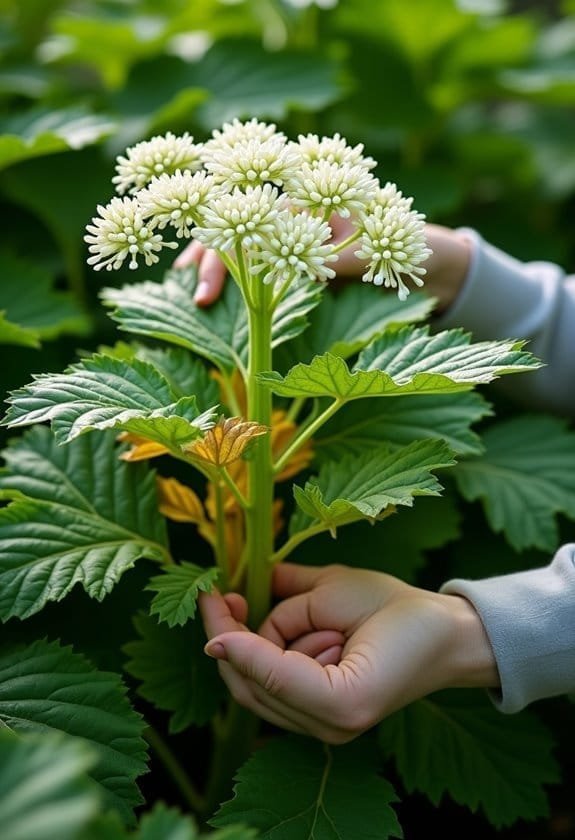
Caring for wild angelica (*Angelica sylvestris*) involves attention to its specific needs for peak growth and health.
Regular watering is vital, especially during arid periods, while strategic pruning and fertilization enhance the plant's vigor and flowering potential.
Additionally, choosing suitable companions and managing its growth through seed control guarantees that this majestic species doesn't overwhelm garden spaces, allowing it to flourish beautifully alongside other plants.
Planting Tips
Successful planting of *Angelica sylvestris* hinges on creating conditions that closely mimic its natural wetland habitat. Plant this striking perennial in moist, rich soils, preferably near water sources, to guarantee excellent growth and health.
Use effective planting techniques to select a location that receives partial to full sunlight; this species thrives in the marshy ambiance of damp meadows and open woodlands.
To encourage healthy growth and limit potential invasiveness, gardeners should regularly monitor and manage its expansion. Providing sufficient space between plants, ideally 60 to 90 cm, is crucial, as *Angelica sylvestris* can reach impressive heights of up to 2 meters, demanding room for its grandeur.
Propagation methods include seed sowing in late summer or dividing established clumps during early spring or autumn.
This adaptable plant can also benefit from companion planting, where it grows harmoniously alongside compatible flora, creating a vibrant, biodiverse ecosystem. Additionally, ensuring that the soil remains consistently moist is vital for replicating its optimal growth conditions and supporting its health.
Ongoing Care
Efficacy in *Angelica sylvestris* hinges on consistent ongoing care. This plant thrives best in moist, rich soils, so regular watering is essential, particularly during dry spells, to sustain its health and vigor. Additionally, Salad Burnet's deep taproot system offers remarkable drought resistance, underscoring the benefits of robust root development in herbaceous plants.
Utilizing effective fertilization techniques, such as incorporating balanced fertilizers rich in nitrogen, can bolster growth and enhance flower production. Additionally, mulching around the base helps retain soil moisture while suppressing invasive species that might compete for essential resources.
Seasonal pruning plays an important role in the maintenance of wild angelica. After the flowering season, from July to September, it's advisable to prune back dead or damaged stems. This encourages new growth while preventing disease buildup during the winter months, thereby promoting a healthy plant for the following year.
Pest management requires vigilance; one must monitor for signs of pests like the larvae of *Phytomyza angelicae*, known for their leaf-mining habits. Promptly removing affected leaves mitigates their impact on the plant.
When cultivating in gardens, regular checks for invasiveness serve as a proactive measure, ensuring that wild angelica doesn't overwhelm local flora. Such meticulous care nurtures a vibrant ecosystem while maintaining the integrity of the garden. Additionally, incorporating plants like Dark Mullein can enhance pollinator habitat and support local biodiversity in your garden.
Suggested Companions
Choosing the right companions for *Angelica sylvestris* plays a crucial role in enhancing its growth and overall health. This perennial thrives in damp, rich soil, so pairing it with moisture-loving plants such as marsh marigold (*Caltha palustris*) and forget-me-nots (*Myosotis spp.*) can greatly improve companion plant benefits. These alliances promote a healthy microenvironment, ensuring adequate moisture retention. Great Burnet, with its distinct flower structure, is another suitable companion that also thrives in similar conditions.
Moreover, planting Wild Angelica alongside pollinator-friendly species like bee balm (*Monarda spp.*) boosts pollinator interactions, enhancing its pollination success due to its generalized pollination system. Additionally, integrating marsh bedstraw (*Galium palustre*) as a companion can further contribute to a diverse and key component of wetland biodiversity within the garden ecosystem.
Furthermore, arranging Wild Angelica with taller plants such as goldenrod (*Solidago spp.*) improves growth habit compatibility while allowing ample sunlight for all species involved. This vertical layering creates an aesthetically pleasing garden while maintaining environmental balance.
However, gardeners should be cautious to avoid placing Wild Angelica next to aggressive invasive species, as these can aggressively compete for resources and disrupt delicate ecosystems.
Regular maintenance—including mulching and adequate watering—will help prevent weed competition and support robust growth, allowing this native plant to flourish alongside its companions.
Common Issues
In the context of Angelica sylvestris, various pests and diseases can pose significant challenges to its management.
These troublesome invaders not only threaten the health of the plant itself but also have broader implications for local ecosystems, as they may promote the species' invasive nature.
Finding effective solutions to these issues is essential in mitigating the negative impact that unchecked Angelica populations can have on biodiversity and ecological balance.
Pests/Diseases
When caring for Angelica sylvestris, it's important to keep an eye out for common pests and diseases that can threaten its health. One of the main culprits is the larvae of the fly species Phytomyza angelicae, which mine the leaves, creating unsightly oval or circular blotches that diminish the plant's vigor.
Additionally, fungal diseases like powdery mildew thrive in damp, humid conditions, manifesting as white powdery spots on leaves, thereby signaling a need for fungal disease prevention methods.
Another significant threat comes from aphids, particularly Aphis angelicae, which feed on sap, ultimately weakening the plant and leading to stunted growth. It's essential for gardeners to implement effective aphid control methods, such as introducing natural predators or using insecticidal soap, to deter these pests.
Moreover, overly moist soil can lead to root rot, compromising the plant's stability and health. Monitoring for these issues during the growing season is important; early detection can form the basis for effective pest management strategies, safeguarding the integrity of Angelica sylvestris.
In doing so, gardeners can promote a robust and thriving environment for this exquisite herb.
Solutions
Effective solutions for managing common issues with Angelica sylvestris start with proactive strategies that address its potential invasiveness and health threats. This species can overrun local flora in areas like New Brunswick and Cape Breton, thereby disrupting the delicate ecological balance.
To mitigate its spread, gardeners should implement invasive strategies such as removing flower heads before they set seed, effectively minimizing opportunities for further reproduction.
Regular maintenance is essential; pulling up unwanted wild angelica plants or applying mulch can suppress their growth in cherished garden areas. However, it's also beneficial to recognize the plant's role in supporting pollinators. By designating specific zones for wild angelica, one can facilitate its controlled expansion while still promoting garden integration with other species.
In cases where these methods prove insufficient, consulting local conservation guidelines and organizations provides additional resources for environmentally friendly removal and management strategies.
Summary
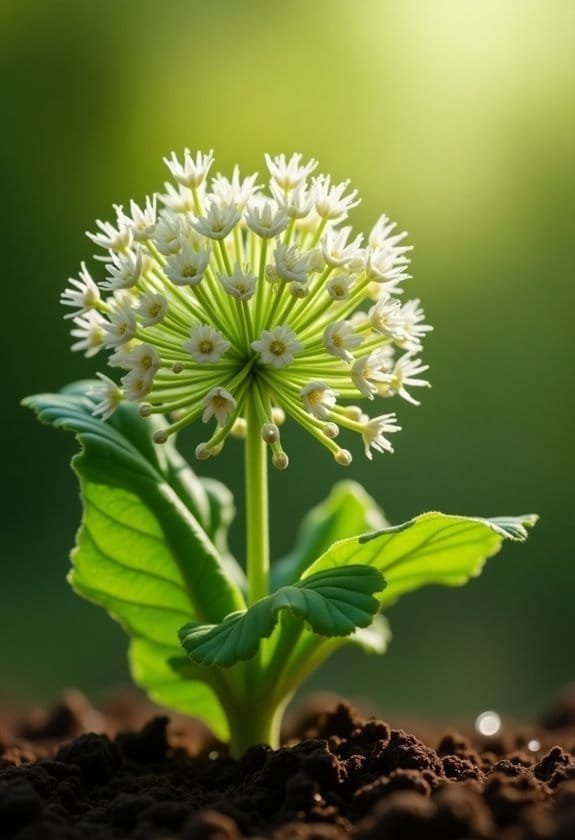
Angelica sylvestris, or Wild Angelica, stands out as a tall, perennial plant reaching heights of up to 2 meters, typically showcasing its blooms from July to September.
With rounded umbels of small, white to pink flowers, this striking plant features distinctive purple, hollow stems that are ridged. Often found in damp meadows and wet woodlands, it thrives in rich soils, making it a favorite among gardeners for its culinary uses. Historically considered a vegetable, Wild Angelica is cultivated in gardens and recognized for its various cultivars by the Royal Horticultural Society.
However, its cultivation isn't without challenges. In regions like New Brunswick and Cape Breton, Nova Scotia, Wild Angelica exhibits invasive growth, highlighting its potential ecological impact if left uncontrolled.
This trait can lead to overwhelming native flora and alter local ecosystems. Consequently, while the plant offers culinary delights and aesthetic value, its management remains important.
Prospective cultivators should navigate these complexities carefully, balancing the plant's appealing characteristics with awareness of its invasive tendencies. In conclusion, Angelica sylvestris embodies beauty and utility while demanding responsible stewardship to preserve ecological integrity.