Cerinthe major 'Purpurascens', known as Honeywort, captures attention with its stunning purplish-blue, tubular flowers and blue-green, heart-shaped bracts. This Mediterranean native thrives in full sun and prefers well-drained, slightly alkaline soil, typically reaching heights of 2 to 4 feet. Remarkably drought-tolerant, it blooms from spring to early fall, offering an extended display of beauty. Its nectar-rich flowers attract essential pollinators like bees and hummingbirds, enhancing local biodiversity. While low maintenance, it requires careful monitoring for pests such as aphids. This plant not only beautifies garden spaces but also supports ecological health, revealing more intricacies of its cultivation and benefits.
Main Points
- Cerinthe major 'Purpurascens', commonly known as Honeywort, features stunning purplish-blue flowers and blue-green bracts, enhancing garden aesthetics.
- This hardy annual thrives in full sun, requiring well-drained, moderately fertile, and slightly alkaline soil for optimal growth.
- Honeywort attracts essential pollinators like bees and hummingbirds, supporting local biodiversity with its nectar-rich blooms throughout spring to early fall.
- It needs consistent watering during the initial growth phase, but becomes drought-tolerant once established, making it low-maintenance.
- Companion plants like Euphorbia dulcis and dark-leaved Heucheras enhance honeywort's visual appeal, creating a vibrant garden environment.
Introduction
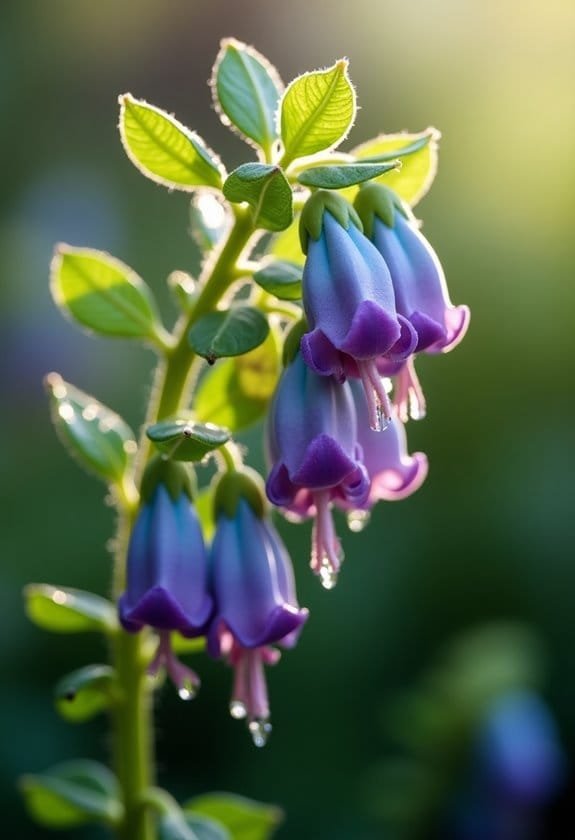
Cerinthe major 'Purpurascens', commonly referred to as honeywort, showcases a striking display with its purplish-blue tubular flowers and blue-green bracts.
This versatile annual flourishes in full sunlight, adapting seamlessly to well-drained soil, making it an ideal choice for cottage gardens where it attracts pollinators like bees and hummingbirds.
Understanding its unique characteristics and requirements is essential for anyone looking to enhance their garden with this resilient and aesthetically pleasing plant.
Common Name
Honeywort is an enchanting common name for Cerinthe Major 'Purpurascens,' highlighting its charm and appeal in the garden. This delightful plant boasts nectar-rich flowers that produce a honey-flavored nectar, enticing numerous pollinators, including bees and hummingbirds.
The distinctive purplish-blue tubular blossoms, elegantly surrounded by blue-green, heart-shaped bracts, add a striking burst of color, creating visual intrigue throughout the gardening landscape.
As a hardy annual or short-lived perennial, Honeywort thrives in full sun and well-drained soils, making it a versatile choice suitable for a variety of garden settings. Its flowering period typically extends from spring through fall, ensuring a prolonged display of beauty that captures the attention of garden enthusiasts.
Beyond its aesthetic value, Honeywort is a non-toxic plant, consequently providing peace of mind for households with children or pets roaming about.
Incorporating this remarkable species into gardens enhances biodiversity while presenting an alluring sensory experience, as its nectar-rich flowers actively attract beneficial wildlife.
Hence, Honeywort not only enriches gardens but fosters an ecosystem brimming with life and vibrancy.
Scientific Name
The scientific nomenclature for Honeywort, Cerinthe major 'Purpurascens,' reveals its classification within the Boraginaceae family. This distinct species, native to the Mediterranean region, particularly flourishes in southern Italy and Greece, where it thrives in its natural habitat. The classification highlights its connection to numerous other flowering plants, promoting an understanding of its ecological role.
Cerinthe major is particularly renowned for its stunning purple flowers, which attract attention with their vibrant hue contrasting against lush greenery. Accompanying these flowers are unique sea-blue bracts, adding to its ornamental allure. This decorative aspect enhances the plant's desirability among gardeners and landscape designers.
As a hardy annual or short-lived perennial, Cerinthe major 'Purpurascens' prefers well-drained soils and performs best in full sun to light shade, making it adaptable to various settings.
Additionally, the plant plays a significant role in supporting pollinators, attracting bees and hummingbirds with its nectar-rich blossoms. By understanding the scientific name, enthusiasts grasp not only the plant's taxonomy but also its natural characteristics, cultivation needs, and ecological importance, reinforcing its place in both gardens and ecosystems.
Overview
Beauty and resilience define Cerinthe major 'Purpurascens', an enchanting plant known for its striking purplish-blue tubular flowers and heart-shaped bracts. Originating from the Mediterranean region, this hardy annual stands out in any garden, reaching heights of up to 24 inches. The rounded, fleshy leaves exhibit a unique glaucous hue, creating visual interest among conventional flora.
Thriving in full sun and well-drained, moderately fertile soils, Honeywort is particularly admired for its remarkable adaptability. Its flowering period extends from spring through autumn, revealing profuse blooms that secrete honey-flavored nectar—an irresistible treat for pollinators such as bees and hummingbirds. The distinctive bracts, vibrant and heart-shaped, enhance the plant's allure, inviting the energetic flutter of these winged visitors.
Ideal for informal gardens, Cerinthe major 'Purpurascens' demonstrates impressive drought tolerance once established and possesses the ability to reseed in mild climates, ensuring its persistence from year to year. Additionally, its role in promoting biodiversity aligns with the benefits of cultivating plants that attract various pollinators such as bees essential for ecosystem health.
With this combination of aesthetic charm and ecological benefits, Honeywort serves as both a stunning visual and a crucial component of sustainable gardens, nurturing the intricate relationships between plants and pollinators.
Key Features
Cerinthe major 'Purpurascens' impresses with its growth stature, typically reaching 2 to 4 feet in height.
Its enchanting purplish-blue tubular flowers, complemented by lush, blue-green bracts, blossom from spring through fall, making it a highlight in any garden setting.
This annual's remarkable features not only enhance its ornamental appeal but also provide an essential source of nourishment for pollinators, establishing it as a prized addition to landscapes.
Growth Size
Reaching heights between 2 to 4 feet in rich soils, Cerinthe major 'Purpurascens' exhibits bushy growth, making it a striking addition to any garden. This plant thrives in full sun, showcasing a robust structure that captures attention.
In ideal conditions, particularly well-drained, nutrient-rich environments, it can expand up to 24 inches in width, creating a luscious, fuller appearance in garden beds and borders. However, in drier or shaded areas, the growth may be less pronounced, sometimes reaching only around 18 inches.
This variability highlights the plant's adaptability; it tolerates light shade while flourishing best in direct sunlight. The thick, glaucous blue-green foliage enhances its visual appeal, providing a vibrant backdrop for its alluring purple-blue flowers.
Additionally, Cerinthe major 'Purpurascens' demonstrates drought tolerance once established, making it suitable for low-maintenance gardens or xeriscaping, where water conservation is essential.
This resilience reflects not only its hardiness but also its capacity to thrive across diverse environmental conditions. Ultimately, its size and growth form underscore its multifaceted roles in landscape design, ensuring it holds a prominent place in both ornamental and functional gardens.
Appearance
The striking appearance of Cerinthe major 'Purpurascens' fascinates garden enthusiasts with its unique combination of features. This exquisite plant boasts arching branches that present clusters of tubular purple-blue flowers, highly enticing to pollinators.
Standing between 2 to 4 feet tall in rich soils, its size diminishes to around 18 inches in drier or shaded areas, demonstrating adaptability to various environments.
The heart-shaped bracts, which can manifest colors ranging from dull blue-green to vibrant purple, enrich its aesthetic allure. These bluish-violet bracts, particularly celebrated for their intense hues, act as a stunning backdrop to the vivid flowers, creating a dramatic visual contrast that draws the eye.
The rounded, fleshy leaves are glaucous and measure approximately 2.5 inches (6 cm), further enhancing the plant's striking appearance and providing an engaging tactile contrast to the vivid colors of the bracts.
Cerinthe major 'Purpurascens' not only thrives in informal garden settings but also enriches them, turning casual landscapes into fascinating spectacles of color and life.
Its alluring combination of purple flowers, complemented by colorful bracts, guarantees it remains a cherished choice among gardeners.
Flowering Season
During its flowering season, Cerinthe major 'Purpurascens' dazzles with vibrant purplish-blue blooms from spring through early fall. Typically, this enchanting plant blooms in Europe from May to August, showcasing clusters of rich purple-blue flowers that captivate both the eye and the heart.
Each tubular blossom is artfully framed by prominent heart-shaped bracts, ranging from dull blue-green to striking blue or deep purple, enhancing the visual allure of the plant.
The flowering season plays a vital role in attracting pollinators, as the honey-flavored nectar produced during this blooming period entices bees, butterflies, and other beneficial insects. This eco-friendly phenomenon underscores the plant's importance in supporting local biodiversity.
Additionally, the timing and intensity of flowering are markedly influenced by ideal growth conditions, such as full sun and well-drained soil.
As the flowers mature, they produce large black seeds encapsulated within pods. Once these pods dry out, an explosive release mechanism disperses the seeds, ensuring successful reproduction.
Consequently, Cerinthe major 'Purpurascens' not only delights with its glorious blooms but also contributes to a vibrant ecosystem through its flowering season.
Growing Requirements
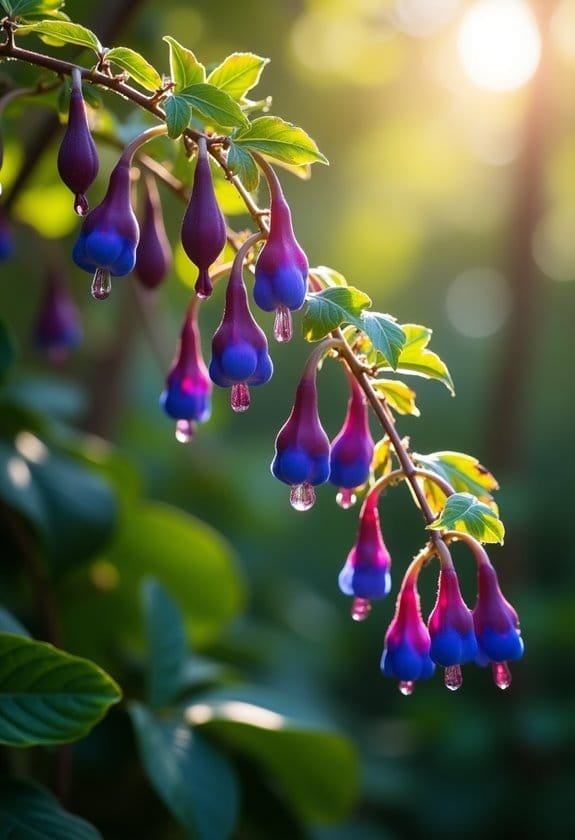
Cerinthe major 'Purpurascens' flourishes best when positioned in full sunlight, where its vibrant foliage can absorb the warmth and energy necessary for robust growth.
This unique plant demands well-drained, fertile soils, promoting health and vigor, while also demonstrating impressive drought tolerance once established.
To maximize its enchanting blooms, it's crucial to strike a balance with regular watering during flowering, ensuring an abundant display of delicate purple flowers.
Light
Full sun is crucial for Cerinthe major 'Purpurascens' to flourish. This stunning plant thrives best with at least six hours of direct sunlight daily, ensuring ideal growth and a vibrant display of its purplish-blue flowers.
While it can tolerate light shade, especially in warmer climates, full sun exposure greatly enhances its picturesque attributes and contributes to robust blooming cycles.
Cerinthe major 'Purpurascens' exhibits remarkable characteristics in well-drained soils, which play an essential role in its overall health.
These types of soils facilitate effective nutrient absorption, allowing the plant to thrive while maintaining adequate moisture retention. Adequate drainage prevents root rot, ensuring longevity and a vigorous life cycle.
In regions with milder winters, positioning Cerinthe in sunny locations can extend flowering periods, leading to prolific seed production.
Indeed, the interplay of light and soil quality considerably impacts the plant's growth habits, influencing not just aesthetics but also ecological contributions. Additionally, thriving in full sun can enhance pollinator attraction by providing essential nectar and habitat for beneficial insects.
Soil
To guarantee ideal growth, Cerinthe major 'Purpurascens' requires well-drained soil that effectively prevents root rot and promotes healthy development. This remarkable plant flourishes in slightly alkaline conditions, which enhance nutrient availability, permitting roots to absorb essential elements more efficiently.
It's beneficial to incorporate a half layer of compost during planting, as this practice notably improves soil fertility and structure.
Cerinthe major 'Purpurascens' thrives best when moisture levels are moderated; although it becomes drought-tolerant once established, regular watering during the growth phase is vital for achieving fuller blooms. This balance guarantees that the soil maintains adequate moisture without becoming overly saturated, which can lead to detrimental effects, such as root rot.
Additionally, mulching is a recommended practice, as it helps retain soil moisture and regulates temperature around the roots. By creating a protective barrier, mulch not only improves moisture retention but also minimizes the need for frequent watering, allowing for a more sustainable growing environment.
Ultimately, a well-prepared soil foundation directly influences the plant's overall health, showcasing just how essential proper soil management is in cultivating vibrant Cerinthe major 'Purpurascens'.
Water
Providing the right amount of water is essential for promoting the vibrant blooms of Cerinthe major 'Purpurascens'. This exquisite plant, once established, is remarkably drought tolerant and requires minimal watering to thrive.
However, during its initial growing phase, regular watering becomes vital to encourage fuller and more abundant blooms, particularly when rainfall is lacking. Gardeners should aim to maintain a medium watering schedule, typically offering about one inch of moisture weekly, especially during dry spells.
It's imperative to guarantee that Cerinthe major 'Purpurascens' is planted in well-drained soil to avert the detrimental effects of waterlogging; excessive moisture can hinder its growth and overall health.
To further assist with moisture retention, mulching around the base of the plant can prove beneficial, particularly during warmer conditions. This not only helps keep the soil moist but also regulates temperature fluctuations, creating a more stable environment for the roots.
In essence, by balancing consistent watering with the plant's innate drought-resistant qualities, gardeners can cultivate a flourishing display of stunning blooms that elevate any garden setting to new heights of beauty.
Temperature
During the growing season, Cerinthe major 'Purpurascens' thrives best within a temperature range of 60-70°F, which enhances both germination and early development. This hardy annual prefers to be planted in spring, once the last frost has passed, as this timing encourages a robust establishment amidst warmer weather.
For those residing in USDA zones 8 and above, direct sowing is particularly advantageous in fall, allowing plants to acclimatize before winter chill sets in. Adequately regulated temperatures not only promote healthy growth but also enhance the vibrancy of the flower bracts.
Intriguingly, cooler conditions can affect the hue of these bracts, leading to a striking color transformation that adds visual interest to gardens. To achieve peak health and blooming potential, growers must balance temperatures with moderate moisture levels.
Moist environments, paired with the right temperature, forge a thriving habitat for Cerinthe major 'Purpurascens', ensuring it delivers a dazzling display. By maintaining these specific growing conditions and understanding the flower's needs, gardeners can cultivate a picturesque showcase that thrives throughout the growing season, showcasing nature's artistry at its finest.
Pollinator Criteria
Cerinthe major 'Purpurascens' attracts a diverse range of pollinators, primarily bees and hummingbirds, owing to its honey-flavored nectar and tubular flowers.
With blooms spanning from spring to fall, this plant not only sustains pollinators throughout the growing season but also plays a crucial role in enhancing local biodiversity. Its unique pollination method, reliant on these frequent visitors, illustrates how flowering plants can create ecosystems that support and invigorate various species. Additionally, like Great Burnet, Cerinthe major 'Purpurascens' provides essential resources for native pollinators, fostering a healthy and balanced garden ecosystem. Furthermore, similar to white clover's nitrogen-fixing capabilities, this plant contributes to soil health, enhancing the growing conditions for itself and neighboring species.
Attracted Pollinators
Many pollinators flock to Cerinthe major 'Purpurascens' due to its abundant honey-flavored nectar and vibrant purple-blue flowers. These attractive features primarily draw bees and hummingbirds, which are essential for sustaining biodiversity in garden ecosystems.
The plant blooms in spring, showcasing clusters of tubular flowers that contain rich nectar, making it particularly enticing for hungry bees seeking a reliable food source.
The heart-shaped bracts of Honeywort not only offer ornamental appeal but also serve as a protective barrier, encouraging pollinators to explore the flower's sweet rewards. Additionally, Cerinthe major 'Purpurascens' acts as a drought-tolerant specimen, providing ongoing nectar accessibility during arid conditions when other flowering plants wilt.
With its striking colors and nutrient-rich offerings, this plant effectively enhances activity in both home gardens and more extensive landscapes.
Gardeners appreciate the role of Honeywort in attracting various pollinators, underscoring its importance in creating balanced ecosystems.
Pollination Method
The efficient pollination of Cerinthe major 'Purpurascens' relies on its unique floral adaptations, which cater specifically to its primary pollinators, bees and hummingbirds. The tubular structure of its flowers facilitates easy access for these pollinators, allowing them to reach the sweet, honey-flavored nectar hidden within. This design not only encourages foraging but also promotes effective pollen transfer, essential for reproductive success.
Flowering occurs from spring through summer, providing a consistent and abundant food source that sustains pollinators during these crucial months. The striking purple-blue flowers, accompanied by large heart-shaped bracts, act as visual signals, drawing in various species seeking nourishment.
This plant ingeniously cultivates pollinator diversity, attracting not just bees and hummingbirds but also other beneficial insects. As the colorful blooms invite multiple species, they contribute considerably to overall ecosystem health, fostering a rich tapestry of interactions among plants and pollinators.
Ultimately, the structural and aesthetic qualities of Cerinthe major 'Purpurascens' not only enhance garden beauty but also play a central role in sustaining essential ecological processes through effective pollination methods.
Care & Maintenance
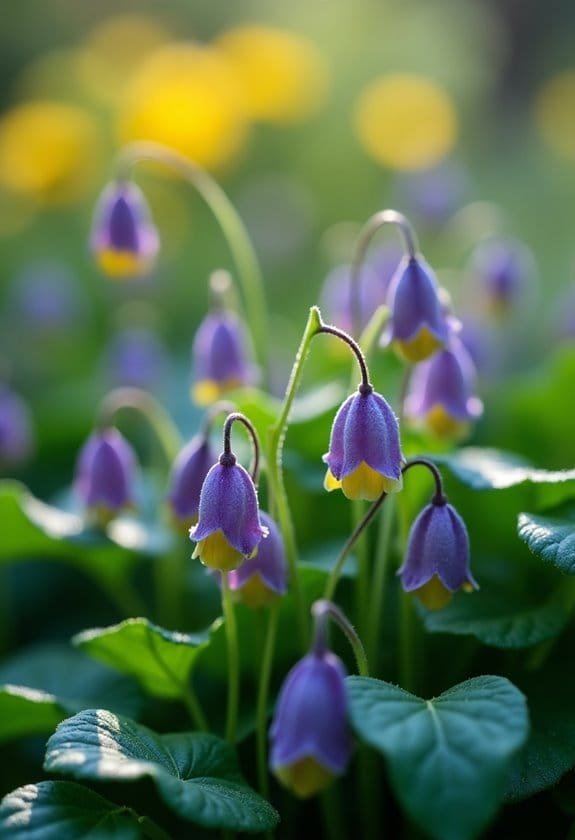
When it comes to caring for Cerinthe major 'Purpurascens', thoughtful attention to planting and ongoing maintenance can greatly enhance its beauty and liveliness.
Employing strategies like soaking seeds overnight not only boosts germination rates but also prepares the plants for robust growth.
Additionally, selecting suitable companions and ensuring consistent watering, especially during dry spells, fosters an environment where these stunning plants can flourish effortlessly.
Planting Tips
For successful planting of Cerinthe major 'Purpurascens', starting with a few simple techniques can greatly enhance growth. Soak Cerinthe major 'Purpurascens' seeds overnight before planting; this encourages hydration and greatly improves germination rates. By engaging in such preparatory practices, the planting will speed up the sprouting process, ensuring a timely bloom.
For best results, plant seeds indoors approximately 4-6 weeks prior to the last frost. Alternatively, in regions classified as zones 8 and above, direct sow during warm fall conditions.
Selecting the right soil is paramount—ensure it's well-drained and slightly alkaline. To enrich the nutrient content, incorporate a half layer of compost into the soil at planting.
Once planted, maintain medium moisture levels by watering weekly, particularly during the establishment phase. This promotes robust roots and healthy foliage.
In addition, deadheading regularly after flowering helps to stimulate continuous blooming, while cutting back plants post-flower is essential for sustaining overall health and vigor, allowing the plant to focus energy on new growth.
Ongoing Care
Ongoing care of Cerinthe major 'Purpurascens' guarantees vibrant blooms and overall plant health. Regular deadheading not only encourages continued blooming but also enhances the plant's appearance, showcasing its striking purple and yellow flowers.
Post-flowering, it's crucial to cut back the plants; this act rejuvenates them for future growth cycles, ensuring robust health and vitality.
Once established, Cerinthe major 'Purpurascens' proves to be remarkably drought-tolerant, requiring minimal watering compared to other flowering species. This adaptability makes it an excellent choice for gardeners seeking low-maintenance blooms.
Additionally, pest and disease issues are rarely a concern for honeywort, further simplifying its ongoing care.
To expedite germination, soaking seeds overnight before planting can greatly enhance sprouting efficiency, allowing for a more fruitful start to the growing season.
By engaging in these simple yet effective practices, one can cultivate a thriving display of honeywort that not only beautifies the landscape but also requires less labor, providing a rewarding gardening experience.
Therefore, with intentional ongoing care, Cerinthe major 'Purpurascens' becomes a splendid addition to any garden, thriving with elegance and resilience.
Suggested Companions
Integrating Cerinthe major 'Purpurascens' into garden designs can enhance both its visual appeal and the overall health of neighboring plants. This unique honeywort thrives when paired with companion plants like Euphorbia dulcis and dark-leaved Heucheras, whose purple and bronze foliage beautifully complements 'Purpurascens'.
Incorporating blue, purple, and pink flowering species creates a harmonious palette, while the addition of bright orange-flowered plants injects an invigorating contrast.
Positioning 'Purpurascens' in borders supports and elevates shorter plants, allowing its longer stems to cascade gracefully in front of arrangements. For additional texture and dimension, little bluestem grass (Schizachyrium scoparium) serves as an excellent companion, creating cascading lines and providing rich color echoes that enrich the garden's visual structure.
Regular deadheading of the Cerinthe major 'Purpurascens' not only prolongs its blooming period but also maintains a lively garden space, benefitting nearby plants by preventing overcrowded, unsightly growth.
Common Issues
Cerinthe major 'Purpurascens' faces several common issues that can hinder its growth and aesthetic value.
While generally hardy, the plant's susceptibility to pests like aphids and diseases, such as root rot, necessitates vigilant monitoring and proactive management strategies.
Understanding these potential challenges can empower gardeners to cultivate a thriving environment, ensuring that their Cerinthe flourishes year after year.
Pests/Diseases
While Cerinthe major 'Purpurascens' is largely pest-resistant, it can occasionally attract aphids, making vigilance important for gardeners. These small sap-sucking pests can stunt growth and even cause leaves to curl if left unchecked.
Though insect pests are rarely a concern, slugs can prove troublesome, particularly for young plants. Gardeners can employ preventive measures, such as applying diatomaceous earth, to deter these pests effectively.
Fungi can also pose a threat in overly damp environments, so ensuring adequate air circulation and well-drained soil becomes essential for preventing root rot, a common issue in various plants.
It's important to maintain a balanced watering routine, as overwatering fosters conditions ripe for fungal diseases. Fortunately, Cerinthe major 'Purpurascens' remains mostly free from considerable diseases, as proper care noticeably lowers the risk related to improper drainage or excessive moisture.
Regular inspections of the foliage play an important role in pest management. By catching early signs of aphid infestations, timely intervention can prevent more extensive damage.
Consequently, gardeners can approach the care of this enchanting plant with confidence, promoting a vibrant display while keeping potential issues at bay.
Solutions
Managing common issues for Cerinthe major 'Purpurascens' can enhance its growth and overall appearance. It's crucial to address transplant shock, which can occur when seedlings are moved. Delicately handling these seedlings guarantees they re-establish effectively, minimizing stress and optimizing their development.
Once established, this striking plant demonstrates remarkable drought tolerance, but gardeners must still prioritize consistent watering to avoid diminished flowering.
Cerinthe major 'Purpurascens' flourishes in well-drained, slightly alkaline soils, so incorporating compost during planting can greatly enhance nutrient availability and overall growth quality. While the plant exhibits strong pest and disease resistance, minimal maintenance is required, making it a superb choice for low-care gardens.
After the blooming period, cutting back the foliage not only supports plant health but also mitigates potential pest issues. This practice encourages new growth for the upcoming season, reinforcing the plant's vitality.
As a result, mindful management of these common concerns—such as transplant shock, watering consistency, and soil quality—guarantees that Cerinthe major 'Purpurascens' maintains its stunning beauty, enriching garden environments while offering the resilience that many modern gardeners seek.
Summary
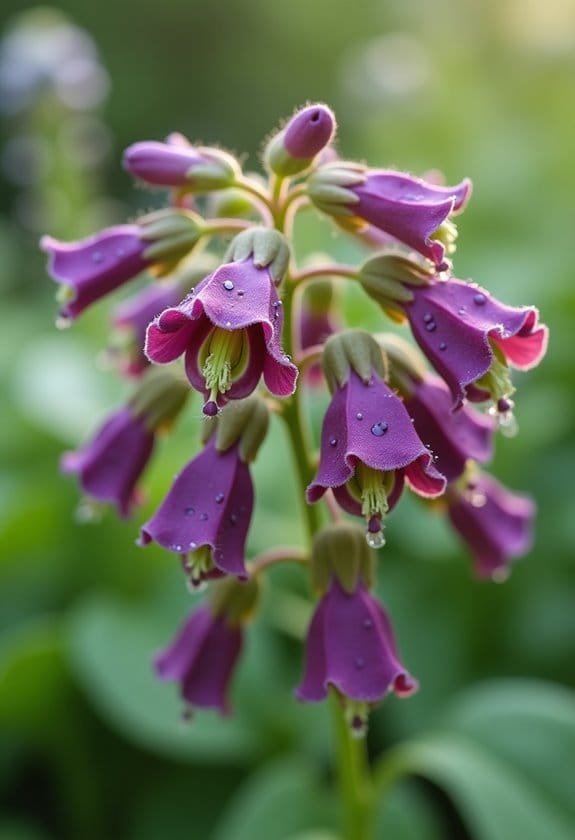
This stunning plant, known as Cerinthe major 'Purpurascens' or Honeywort, captivates gardeners with its striking purplish-blue flowers and vibrant bluish-violet bracts. This hardy annual exhibits remarkable drought tolerance once established, thriving in full sun to light shade while preferring well-drained, moderately dry soil.
Its flowering period extends from spring to fall, allowing it to attract a variety of pollinators, including bees and hummingbirds, with its rich, honey-flavored nectar.
With low maintenance requirements, Honeywort necessitates minimal watering, promoting sustainability in gardens. Occasionally, gardeners can deadhead spent blooms to encourage further flowering, enhancing its visual appeal during the growing season.
Importantly, 'Purpurascens' is non-toxic, making it a safe choice for families with children and pets, providing beauty without the worry of toxicity.
This resilient plant not only enriches the garden's aesthetic but also contributes to local ecosystems by supporting crucial pollinator populations.
Its combination of drought tolerance, pollinator attraction, and low-maintenance care positions Cerinthe major 'Purpurascens' as an exemplary choice for those seeking to create vibrant and sustainable landscapes effortlessly.