Eryngium × Tripartitum, known as Tripartite Sea Holly, stands impressively at 3-4 feet (90-120 cm) tall. This hybrid, belonging to the Apiaceae family, is adorned with striking violet-blue flower heads, combining aesthetic beauty with ecological value by attracting crucial pollinators like bees. Thriving in full sun and well-draining soils, it becomes drought-resistant once established, requiring diligent watering initially. Its blooming season, from mid-summer to early fall, provides essential nectar, enriching local biodiversity. While regular care, such as cutting back stems post-bloom, enhances growth, this resilient plant offers continued intrigue for enthusiast gardeners seeking a unique addition.
Main Points
- Eryngium × Tripartitum, known as Tripartite Sea Holly, is a striking hybrid plant characterized by its violet-blue flower heads and spiny bracts.
- The plant thrives in full sun and well-draining, dry soils, making it suitable for gravel gardens and coastal settings.
- It blooms from mid-summer to early fall, providing nectar-rich flowers that attract pollinators like bees, enhancing local biodiversity.
- Regular maintenance includes cutting back flower stems after blooming and monitoring for pests like leaf and bud eelworms.
- Awarded the Royal Horticultural Society's Award of Garden Merit, it offers both aesthetic beauty and ecological benefits to gardens.
Introduction
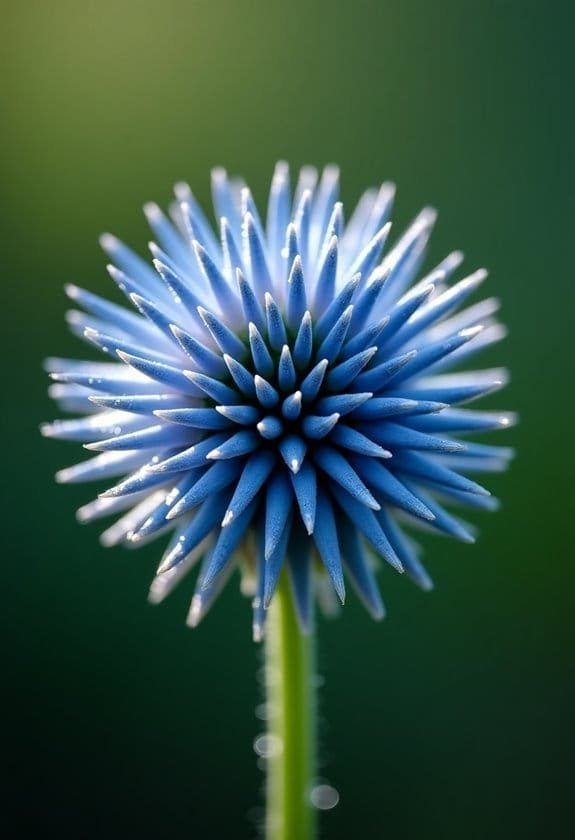
Eryngium × tripartitum, often referred to as the Tripartite Sea Holly, captures attention with its striking violet-blue flower heads and spiky profile.
This hybrid species from the Apiaceae family typically grows to heights of 3-4 feet, showcasing its coarsely toothed, gray-green leaves, and adding a dramatic flair to any garden setting.
With its pollinator-friendly nature and recognition from the Royal Horticultural Society, this plant not only enhances aesthetic appeal but also fosters biodiversity in local ecosystems.
Common Name
Known as the Tripartite Sea Holly, this striking hybrid plant captures attention with its vivid blue flower heads and distinctive spiny bracts. Reaching heights of 3-4 feet (90-120 cm) and spreading up to 20 inches (50 cm) wide, Eryngium × tripartitum boasts upright, coarsely toothed gray-green leaves that enhance its architectural presence in any garden.
With a blooming period extending from mid-summer to early fall, it showcases vibrant violet-blue flower stems adorned with metallic-blue flower heads.
The plant's aesthetic allure has earned it the prestigious Royal Horticultural Society's Award of Garden Merit, signifying its outstanding garden suitability and reliability as an ornamental specimen.
Aptly named the Sea Holly, Eryngium × tripartitum not only captivates gardeners and landscapers but also serves as an essential resource in supporting biodiversity. Its nectar-rich flowers attract bees and other beneficial insects, reinforcing its inclusion in pollinator-friendly landscaping initiatives. Additionally, like the cornflower, this plant can also play a vital role in creating important habitats for beneficial insects, thereby promoting ecosystem health.
After flowering, cut back the flower stems to encourage new growth, allowing the plant to flourish and add structural beauty to the garden year after year.
This remarkable hybrid harmonizes beauty and ecological significance, proving its worth in various horticultural settings.
Scientific Name
What makes Eryngium × tripartitum stand out in the world of horticulture is its classification as a hybrid species belonging to the Apiaceae family. This unique designation arises from its direct lineage, merging characteristics from parent species to create a visually striking plant.
Typically, Eryngium × tripartitum reaches impressive heights of 3-4 feet (90-120 cm) while exhibiting a spread of 20 inches (50 cm) at maturity. Its coarsely toothed gray-green leaves complement the eye-catching spiky flower heads, which are adorned with deep blue bracts.
Recognized for its exceptional performance, Eryngium × tripartitum has earned the Royal Horticultural Society's prestigious Award of Garden Merit. This accolade highlights the plant's ability to thrive in moderately fertile conditions, ultimately contributing to its popularity among gardeners.
Additionally, its vibrant blooms attract numerous pollinators, particularly bees, fostering biodiversity within garden ecosystems. By integrating this hybrid into their landscapes, horticulturists not only enhance aesthetic appeal but also promote environmental significance.
With its robust stature and alluring coloration, Eryngium × tripartitum serves as a splendid example of the intricate artistry found within hybrid plant species.
Overview
With its striking appearance and impressive features, Eryngium × tripartitum, commonly referred to as the Tripartite Sea Holly, captures the attention of gardeners and horticulturists alike. This hybrid species belongs to the Apiaceae family and boasts a distinctive spiky form that presents vibrant violet-blue flower heads, set against a backdrop of gray-green, coarsely toothed leaves.
Reaching heights of 3 to 4 feet (90-120 cm) with a spread of about 20 inches (50 cm), the plant offers both structure and bold color to any garden design.
Thriving in full sun, Eryngium × tripartitum demonstrates remarkable resilience, favoring dry, well-drained soils while tolerating poor conditions and drought. Its branching stems support cone-shaped flower heads, which typically bloom from mid-summer to early fall, drawing attention to their spiny dark blue bracts that enhance the plant's ornamental value.
Recognized with the Royal Horticultural Society's Award of Garden Merit, the Tripartite Sea Holly not only satisfies aesthetic desires but also plays an essential role in attracting pollinators, particularly bees, enriching the garden biodiversity.
Key Features
Eryngium × tripartitum boasts an impressive stature, growing between 3 to 4 feet tall and spreading about 20 inches wide.
Its striking violet-blue stems and spiny dark blue bracts provide a dramatic backdrop for the metallic-blue flower heads, which appear from mid-summer to early fall.
This combination not only enhances visual appeal but also supports local biodiversity by attracting essential pollinators like bees.
Growth Size
Reaching heights between 3 to 4 feet (90 to 120 cm), Eryngium × tripartitum makes a striking addition to any garden.
This herbaceous perennial exhibits a bushy growth habit, with a spread of up to 20 inches (50 cm). Its upright stature allows it to stand out in various landscape designs, especially in gravel gardens where its vibrant blue tones harmonize beautifully with the surrounding materials.
The plant's distinctive gray-green leaves, which are coarsely toothed, contribute notably to its overall charm, providing a unique textural contrast.
Flowering occurs from mid-summer to early fall, showcasing violet-blue stems topped with striking metallic-blue flower heads, each encircled by spiny dark blue bracts. Such features not only create a dramatic aesthetic but also enhance the visual interest of any garden setting.
When massed together, Eryngium × tripartitum forms an impressive display, as its vertical growth and tightly packed flower heads create a sense of rhythm and movement.
This enchanting plant thrives in well-drained soils typical of gravel gardens, making it a reliable choice for gardeners seeking resilience and beauty in their landscapes.
Appearance
Often admired for its striking features, Eryngium × tripartitum showcases upright, coarsely toothed gray-green leaves that provide a vibrant backdrop for its stunning flowers. This perennial plant typically reaches a height of 3 to 4 feet (90 to 120 cm) and spreads approximately 20 inches (50 cm) wide, making it a prominent choice in gardens.
The plant produces fascinating violet-blue stems adorned with metallic-blue flower heads that create an eye-catching display. Each flower head is encircled by spiny dark blue bracts, enhancing its distinctive spiky appearance that captures attention throughout the growing season.
To maintain its health and encourage new growth, gardeners often choose to cut back flower stems after flowering, promoting a bushy appearance.
Eryngium × tripartitum thrives through root cuttings, making it easy to propagate. Its elegant form and dazzling colors earned it the Royal Horticultural Society's Award of Garden Merit, acknowledging its aesthetic appeal and reliability. This plant not only enriches the visual landscape but also attracts pollinators, cementing its status as a garden favorite that blends beauty with practicality.
Flowering Season
During the flowering season, Eryngium × tripartitum enthralls with its vibrant display from mid-summer to early fall. This plant typically flowers for several weeks, delighting observers with its striking blooming colors. The violet-blue stems rise majestically, reaching heights of 3 to 4 feet (90 to 120 cm), effectively creating an impressive focal point in garden landscapes.
The unique flower heads, characterized by their dramatic metallic-blue appearance, are encircled by spiny dark blue bracts. These striking features not only enhance visual interest during the flowering duration but also serve as a fascinating contrast against the foliage, amplifying the overall appeal. As bees and other pollinators flock to the blossoms, Eryngium × tripartitum fosters a vibrant ecosystem, underscoring its value in nature.
Moreover, the plant's seed heads contribute to seasonal interest in the winter months. Left intact, they offer texture and structure in the barren garden, reminding admirers of the kaleidoscope of colors that appeared just months earlier.
Eryngium × tripartitum truly exemplifies the beauty of a diverse garden throughout varying seasons, guaranteeing lasting allure and botanical intrigue.
Growing Requirements
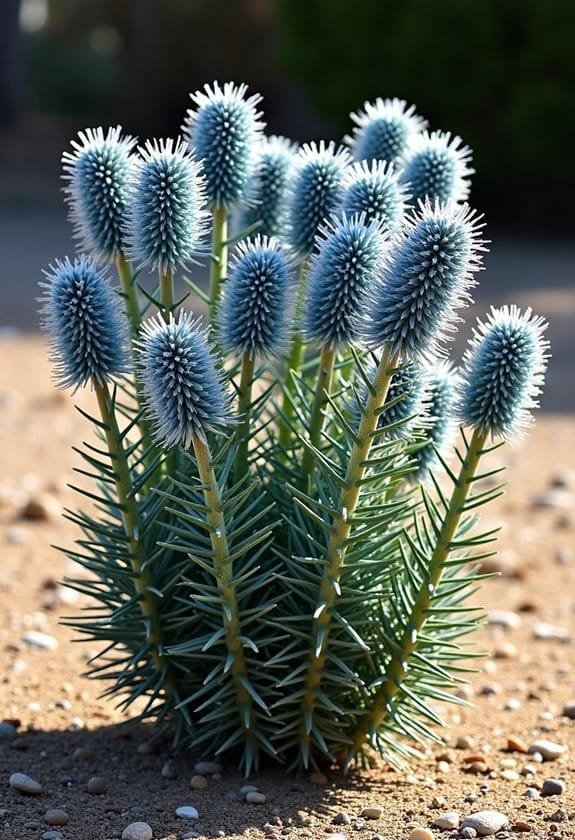
Eryngium × tripartitum flourishes best under the bright embrace of full sun, which fosters its striking blooms and robust growth.
With its preference for well-draining soil, this resilient plant adapts remarkably to environments like gravel gardens or coastal settings, thriving even in less-than-ideal soil conditions.
Regular watering is essential during establishment; however, once rooted, it confidently withstands drought, making it a dependable choice for gardeners seeking low-maintenance beauty.
Light
For ideal growth and flourishing blooms, Eryngium × tripartitum thrives in full sun. This plant's light preferences demand a minimum of six hours of direct sunlight each day, as this sunlight impact is significant for vibrant health.
When adequately exposed to sunlight, the distinctive violet-blue stems and striking metallic-blue flower heads emerge, creating an enchanting visual display. Although Eryngium × tripartitum exhibits some shade tolerance, it truly performs best under optimal light conditions.
The ability to adapt to harsh environments further underscores its versatility, thriving in dry, well-drained soils typically found in coastal, cottage, and gravel gardens. In these sunny settings, the plant's growth is robust, bolstered by its natural drought resistance, which allows it to flourish with minimal watering.
This capability not only makes it a sustainable choice for gardeners aiming for low-maintenance landscapes but also emphasizes the essential relationship between adequate light and overall plant health.
Understanding these light requirements will empower gardeners to cultivate Eryngium × tripartitum effectively, ensuring a mesmerizing garden display that thrives in sunny conditions.
Soil
Successful growth extends beyond adequate sunlight; the right soil conditions are equally important for Eryngium × tripartitum. This plant flourishes in dry, well-drained soils, typically favoring poor to moderately fertile environments. Its remarkable tolerance for less-than-ideal soil quality makes it an excellent choice for challenging garden spots where other plants might struggle.
To guarantee ideal soil composition, gardeners should consider integrating grit when planting, a technique that enhances drainage and helps to establish a robust root system.
Effective drainage techniques are crucial, especially because Eryngium × tripartitum's roots require protection from excessive moisture during winter months, which can lead to detrimental root rot.
Moisture management becomes essential in the early stages of growth; while the plant is drought-tolerant once established, it needs regular watering until it can fully adapt to its environment.
Monitoring soil moisture will guide gardeners in providing appropriate hydration levels, guaranteeing the plant thrives without becoming susceptible to stress.
With the right soil conditions, Eryngium × tripartitum can become a resilient and striking addition to any garden landscape, offering beauty with minimal care.
Water
Water management is vital for the health and growth of Eryngium × tripartitum. During its establishment phase, regular watering is significant; however, once mature, the plant boasts impressive drought resilience, thriving with minimal water. This adaptability stems from its preference for well-draining soil that should remain dry in winter, reducing excess moisture that can lead to root rot.
The key to successful cultivation lies in carefully monitoring watering frequency, especially during the initial planting stage. Adequate moisture promotes vigorous new root and shoot growth, establishing a robust foundation vital for the plant's longevity. Overwatering, on the other hand, can disrupt root care by creating a soggy environment detrimental to the plant's overall health.
In colder climates, mulching with straw acts as a protective barrier against winter's moisture overload, safeguarding the roots. By balancing sufficient hydration and soil drainage, gardeners can guarantee that Eryngium × tripartitum not only survives but flourishes in less-than-ideal soil conditions.
Ultimately, understanding these water dynamics transforms the cultivation of this striking plant into an art, where careful attention yields remarkable results.
Temperature
Eryngium × tripartitum thrives best in hardiness zones 5 to 8, where it can flourish in various temperate climates. This plant exhibits remarkable climate adaptation, allowing it to withstand temperature extremes while maintaining healthy seasonal growth.
Ideally, Eryngium × tripartitum prefers full sun exposure, which not only boosts its growth but also enhances its resilience against fluctuating temperatures.
In terms of soil, while it can adapt to poor conditions, it requires free-draining soil that remains dry during winter. Excess moisture can harm the root systems, particularly in colder climates. Consequently, protective measures, such as straw mulch, offer an excellent buffer against winter wet conditions, ensuring the plant survives the cold months unscathed.
Once established, Eryngium × tripartitum develops a drought tolerance, yet regular watering during its formative stages is essential for peak growth.
This delicate balance of temperature management and moisture control allows the plant to thrive within its designated hardiness zones. With its adaptive characteristics, Eryngium × tripartitum not only beautifies gardens but also exemplifies nature's ability to flourish amidst varying environmental challenges.
Pollinator Criteria
Eryngium × tripartitum stands out as an essential source of nectar and pollen, attracting a diverse array of pollinators, especially bees, during its peak blooming from mid-summer to early fall.
Its striking metallic-blue flower heads, coupled with the spiny dark blue bracts, not only allure pollinators but also play a significant role in promoting effective cross-pollination.
Attracted Pollinators
Frequently seen in gardens, Eryngium × tripartitum, or Sea Holly, attracts a range of pollinators, especially bees, due to its vibrant flowers and abundant nectar. The plant features striking violet-blue flower heads wrapped in spiny, dark blue bracts, creating an enchanting spectacle for both gardeners and pollinators alike. This floral structure enhances pollinator behavior, allowing easy access for bees to collect nectar and pollen.
Incorporating Eryngium × tripartitum into garden designs not only adds aesthetic appeal but also contributes considerably to local biodiversity. As a member of the RHS Plants for Pollinators initiative, this plant serves as an essential food resource, supporting pollinators throughout the growing season. By employing effective gardening techniques, such as planting clusters of Sea Holly, gardeners can foster environments that nurture bee populations. This not only benefits the plants themselves but also creates attractive habitats for beneficial insects, promoting ecological interactions in the garden.
The biodiversity impact of Eryngium × tripartitum is profound; it creates harmonious ecosystems where pollinators can thrive. As bees and other pollinators visit these flowers, they facilitate cross-pollination, further enriching the plant community within gardens. Additionally, Eryngium's ecological role in supporting local biodiversity enhances the overall health of the ecosystem. Gardening practices that incorporate this remarkable species ultimately promote ecological balance and highlight the importance of sustaining our crucial pollinator populations.
Pollination Method
Pollination in Eryngium × tripartitum hinges on its ability to draw in a variety of pollinators, particularly bees. Its beautiful violet-blue flowers produce nectar, encouraging frequent visits from these significant insects. The plant employs effective cross pollination strategies, enhancing genetic diversity and resilience among its populations.
Flower morphology adaptations play a considerable role in attracting and accommodating pollinators. Eryngium × tripartitum features unique floral heads framed by spiny, dark blue bracts, which elevate the flowers for better visibility and accessibility. These structural elements combine to create a striking appearance that captivates pollinators from a distance. The plant's ability to thrive in dry, sandy soils further supports its prolific flowering and subsequent pollinator attraction.
Nectar secretion patterns are optimized during the bloom period from mid-summer to early fall, which coincides with the peak foraging activity of various bee species. This timing guarantees a steady supply of food when other resources may be scarce.
As a result, Eryngium × tripartitum contributes a crucial source of nectar and pollen, fostering local bee populations' health and survival. By supporting these insect allies and promoting biodiversity in gardens as part of the RHS Plants for Pollinators initiative, Eryngium × tripartitum showcases its ecological importance. Additionally, the presence of specialized bees around similar flowering shrubs like Cornus sanguinea can significantly enrich the pollination landscape.
Care & Maintenance
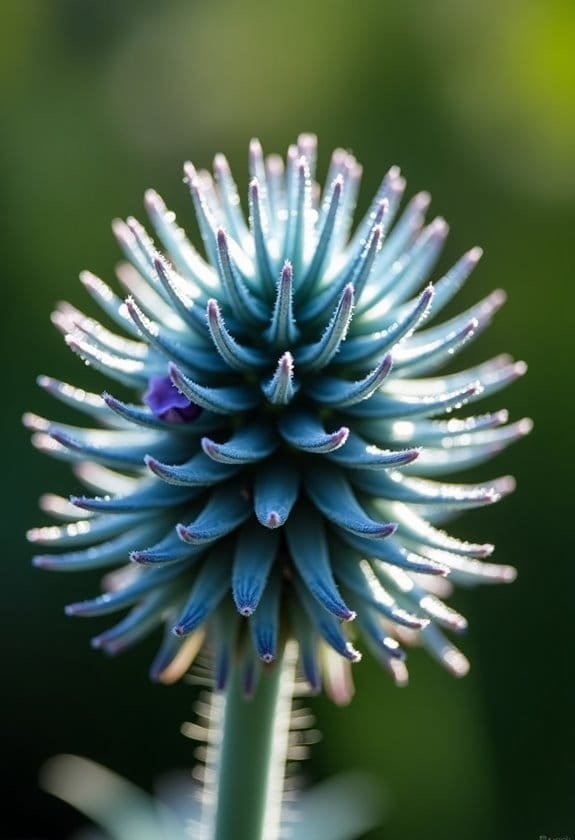
Caring for Eryngium × Tripartitum involves understanding its specific needs and preferences to cultivate a thriving plant.
Initially, it requires consistent watering to establish roots, evolving to a drought-tolerant state that simplifies maintenance in drier climates.
Collaborating with compatible companions while ensuring well-drained soil will enhance its growth, promoting a stunning display in any garden setting.
Planting Tips
When selecting a spot for Eryngium × tripartitum, gardeners should prioritize full sun and well-drained soil for the best results. This hardy perennial flourishes in bright, sunny locations, ideally receiving at least six to eight hours of direct sunlight daily.
To enhance the growth conditions, incorporating soil amendments, such as coarse grit or sand, into the planting hole noticeably improves drainage. These amendments are essential since Eryngium prefers drier conditions, particularly during the winter months when excess moisture can be detrimental.
In terms of planting techniques, it's important to guarantee a spacing of about 12 to 18 inches between plants, allowing each specimen room to grow and establish a robust root system. While regular monitoring of soil moisture is necessary until the plants are established, mature Eryngium × tripartitum exhibit remarkable drought tolerance.
As seasonal considerations arise, gardeners can also plan for propagation via root cuttings in late winter, which helps maintain and expand their Eryngium collection.
Ongoing Care
Maintaining Eryngium × tripartitum requires regular attention to its health and growth conditions. A carefully planned fertilization schedule supports robust development; using a balanced, slow-release fertilizer during the growing season can enhance blooming vigor. One might consider applying the fertilizer once every six to eight weeks to guarantee steady nutrient availability.
Seasonal pruning plays an essential role too. While cutting back flower stems after blooming is optional, leaving seed heads can provide winter interest and habitat for beneficial wildlife.
In colder climates, providing winter protection is significant; applying a layer of straw mulch can insulate the roots, safeguarding against harsh temperatures while promoting better growth in spring.
Vigilance is key in monitoring for pests and diseases. Leaf and bud eelworms, powdery mildew, and root rot can undermine plant health if unnoticed. Initially, regular watering assists the establishment phase, but once mature, the plant becomes drought-tolerant, needing minimal maintenance.
Finally, propagating Eryngium × tripartitum through root cuttings taken in late winter offers an excellent opportunity to cultivate this striking hybrid, guaranteeing future generations flourish in the garden.
Suggested Companions
Selecting appropriate companions for Eryngium × tripartitum enhances both its visual appeal and ecological benefit. This striking plant thrives alongside drought-tolerant companion plants, such as Cistus x purpureus and Melianthus major, which not only reduce water requirements but also create a harmonious and attractive landscape.
Additionally, incorporating bee-attracting specimens like Osteospermum Lady Leitrim supports essential pollinator benefits, fostering biodiversity within the garden environment. Geum rivale(Water Avens), known for its bell-shaped flowers, also provides nectar for pollinators during its extended blooming season and can complement the diverse planting scheme.
When grouping Eryngium × tripartitum, it's vital to maintain adequate spacing of at least 20 inches (50 cm) between plants. This spacing guarantees proper air circulation, thereby minimizing the risk of disease spread.
Furthermore, integrating low-maintenance perennials that can endure poor soil conditions complements Eryngium's growth, contributing to overall garden health.
For best results, consider planting Eryngium × tripartitum in gravel gardens. Here, well-drained, sun-loving species can thrive alongside this unique plant, creating a visually striking and sustainable landscape. Dandelions, which support pollinator populations, can also be beneficial as they attract various pollinators while enhancing soil quality.
Such carefully planned pairings not only bolster the aesthetic quality of the garden but also cultivate an inviting habitat for pollinators, ultimately enriching both flora and fauna in this vibrant ecosystem.
Common Issues
Eryngium × tripartitum faces several common issues that gardeners must be vigilant about to maintain plant health.
Leaf and bud eelworms can stunt growth and discolor foliage, while the presence of powdery mildew may signal the need for adjustments in air circulation and humidity levels.
Additionally, managing watering practices is essential to prevent root rot, as well as keeping an eye out for slugs and snails that can inflict minor damage, ensuring a robust and vibrant garden display.
Pests/Diseases
Gardeners should be vigilant about the common pests and diseases that can affect Eryngium × tripartitum. Leaf and bud eelworms, for example, can lead to notable distortion and reduced vigor in affected plants, warning of underlying health issues.
Additionally, powdery mildew thrives in humid conditions, presenting as a noticeable white powder on leaves, often signaling inadequate air circulation that needs addressing.
Root rot also poses a significant threat, particularly in overwatered plants or poorly draining soils, resulting in stressful wilting and possible plant demise.
Regularly monitoring for pests like slugs and snails is essential; these creatures may feast on foliage, potentially causing minor damage if left unchecked. Implementing robust pest management strategies can effectively reduce these risks.
Moreover, smart disease prevention techniques are vital for sustaining plant health. Timely removal of any affected parts and good cultural practices can greatly minimize diseases' impact, fostering a thriving growing environment. Additionally, maintaining moist, poorly drained soils can prevent overwatering and root rot, promoting healthier plants in the garden.
Solutions
Effective management is essential for maintaining the health of Eryngium × tripartitum amidst common challenges. Gardeners should implement robust pest management strategies, paying close attention to leaf and bud eelworms. Early detection is critical, so regular monitoring can greatly reduce their impact.
To combat powdery mildew, especially in humid environments, employing preventative care techniques, such as ensuring good air circulation and avoiding overcrowding, can be remarkably effective.
Moreover, root rot presents a serious risk when the plant is overwatered; therefore, cultivating Eryngium in well-drained soil remains fundamental for promoting its vigor. Utilizing organic treatment options, such as compost and mulch, not only supports healthy soil but also encourages strong root development.
Although slugs and snails may cause minor damage, implementing barriers or using organic slug control methods can mitigate their effects, ensuring the plant's overall health.
Post-bloom, cutting back flower stems is optional; however, leaving seed heads can enrich the winter landscape while providing sustenance for local wildlife.
With these thoughtful approaches, gardeners can nurture Eryngium × tripartitum, transforming potential challenges into opportunities for growth and beauty.
Summary
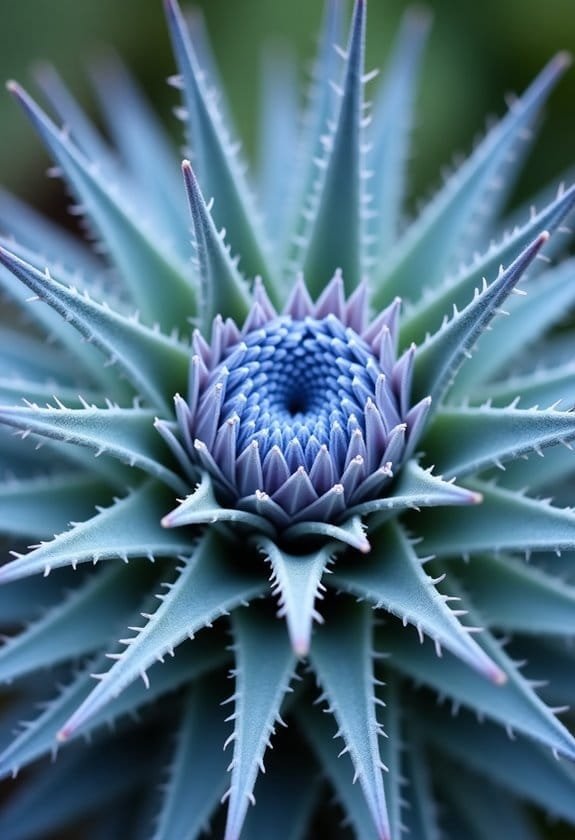
Known for its striking appearance, Eryngium × tripartitum, or tripartite sea holly, is a hybrid perennial that thrives in gardens and coastal landscapes. This remarkable plant features upright gray-green leaves, reaching impressive heights of 3-4 feet (90-120 cm) and a spread of approximately 20 inches (50 cm).
During mid-summer to early fall, it showcases stunning violet-blue stems adorned with metallic-blue flower heads, encircled by dark blue spiny bracts.
Cultivation techniques for Eryngium × tripartitum emphasize well-drained soils and full sun exposure, making it particularly suitable for gravel and coastal gardens. Its remarkable tolerance to poor soil conditions and drought enhances its landscape benefits, as it provides striking color and texture even in challenging environments. This hybrid not only enriches visual appeal but also attracts pollinators, contributing to the overall health of garden ecosystems.
Furthermore, Eryngium × tripartitum serves alternative uses, such as in floral arrangements, where its unique structure adds an alluring element.
Awarded the Royal Horticultural Society's Award of Garden Merit (AGM), this perennial is a tribute to both beauty and resilience, a vibrant choice for any garden enthusiast.