Helianthus debilis, known as cucumberleaf sunflower, thrives in the coastal regions of the Atlantic and Gulf Coasts, reaching heights of up to 2 meters. With its distinctively robust, deltoid leaves that evoke the appearance of cucumber plants, it displays remarkable adaptability to sandy, low-nutrient soils. This perennial creates bright yellow blooms, measuring 2 to 4 inches across, which attract essential pollinators like butterflies and native bees. Its ecological role includes erosion control and providing a food source for local bird species. For those interested in cultivating this stunning plant, attention to specific growing requirements guarantees its vibrant growth and contributions to biodiversity.
Main Points
- Helianthus debilis, also known as cucumberleaf sunflower, thrives in coastal regions with sandy, well-drained soils and full sun exposure.
- This plant blooms from spring to fall, producing striking yellow flowers that attract various pollinators including butterflies and native bees.
- Cucumberleaf sunflower plays a crucial role in erosion control and provides seeds as a food source for birds, enhancing local biodiversity.
- It demonstrates remarkable drought tolerance and requires annual spring fertilization, with spacing of 12 to 18 inches between young plants for optimal growth.
- Minimal pests are a concern, but careful management of humidity and soil drainage prevents issues like powdery mildew and root rot.
Introduction
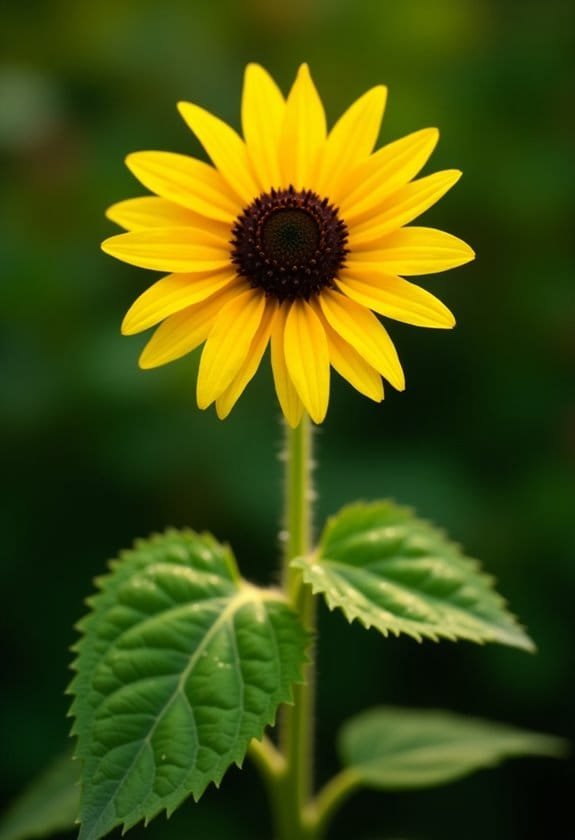
Helianthus debilis, known as the cucumberleaf sunflower, stands out for its unique foliage and vibrant blooms.
This perennial herb, native to coastal regions of the United States, showcases striking yellow flowers that flourish throughout the year in suitable climates.
With its resilience in poor soils and ability to draw in various pollinators, this species not only enhances coastal landscapes but also poses important conservation considerations for its imperiled subspecies.
Common Name
Cucumberleaf sunflower, also known as beach sunflower, weak sunflower, and East Coast dune sunflower, thrives in coastal areas of the Atlantic and Gulf Coasts of the United States. This native plant flourishes in sandy soils, showcasing its adaptability to marine environments. Its yellow blooms, reminiscent of traditional sunflowers, can grow between 2 to 4 inches in diameter, adding vibrant pops of color to coastal landscapes.
Adding to its charm, the cucumberleaf sunflower features distinctive leaves that resemble the shape of cucumbers, which is the origin of its common name. This unique foliage not only enhances its aesthetic appeal, but also allows it to withstand harsh coastal conditions.
The plant's resilience attracts a variety of butterflies, serving as an essential nectar source during blooming seasons. Moreover, the seeds produced by the cucumberleaf sunflower provide nourishment for birds, contributing to the biodiversity of coastal ecosystems.
Scientific Name
The cucumberleaf sunflower, scientifically known as Helianthus debilis Nutt., showcases the intricate classification within the Helianthus genus and Asteraceae family. This botanical designation implies a rich lineage characterized by its distinctive features and ecological preferences.
Commonly referred to as the beach sunflower or weak sunflower, Helianthus debilis thrives primarily along the Atlantic and Gulf Coasts of the United States, although its adaptability has led to introductions in places such as South Africa and Australia.
Helianthus debilis encompasses five recognized subspecies—subsp. cucumerifolius, debilis, silvestris, tardiflorus, and vestitus—each varying in morphology and habitat suitability. As an annual or perennial plant, it can reach impressive heights of up to 2 meters, boasting variable leaf shapes that add to its visual diversity.
The vibrant yellow ray florets of Helianthus debilis create a striking display in its natural coastal habitats, evoking images of sun-kissed shores. These characteristics not only reflect its scientific classification but also its ecological role, reinforcing the importance of understanding the complexities of plant taxonomy and its relationship with the environment.
Overview
In coastal regions of the United States, the cucumberleaf sunflower, or Helianthus debilis, stands out as a significant herbaceous plant. This remarkable species, native to the Atlantic and Gulf Coasts, embodies both beauty and ecological importance. A versatile grower, the cucumberleaf sunflower can reach heights of up to 2 meters, showcasing alternate leaves that vary in shape and size, typically growing around 14 cm long.
Its striking inflorescence features single or multiple flower heads adorned with vibrant yellow ray florets, which often display a spectrum of cultivars, including hues of whitish, reddish, or orange. Such diversity not only captivates the eye but also serves essential ecological functions.
Thriving in coastal habitats, this adaptable plant tolerates moderate salinity and drought, playing a critical role in erosion control. Furthermore, it's a magnet for wildlife, attracting various butterflies and birds, which add vibrancy to its surroundings.
Despite its resilience, particular subspecies, like subsp. vestitus, face conservation concerns, especially in Florida. Consequently, understanding the cucumberleaf sunflower's habitat and ecological contributions is imperative for preserving the delicate balance of coastal ecosystems.
Key Features
Helianthus debilis stands tall, reaching heights of up to 2 meters, with impressive leaves that can measure 14 cm in length, showcasing a robust and vibrant presence.
This perennial exhibits stunning flower heads adorned with 21 yellow ray florets, typically spanning 2 to 4 inches in diameter, which contribute to its eye-catching appeal.
Blooming year-round in favorable environments, it not only enhances coastal landscapes but also attracts a variety of pollinators, enriching the ecosystem with its nectar-rich offerings.
Growth Size
How tall can one expect Helianthus debilis to grow? This remarkable plant, often referred to as the dune sunflower, typically achieves heights ranging from 2 to 4 feet. In ideal conditions, however, some specimens can tower up to 6 feet. Growth patterns vary considerably depending on the subspecies, allowing this perennial to adapt impressively to different environments.
Its foliage consists of dark green, deltoid leaves that can extend up to 4 inches in length, drawing a visual resemblance to cucumber plants. Moreover, Helianthus debilis possesses an expansive growth habit, often spreading between 24 and 48 inches wide due to its efficient runner system.
This ability to spread not only enhances its decorative appeal but also contributes to its role in stabilizing sandy soils in coastal regions, where it's commonly found. The plant's continuous blooming cycle from spring to fall, with peak blooms extending up to 3 months, further enriches its value in horticulture.
Appearance
One can easily recognize Helianthus debilis by its striking features that set it apart in gardens and coastal landscapes. This remarkable plant showcases distinctive deltoid-shaped leaves, evocative of cucumber foliage, reaching lengths of up to 4 inches.
Standing typically between 2 to 6 feet tall, certain subspecies may extend even further towards the sky under ideal conditions, offering a robust presence.
The true charm of Helianthus debilis lies in its enchanting sunflower-like flowers, which range from 2 to 4 inches in diameter. These florets exhibit vibrant yellow petals that encircle a rich, dark brown center, creating a visually arresting contrast.
Each flower head may comprise up to 21 ray florets, contributing to a delightful display that enchants observers from spring through fall.
Supported by long, slender stems, the inflorescences create an elegant visual effect, swaying gently in coastal breezes.
The combination of its unique leaf shape, impressive height, and bright, cheerful blooms truly establishes Helianthus debilis as a standout feature in any garden, drawing both attention and admiration.
Flowering Season
Blooming from spring to fall, Helianthus debilis, or the cucumberleaf sunflower, brings vibrant color to gardens and landscapes with its continuous display of flowers in frost-free regions. This species typically begins its flowering season in late spring, showcasing stunning blooms that last for up to three months, effectively extending the visual appeal across both coastal areas and inland environments.
The flowers, measuring between 2 to 4 inches in diameter, flaunt bright yellow petals encircling a prominent brown center, enchanting the attention of onlookers and attracting an array of pollinators.
Helianthus debilis thrives in sandy soils, frequently found in coastal habitats, where its long stems elevate the blossoms, enhancing their visibility against the backdrop of blue skies and green foliage.
During its flowering season, the species produces nectar-rich flowers, providing an essential food source for butterflies and various beneficial insects. As a result, these sunflowers not only enrich the aesthetic quality of the landscape but also foster a vibrant ecological community.
Their remarkable ability to bloom continuously guarantees that the cucumberleaf sunflower remains a beloved choice for gardeners seeking to attract wildlife while enjoying an extended period of colorful blooms.
Growing Requirements
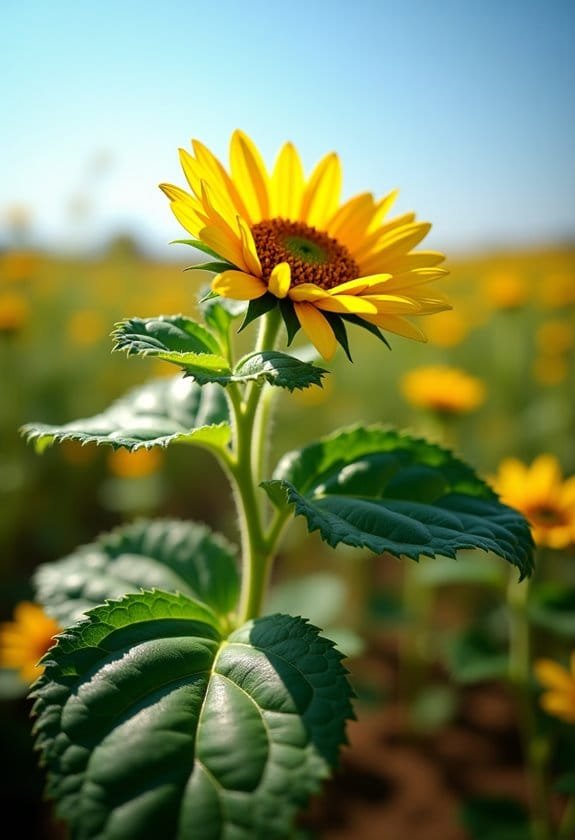
Helianthus debilis flourishes under full sun, requiring exposure to light that warms its vibrant blooms and encourages robust growth.
Preferring well-drained, sandy soils found in coastal areas, this sunflower variety germinates within about 14 days, thriving at an ideal temperature of around 70 degrees Fahrenheit.
Once established, it exhibits remarkable drought tolerance, rarely needing additional watering, which enhances its adaptability to various environmental conditions.
Light
Bright sunlight is essential for the healthy growth of Helianthus debilis, as these plants thrive best when they receive full sun exposure. This sunflower variant flourishes under ideal sunlight conditions, leading to vigorous growth and abundant flowering.
It's recommended to directly sow the seeds in May or June, during a period where sunlight is particularly ample, ensuring the seedlings receive adequate light and warmth.
For effective germination, the seeds require temperatures around 70 degrees Fahrenheit, which typically takes about 14 days to achieve. Once planted, spacing the young plants 12 to 18 inches apart is imperative; this arrangement allows sunlight to permeate, enabling each plant to harness the light necessary for robust development.
Once established, the beach sunflower demonstrates remarkable drought tolerance, highlighting its suitability for regions characterized by both high sunlight intensity and limited water availability.
Consequently, cultivating Helianthus debilis demands careful attention to light exposure and planting conditions, which greatly influence the plant's vitality and resilience. By accommodating these growing requirements, gardeners can expect a flourishing display of vibrant yellow blossoms, characteristic of this sun-loving species.
Soil
In sandy, well-drained soils, Helianthus debilis thrives, making it particularly suited for coastal environments where proper drainage is crucial. This remarkable plant demonstrates a strong tolerance for poor soil conditions, including both acidic and alkaline varieties, which enables it to flourish even in low-nutrient areas. Its adaptability allows gardeners to cultivate Helianthus debilis in a variety of soil types while still achieving vibrant blooms.
To optimize growth and flowering, the plant prefers full sun exposure, requiring temperatures around 70 degrees Fahrenheit for successful germination. Curiously, it's important to avoid over-irrigation; once established, Helianthus debilis exhibits impressive drought tolerance. In fact, it favors a dry environment that helps prevent root rot, making it an excellent choice for less-frequent watering schedules.
Moreover, proper planting practices influence its development; spacing the plants 12 to 18 inches apart allows for adequate growth and airflow, minimizing the risk of disease. With these soil preferences and requirements in mind, gardeners can successfully cultivate Helianthus debilis, enhancing their landscapes with this resilient, beautiful sunflower.
Water
For ideal growth, Helianthus debilis thrives with careful attention to its watering needs. This remarkable plant is highly drought tolerant once established, making it an excellent choice for low-water environments.
Initially, new seedlings demand consistent watering to guarantee proper development; typically, they should be watered consistently during the first few weeks after germination. However, as they mature, it's essential to allow the soil to dry out between watering sessions. Dog Rose, known for its vibrant rose hips, highlights the importance of managing water to ensure robust growth in similar conditions.
Helianthus debilis prefers well-drained, sandy soils that don't retain excess moisture, which can hinder its growth and lead to root rot. During the growth period, the plant indeed requires adequate moisture, but it flourishes in conditions where rainfall is infrequent, akin to its natural coastal habitats. Additionally, understanding how Field Forget-Me-Not adapts to well-drained soils can further inform successful cultivation practices.
Over-watering should be avoided, as this delicate balance between moisture and dryness promotes healthy root systems necessary for overall well-being. Consequently, understanding the watering needs of Helianthus debilis provides gardeners with the means to cultivate this sunflower effectively, guaranteeing it thrives in its intended environment while reflecting the resilience characteristic of many coastal species.
Temperature
Ideal temperatures around 70 degrees Fahrenheit greatly enhance the growth of Helianthus debilis, promoting healthy germination and development. This remarkable sunflower typically germinates within approximately 14 days when conditions are favorable, establishing a solid foundation for further growth.
As a species that thrives in full sun exposure, Helianthus debilis flourishes in warm, bright environments, making sunny locations highly suitable for cultivation.
Although these sunflowers primarily prefer warmer climates, they exhibit impressive adaptability across a range of temperatures, specifically within hardiness zones 8 to 11. This adaptive quality allows them to endure the fluctuating temperature extremes often found in diverse environments, reinforcing their resilience.
Once established, Helianthus debilis showcases drought tolerance, meaning it can withstand periods of low water availability without significant damage to its growth or blooming capabilities.
This characteristic not only aids in sustainability but also aligns with the growing interest in xeriscaping—a gardening method focused on water conservation.
Consequently, by selecting the right temperature and providing adequate sun exposure, gardeners can cultivate vibrant clusters of these sunflowers, enhancing both the beauty and ecological functionality of their landscapes.
Pollinator Criteria
Helianthus debilis inherently attracts a diverse array of pollinators, particularly butterflies, through its nectar-rich and easily accessible flowers. Measuring between 2 to 4 inches across, these small, sunflower-like blooms play an essential role in the pollination process, effectively drawing visiting insects from spring through fall. This plant also supports ecosystem health by enhancing genetic diversity among pollinator populations. Additionally, Helianthus debilis thrives in moist, well-draining soil, providing a suitable habitat for various pollinators.
Attracted Pollinators
The cucumberleaf sunflower boasts nectar-rich flowers that draw a variety of pollinators, playing an important role in enhancing local biodiversity. Its vibrant yellow blooms, appearing from spring to fall, serve as a continuous food source for butterflies, which are particularly attracted to its appealing petals and sweet nectar.
These interactions create a dynamic environment where pollinators thrive, fostering ecosystem health. Additionally, the cucumberleaf sunflower's open flower structure allows easy access to native bee species, crucial players in the pollination process. This adaptation ensures improved pollen accessibility for these beneficial insects.
These bees, drawn to the dense ground cover and abundant nectar, contribute considerably to the plant's reproductive success. Research underscores that Helianthus debilis serves as a key resource for sustaining these pollinator populations.
Moreover, the sunflower's seed heads become a favored food source for birds, especially finches, during the colder months. This dual role of providing nectar for butterflies and seeds for birds showcases the plant's multifunctional benefits within its ecosystem. The presence of ramsons in nearby habitats further enriches the environment by providing nectar-rich blooms that benefit early spring pollinators.
Pollination Method
How do pollinators select which flowers to visit? Pollinators, such as bees and butterflies, are instinctively drawn to nectar-rich flowers, a critical component of their foraging behavior.
Helianthus debilis, or cucumberleaf sunflower, employs a strategic pollination method that enhances its reproductive success. The plant features vibrant yellow ray florets, numbering up to 21 per flower head, which serve as visual beacons to foraging insects. This striking display not only highlights the flowers but also signals the presence of abundant nectar, enticing a variety of pollinators. Additionally, the presence of vibrant blue flowers in nearby plants like Vipers Bugloss can further attract beneficial insects.
The flowering period, which spans from spring to fall, guarantees a consistent food supply, helping sustain local pollinator populations. Additionally, the adaptability of Helianthus debilis to coastal habitats fosters an environment that nurtures pollinators accustomed to similar conditions. Moreover, its dense monocultures can impact the diversity of local pollinator species, similar to the effects seen with invasive plants like garlic mustard.
Care & Maintenance
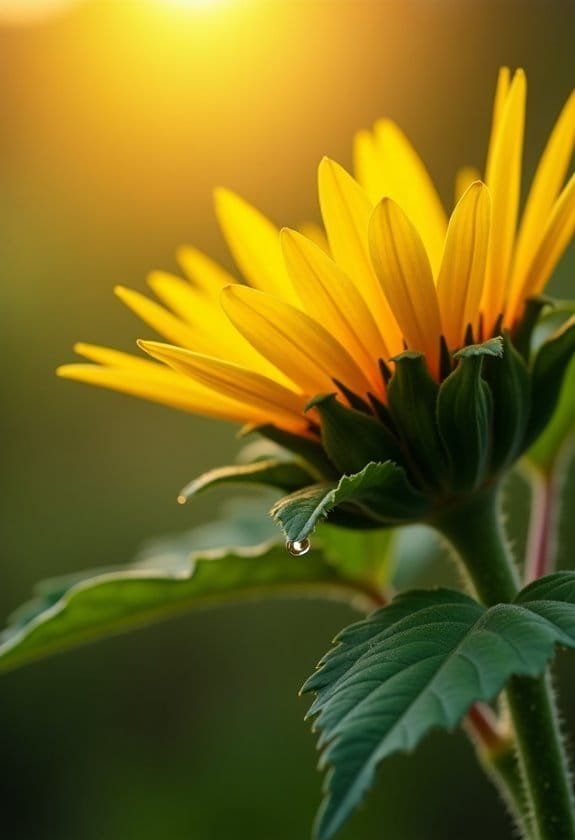
When cultivating Helianthus debilis, attention to planting tips, ongoing care, and companion planting can greatly enhance its vitality.
This sun-loving sunflower flourishes in sandy, well-drained soils, benefiting from thoughtful planting during the warmer months, ideally direct-sown between May and June.
Regular maintenance, such as spring pruning and judicious staking, not only fortifies its structure but also encourages a more vibrant floral display, making it an excellent choice for low-maintenance gardens.
Planting Tips
For successful growth of Helianthus debilis, it's vital to provide full sun and plant them in sandy, well-drained soil, spacing them 12 to 18 inches apart. As a beach sunflower, this plant thrives in bright conditions, which stimulate robust maturation and flowering.
During the establishment phase, regular watering is essential to support root development, but gardeners must avoid over-watering to prevent jeopardizing plant health through root rot.
To guarantee ideal growth, it's recommended to fertilize this sunflower variety once annually in spring and again in late summer. While nutrients foster vigorous development, excessive fertilizer may hinder growth, so caution is advised.
Pruning in early spring can notably enhance the plant's bushiness, leading to a fuller appearance and manageable shape.
Starting from non-stratified seeds or softwood cuttings, gardeners can expect germination within approximately 14 days under ideal temperatures of around 70 degrees Fahrenheit. This gentle act of planting enables a strong foundation for growth, so the beach sunflower can flourish and brighten garden spaces with its distinct charm and resilience. Furthermore, like Geum rivale, these sunflowers are known for their role in supporting local ecosystem diversity through attracting pollinators and providing food sources in their habitats.
Ongoing Care
Ongoing care for Helianthus debilis guarantees these vibrant beach sunflowers remain healthy and attractive in any garden. Thriving in full sun, these drought-tolerant plants flourish in sandy, well-drained soils once established. However, young plants require regular watering until their root systems become robust, ensuring longevity and vibrancy in mass plantings.
To promote healthy growth, annual fertilization is recommended, ideally conducted in spring and late summer. It's essential to apply moderate amounts; excessive fertilization can be detrimental to their development.
Regular pruning in early spring encourages new, dense growth, enhancing the aesthetic appeal of these charming groundcovers.
For taller varieties, staking is advisable. Gardeners can effectively support these plants by placing poles at an early growth stage, securing stems with twine or soft ties every six inches. Such measures prevent wind damage and help maintain the integrity of the mass plantings.
Suggested Companions
Pairing Helianthus debilis with compatible plants enhances both their growth and aesthetics.
In coastal dune environments, selecting companion plants like Salvia spp. can considerably boost biodiversity. These sage species attract beneficial pollinators, fostering a healthier garden ecosystem alongside the cucumberleaf sunflower. Additionally, Gaillardia spp., known as blanket flower, thrives in similar sandy conditions, providing a vibrant color contrast that enlivens the landscape and supports pollinator diversity in the garden.
Staggering the planting of Helianthus debilis with Coreopsis spp. creates a visually intriguing and drought-tolerant environment, ensuring blooms persist throughout the growing season.
Integrating Echinacea purpurea, or purple coneflower, adds not only beauty but also diversity, drawing various pollinators and enhancing wildlife interactions in this coastal region.
Furthermore, positioning Lavandula spp.—lavender—nearby not only elevates the garden aesthetics with its aromatic flowers but also serves a practical function by repelling unwanted pests.
These strategic pairings work harmoniously, each reinforcing the other's health, while collectively creating an engaging, lively atmosphere in the coastal dune garden. Additionally, promoting pollination through beneficial insects enhances the overall productivity of the garden ecosystem.
Common Issues
When cultivating Helianthus debilis, gardeners often encounter challenges related to pests and diseases that can hinder the plant's health.
Aphids, while not typically abundant, can appear and disrupt growth; however, employing natural predators or insecticidal soap generally resolves these minor invasions effectively.
Additionally, maintaining proper soil conditions is essential for combating potential problems, as the plant responds best to well-drained, low-nutrient environments that prevent root-related ailments.
Pests/Diseases
Despite its general resistance to pests and diseases, Helianthus debilis can occasionally encounter a few common issues. While these occurrences are rare, one notable pest is the aphid, which may infest the foliage and result in distressing leaf curling that leads to potential stunted growth. These minuscule insects, often undetected at first, thrive in clusters, consuming essential plant sap and weakening the overall vitality of the sunflower.
In addition to pests, fungal diseases such as powdery mildew can manifest under humid conditions, particularly when airflow around the plant is limited. This white, powdery substance gradually envelops leaves, affecting photosynthesis and overall health.
Moreover, root rot poses a significant threat, particularly if the plant is subjected to overwatering in poorly draining soils. This condition can lead to the deterioration of roots, ultimately impairing nutrient uptake.
Regular monitoring for these pests and diseases is critical, along with adhering to proper cultural practices. By ensuring proper drainage and ideal conditions, gardeners can effectively preempt potential issues, allowing Helianthus debilis to thrive in its natural splendor.
Awareness and diligence are key to maintaining the health of this resilient plant.
Solutions
To address the occasional pests and diseases that may affect Helianthus debilis, gardeners can implement several effective strategies. This resilient sunflower thrives in coastal regions, but caution is essential to avoid excessive salt spray. Ensuring well-drained soil prevents overwatering during growth, which can lead to root rot and hindered growth.
Regular pruning is essential, especially after blooming, to prevent the plant from becoming leggy and unkempt, promoting new growth and maintaining aesthetic appeal. Gardeners should monitor their plants but rejoice in the fact that Helianthus debilis generally suffers from minimal pest issues.
When cultivating this sunflower, utilizing local ecotypes is significant, particularly to protect the imperiled subsp. vestitus found in Florida, as hybridization could threaten their unique genetic makeup.
Monitoring fertilization practices is equally important, as excess nutrients can inhibit growth and lead to nutrient overload—a condition that stunts crucial development.
Summary
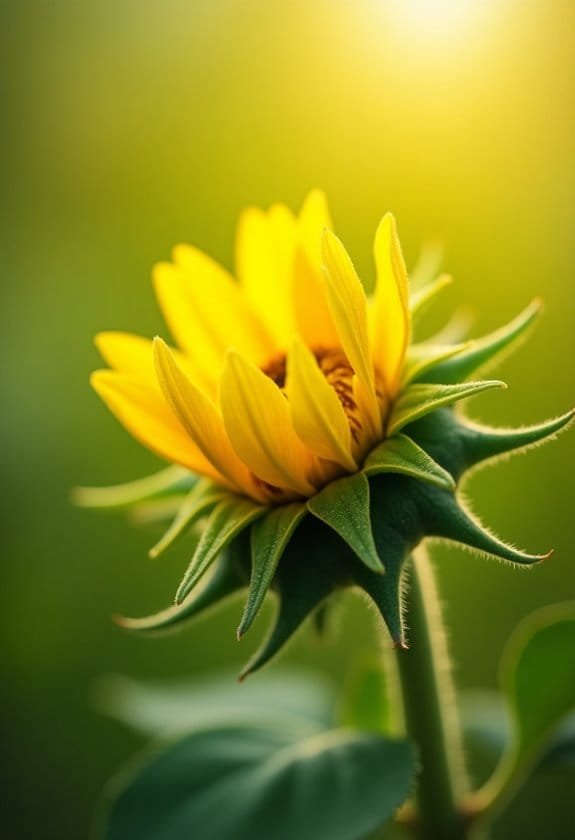
Helianthus debilis, or cucumberleaf sunflower, is a versatile herb that can be either annual or perennial, thriving mainly along the U.S. Atlantic and Gulf coasts. Known for its striking yellow, sunflower-like blooms, this plant can grow between 2 and 6 feet tall, depending on the specific subspecies.
Preferring sandy, well-drained soils typical of coastal dunes, it demonstrates remarkable drought resistance once established, making it a resilient component of its ecosystem.
Ecologically, cucumberleaf sunflower plays a crucial role in attracting various pollinators, including butterflies and birds, which are essential for ecosystem health. Additionally, its root structure aids in stabilizing sandy soils, effectively preventing erosion that can lead to habitat degradation.
Unfortunately, conservation concerns arise, particularly for the imperiled subspecies vestitus, with only about 22 known occurrences in Florida. This highlights the urgent need for habitat protection, as the loss of this unique plant may disrupt established ecological relationships.