Hydrotelephium telephium, widely recognized as Orpine, is a remarkably resilient succulent native to rocky, arid environments. With a height ranging from 2 to 2.5 feet, it features thick, serrated leaves and star-shaped flowers that bloom from August to October, attracting essential pollinators like bees and butterflies. This plant flourishes in full sun and well-drained, sandy soil with a pH of 6.0 to 8.0. Its deep taproots efficiently store moisture, enhancing drought resistance. Minimal maintenance is required, making Orpine a valuable addition to sustainable gardens, where it promotes biodiversity and health. More enlightening details await those keen to explore further.
Main Points
- Hylotelephium telephium, commonly known as Orpine, is a drought-resistant succulent in the Crassulaceae family, originally classified as Sedum telephium.
- Orpine thrives in rocky, well-drained sandy soils and requires full sun for at least six hours daily.
- It blooms from August to October, producing star-shaped flowers in pink to purplish-red, attracting bees and butterflies.
- The plant has thick, serrated leaves and a deep taproot that helps store moisture, making it ideal for arid environments.
- Minimal maintenance is needed, with reproduction through stem cuttings; however, it can be moderately toxic to humans and animals.
Introduction
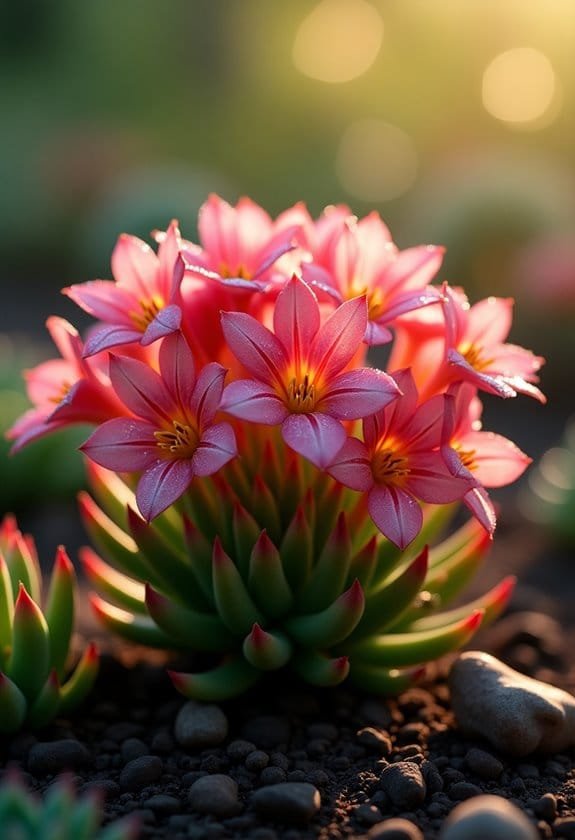
Hylotelephium telephium, commonly referred to as Orpine or Stonecrop, represents a fascinating succulent perennial native to diverse regions such as Europe, Russia, and northern China.
This plant's remarkable adaptability and unique characteristics set it apart from related species, particularly its former classification under the genus Sedum.
With its impressive height of 2 to 2.5 feet and fleshy leaves, Orpine not only enhances garden aesthetics but also plays an essential role in supporting local ecosystems by attracting beneficial insects.
Common Name
Commonly known as "orpine," this resilient plant is also referred to by several other names, including "stonecrop," "live-forever," "life-everlasting," and "frog's stomach." Each name reflects not only its hardiness but also its cultural significance in various traditions. Orpine, derived from the French term "orpiment," underscores its historical usage in both herbal remedies and folklore.
The term "stonecrop" emphasizes the plant's affinity for rocky, arid environments, where it thrives despite harsh conditions. Orpine's exceptional durability makes it a favored choice in gardens intended to withstand drought, appealing to both gardeners and ecologists alike. This plant exhibits excellent drought resistance due to its specialized water-storing tap roots, further enhancing its utility in diverse landscapes.
Additionally, its association with longevity is symbolically linked to healing properties, as many cultures have historically utilized it in traditional medicine. Wild Thyme (Thymus polytrichus) is another example of a pollinator-friendly plant that enriches the ecosystem by attracting beneficial insects.
Boasting a range of cultivars, each exhibiting unique traits, orpine shares the broader classification of stonecrop, encapsulating diverse forms that still resonate with the same essential hardiness.
This adaptability reflects not just ecological resilience but also the plant's fundamental role in various cultural practices, highlighting the profound connection between humanity and the natural world, where the orpine stands as a living proof to endurance and energy.
Scientific Name
The scientific name of orpine is Hylotelephium telephium (L.) H. Ohba, a designation that captures its biological heritage and recent reclassification.
Originally described by the renowned botanist Carl Linnaeus in 1753, the plant was first termed Sedum telephium, reflecting its initial inclusion in that genus. However, molecular studies conducted in 1977 led to a significant taxonomic shift, moving it to the genus Hylotelephium.
Belonging to the Crassulaceae family, Hylotelephium telephium exhibits the succulent features characteristic of its relatives, thriving in diverse environments.
The term "telephium" connects this plant to mythological King Telephus, symbolizing its historical use in treating unhealed wounds, emphasizing its medicinal importance.
In addition, Hylotelephium telephium is classified within the tribe Telephieae, indicating a distinct lineage that diverges from other Sedum species.
This classification not only enhances the understanding of its ecological relationships but also aids in preserving its unique traits.
As research continues, the significance of Hylotelephium telephium becomes increasingly apparent, showcasing the interplay between scientific discovery and botanical identity.
Overview
Recognized for its unique succulent features, Hylotelephium telephium, or Orpine, serves as a versatile addition to various garden designs. This herbaceous perennial, also known as Stonecrop, is native to Europe, Russia, and northern China. With an upright growth habit, the plant typically reaches heights of 2 to 2.5 feet.
Thriving in full sun and well-drained, medium to dry soil, Orpine requires minimal maintenance, making it an ideal choice for busy gardeners. Additionally, Orpine's ability to flourish in moist, grassy environments allows it to cohabit well with other plants.
The charming flowering stems produce dense clusters of delightful star-shaped flowers that bloom from mid-summer to early fall, showcasing an intriguing palette that ranges from pink to purplish-red. Measuring about 1 inch, these flowers not only enhance the aesthetic appeal of gardens but also attract beneficial insects like bees and butterflies, promoting a vibrant ecosystem.
While Hylotelephium telephium is moderately toxic to humans and animals, its historical use in traditional medicine underscores its multifaceted nature. Additionally, this Sedum variety can reproduce easily through stem cuttings and division, allowing gardeners to cultivate new plants effortlessly. The plant's resilience to mild frost enhances its adaptability in diverse climates, similar to other pollinator-attracting plants that thrive in gardens.
Key Features
Hylotelephium telephium, commonly known as Orpine, displays distinctive characteristics that make it a compelling choice for gardeners.
Growing between 2 to 2.5 feet in height and 1.5 to 2 feet in width, it captures attention with dense clusters of star-shaped flowers, which bloom in enchanting shades of pink and purplish-red from mid-summer to early fall.
Coupled with its thick, coarsely serrated leaves, this succulent perennial thrives in full sun and well-drained soils, showcasing its adaptability and low-maintenance appeal. Notably, similar to selfheal, Orpine contributes to local biodiversity by attracting various pollinators, such as bees, and it can also thrive alongside other acid-loving plants to enhance garden ecosystems.
Growth Size
Hydrotelephium telephium's growth size is one of its defining features, typically reaching heights of 2 to 2.5 feet and spreading to about 1.5 to 2 feet in width. This robust plant exhibits an erect and clumping habit, ensuring a visually striking presence in any garden.
Its stems, which may display green or red-tinged hues, are generally unbranched and possess a smooth surface, contributing to its overall composure.
The thick and fleshy leaves of Hylotelephium telephium measure between 1.5 to 4 inches long, showcasing a coarsely serrated edge along with an oblong-elliptic shape. Under ideal conditions, this plant can flourish, making it a reliable choice for gardeners seeking resilience.
The deep white, carrot-shaped taproots serve a vital function, as they enable Hylotelephium telephium to store water efficiently during dry periods, ensuring survival and growth.
Furthermore, the plant's ability to regenerate from a single leaf adds to its allure, presenting yet another reason for its popularity in various landscapes. With such impressive growth size, this perennial not only captures attention but also resonates with those passionate about sustainable gardening practices.
Appearance
With its striking presence, Orpine captivates gardeners through its unique appearance and key features. Hylotelephium telephium typically grows to a height of 2 to 2.5 feet, displaying a clumping habit that enhances its visual appeal. The upright, unbranched stems can be found in shades of vibrant green, often accented with delightful red tinges.
The thick, succulent leaves measure between 1.5 to 4 inches long and boast an oblong-elliptic shape, complemented by their coarsely serrated edges, creating a well-defined outline. The foliage presents a smooth, hairless surface with rounded tips, contributing to Orpine's distinctive appearance among other succulents.
In mid-summer to early fall, the plant reveals star-shaped flowers in dense clusters, exhibiting colors that evolve from pink to purplish-red, with occasional white or greenish variants. These flat-topped to convex flower clusters consist of tiny blossoms approximately 3/8 inch across, each adorned with five delicate petals and ten pinkish stamens.
This intricate design not only enhances its aesthetic value but also draws in pollinators, creating a vibrant tapestry in any garden setting.
Flowering Season
Blooming from mid-summer to early fall, Orpine's flowering season showcases an impressive display of tiny star-shaped flowers. These blossoms, which typically emerge from August to October, flourish in dense clusters that delight the eye.
Colors range from soft pink to rich purplish-red, with certain varieties exhibiting delicate white or greenish tints, adding to their charm. Each star-shaped flower measures about one inch across, presenting five petals along with ten pinkish stamens and five teardrop-shaped carpels, which collectively create a fascinating visual appeal.
The flowering generally occurs within the upper leaf axils and at the stem's apex, forming a striking display that commands attention during its blooming season.
To achieve the best flowering, Orpine thrives in full sun, basking in bright exposure that promotes robust growth and abundant flowers. The interplay of sunlight and rich coloration transforms this perennial into a vibrant focal point in gardens, drawing admiration from both casual observers and horticultural enthusiasts alike.
As the season progresses, the flowers enhance the landscape, serving not only as an ornamental delight but also attracting pollinators, essential for the ecosystem's health.
Growing Requirements
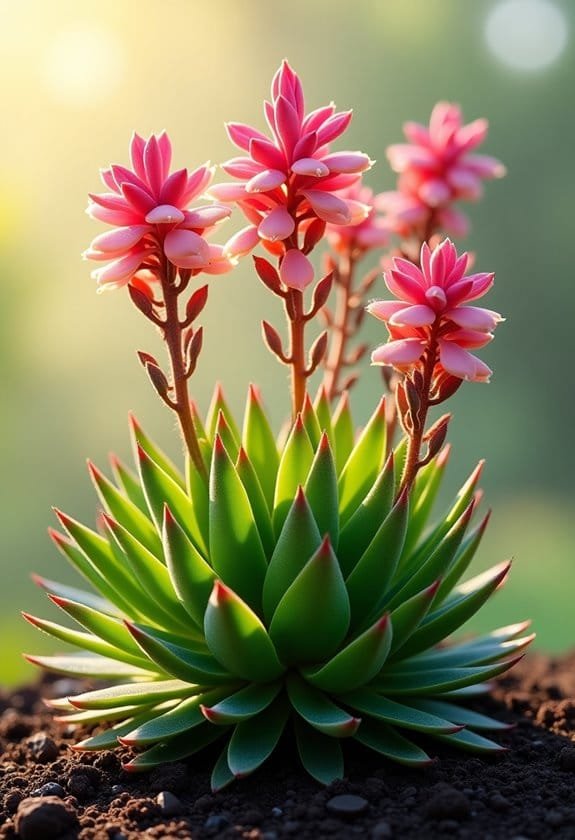
Hylotelephium telephium thrives under the warm embrace of full sunlight, making it a stellar choice for gardens that bask in bright exposure.
This hardy plant flourishes in various types of soil, particularly medium to dry, sandy, or rocky substrates with a pH between neutral and alkaline.
Watering should follow a soak and dry approach, promoting strong taproot development that effectively stores moisture and supports resilience during droughts.
Light
The ideal growing conditions for Hylotelephium telephium center around full sun exposure, as the plant thrives on a minimum of six hours of direct sunlight daily. This ample sunlight is vital for robust growth; it supports the plant's natural ability to produce vibrant flower colors that range from charming pinks to striking purplish-reds. In contrast, Creeping Buttercup's aggressive spread can significantly overshadow Hylotelephium telephium, underscoring the importance of a well-managed garden space.
While Hylotelephium telephium can tolerate light shade, prolonged periods without sufficient sunlight may lead to weak and leggy growth, ultimately undermining its aesthetic appeal and overall health.
Exposure to maximum sunlight not only enhances these vivid flower colors but also promotes healthier flowering, which typically occurs from mid-summer to early fall. This timing aligns with the plant's natural growth cycle, ensuring its blossoms are at their most magnificent when conditions are ideal.
Given its drought-tolerant nature, Hylotelephium telephium efficiently stores water in its fleshy leaves and taproots, allowing it to flourish even in challenging environments. Additionally, like ramsons, this plant benefits from well-drained soil conditions, which are important for plant health and growth sustainability.
As a result, a deliberate choice of a sunny location is essential, maximizing the plant's potential and creating a striking focal point in any garden setting. Establishing such conditions sets the stage for an astonishing display of nature's beauty.
Soil
Choosing the right soil is vital for Hylotelephium telephium to thrive. This resilient plant prefers medium to dry, sandy, or shallow-rocky soil that provides excellent drainage, which is essential for its health. The ideal pH for this succulent ranges from a neutral 6.0 to an alkaline 8.0, guaranteeing nutrient availability and promoting vigorous growth.
Hylotelephium telephium's unique white, carrot-shaped tap roots effectively store water, allowing the plant to survive during dry spells. However, it doesn't fare well in rich or overly wet soils, making drainage a top priority. While the plant demonstrates considerable adaptability across various soil types, it truly flourishes in well-drained conditions that prevent waterlogging and root rot. Additionally, the importance of deep taproot systems is notable for enhancing nutrient extraction and overall plant resilience. Common Cowslip serves as an example of a plant that thrives in well-drained, medium-moisture soils, benefiting similar growing conditions.
The relationship between soil composition and plant health is complex; therefore, gardeners should aim for a balanced environment with both drainage and nutrient supply.
Water
Watering is essential to ensuring Hylotelephium telephium's health and vigor. This plant thrives on a soak-and-dry watering method that aligns perfectly with its natural drought resistance. Gardeners benefit from a reduced need for frequent watering, as the plant can endure extended periods without water.
Ideal irrigation occurs when the soil is significantly dry to the touch, allowing the plant's robust, carrot-shaped tap roots to efficiently store moisture during arid spells. Dark Mullein's excellent drought tolerance further exemplifies the adaptability of drought-resistant plants in various garden settings.
Hylotelephium telephium flourishes in medium to dry sandy or shallow-rocky soils, which play a critical role in preventing root rot. When the soil retains excessive moisture, the risk of fungal and bacterial rot diseases escalates, negatively impacting overall plant health.
Ensuring excellent drainage is paramount, as overly rich or waterlogged soils hinder the plant's growth. Additionally, Dog Rose's growing requirements highlight the importance of well-drained soils for overall plant vitality.
This remarkable adaptability not only demonstrates Hylotelephium telephium's resilience but also presents it as an ideal choice for gardeners seeking low-maintenance yet visually appealing options.
Understanding these watering requirements is key to fostering a lush, thriving display that captures attention and admiration throughout the growing season.
Temperature
Hylotelephium telephium flourishes in a variety of temperatures, thriving best within USDA hardiness zones 5a to 9b, which gives it the ability to withstand temperatures ranging from -20°F to 30°F (-29°C to -1°C). This remarkable adaptability allows it to thrive in diverse climates, provided it receives sufficient light.
Ideally, it prefers full sun exposure, which not only enhances its overall health but also encourages vibrant flowering during the growing season. Though it can tolerate light shade, plants may struggle in heavily shaded conditions, resulting in weaker, leggy growth.
For those cultivating in regions characterized by hot, dry summers, established Hylotelephium telephium exhibits impressive drought resistance, requiring minimal additional watering. This resilience contributes to its appeal for gardens in warmer climates, where consistent sunlight is abundant.
To shield the plant from potential cold damage during winter months, applying a layer of mulch around its base is recommended. This practice insulates the roots, helping mitigate severe temperature fluctuations.
Pollinator Criteria
Hylotelephium telephium, with its vibrant pink to purplish-red flowers, serves as a fundamental attractant for a variety of pollinators, particularly bees and butterflies.
These organisms play an essential role in the plant's pollination method, facilitating cross-pollination, which enhances genetic diversity within the species.
Not only does orpine's flowering coincide with peak pollinator activity in the summer, but it also acts as a significant resource, supporting local ecosystems through its abundant nectar-rich offerings. Additionally, the presence of neighboring plants like hardy geraniums, which attract various beneficial insects to the garden, further enhances the overall pollinator experience. Wild strawberries, which also support local biodiversity, share similar habitats and provide valuable nectar resources during their flowering period.
Attracted Pollinators
Many gardeners find that Hylotelephium telephium, commonly known as Orpine, is a magnet for pollinators, thanks to its vibrant, nectar-rich flowers. During its flowering period, which spans from mid-summer to early fall, Orpine produces dense clusters of star-shaped blooms, enchanting a variety of pollinators, including industrious bees and captivating butterflies. The vivid colors and rich nectar attract these beneficial insects, offering a late-season food source essential for their survival.
Moreover, Orpine's succulent foliage demonstrates remarkable resilience to drought, allowing it to thrive even in less hospitable garden conditions. This adaptability makes it particularly suitable for diverse garden styles, ranging from rustic cottage gardens to elegant rock gardens. By cultivating Hylotelephium telephium, gardeners bolster local pollinator populations, effectively multiplying their ecological impact. Additionally, the nectar-rich flowers of Orpine can attract key pollinators that significantly contribute to the local ecosystem.
The interaction between the flowers and pollinators not only enriches the immediate environment but also sustains surrounding flora, fostering overall ecological diversity. Furthermore, like Water Avens, Orpine can serve as a vital nectar source for pollinators, especially during times of scarcity during peak flowering seasons. Encouraging pollinator activity through such a beautiful and practical plant creates a ripple effect, which ultimately benefits entire garden ecosystems and promotes vibrant, healthy plant life.
Therefore, Orpine truly serves as both a visual and ecological asset.
Pollination Method
Orpine's pollination method hinges on its ability to attract a variety of pollinators, particularly bees and butterflies, during the late summer and early fall. The star-shaped flowers bloom from mid-summer to early fall, creating dense clusters rich in nectar. This concentrated food source draws diverse pollinator species, ensuring that they visit multiple flowers, which enhances the likelihood of effective cross-pollination among plants.
The flowers' vibrant colors, ranging from pink to purplish-red, play an essential role in attracting these important visitors. Pollinators are instinctively drawn to such hues, facilitating a visual connection that guides them to the floral rewards. Remarkably, each flower's central structure, with five teardrop-shaped carpels and ten pinkish stamens, provides a clear target for pollinators.
With a flowering period extending from August to October, Hylotelephium telephium contributes considerably to local ecosystems, offering critical late-season resources for pollinators. As these pollinators thrive on Orpine's flowers, they reinforce the health of surrounding flora, amplifying biodiversity. Moreover, similar to how Red Clover enhances soil quality through its nitrogen-fixing abilities, Orpine supports ecological health by fostering a wide array of organisms.
In this way, Orpine underscores the intricate relationships between plants and pollinators within their shared environment.
Care & Maintenance
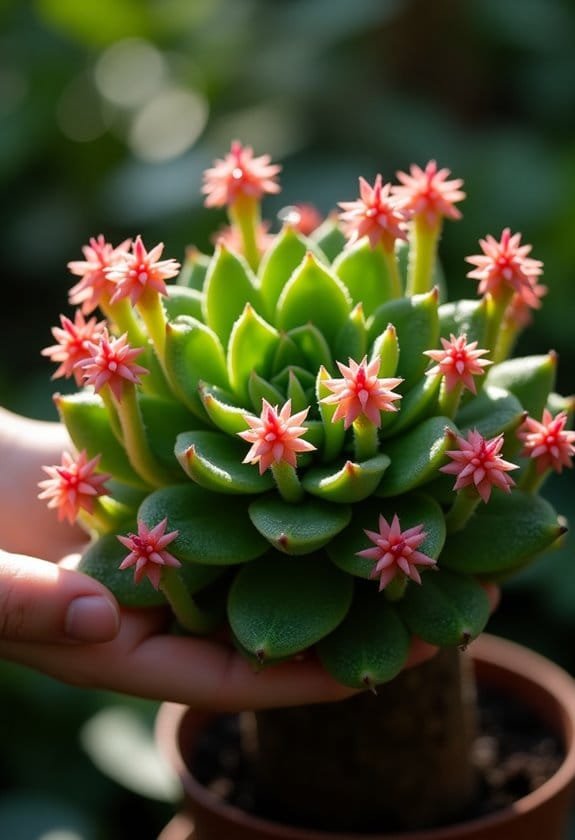
Caring for Hylotelephium telephium involves understanding its specific needs, such as ideal sunlight and soil conditions.
It flourishes in full sun, favoring medium to dry, sandy soils with a pH of 6.0 to 8.0, making proper planting essential.
Regular attention to watering practices, pest monitoring, and occasional fertilization will guarantee its continued health in the garden.
Planting Tips
When planting Hylotelephium telephium, choosing the right location is vital for the plant's success. This succulent plant flourishes in full sun, ideally basking in six to eight hours of sunlight daily.
The soil should be well-drained, with sandy or shallow-rocky conditions providing peak growth. When watering, employing the soak and dry method is essential; Hylotelephium telephium prefers its soil to dry out completely between waterings to avoid the dreaded root rot.
Annual application of a balanced fertilizer in spring enhances healthy growth and vibrant flowering, guaranteeing your orpine performs beautifully. For those interested in cultivation, a plant identification course offered could provide further insights into recognizing the unique properties of this species.
Propagation is relatively straightforward, as it can be achieved through division in spring or stem cuttings taken during the summer months, thus reinforcing its low-maintenance status. Additionally, observing pest monitoring as seen with Black Horehound can provide effective strategies for keeping Hylotelephium telephium healthy.
Regular vigilance for pests—notably slugs and aphids—as well as fungal diseases will assist in maintaining the plant's health and vigor.
Ongoing Care
To guarantee Hylotelephium telephium remains healthy and vibrant, ongoing care focuses on proper watering, fertilization, and pest management. This remarkable plant thrives under full sun, preferring well-drained, sandy, or rocky soil with a pH level between 6.0 and 8.0.
The "soak and dry" watering method suits this drought-tolerant species; it should be thoroughly watered when the soil feels dry, which prevents the roots from becoming waterlogged.
In spring, an annual application of balanced fertilizer fosters healthy growth. Despite its minimal soil requirements, a little boost in nutrients goes a long way.
For effective pest control, it's prudent to regularly inspect for aphids, slugs, and mealybugs, as these intruders can pose significant threats to foliage and stems, weakening the plant's vigor.
Additionally, propagation can effortlessly occur via division in spring or stem cuttings in summer, showcasing its adaptability. Remarkably, Hylotelephium telephium can even regenerate from a single leaf, making it an ideal choice for low-maintenance gardeners.
With such proactive ongoing care, gardeners can relish in the plant's beauty and resilience throughout the growing season.
Suggested Companions
Orpine thrives in the company of other drought-tolerant plants, creating a vibrant and resilient garden tapestry. For ideal results, it pairs beautifully with lavender, sedums, and ornamental grasses, which provide visually exciting contrasts in texture and height. Selecting companions that flourish in similar well-drained, sandy, or rocky soil conditions minimizes competition for water, ensuring that all plants achieve their best growth. Additionally, since Orpine prefers full sun exposure, it's important to combine it with other plants sharing this light requirement. This strategy fosters a healthy garden ecosystem, allowing each plant to thrive. Ground-covering companions, such as creeping thyme or stonecrop, can also enhance the garden by mitigating soil erosion while complementing Orpine's upright growth habit.
Wood Forget-Me-Not's ability to support biodiversity in garden ecosystems can also benefit Orpine's companion plants by attracting essential pollinators. Regular monitoring for pests, including slugs and aphids, is essential not just for Orpine but also for its companions. An integrated pest management approach promotes overall plant health and sustainability. Moreover, incorporating pollinator-friendly practices can greatly enhance the biodiversity and ecological value of the garden as well.
Consequently, by choosing appropriate partners and maintaining a vigilant eye on their well-being, gardeners can enjoy a flourishing, drought-resistant landscape that celebrates both beauty and resilience in nature.
Common Issues
Hydrotelephium telephium faces several common issues that can hinder its growth and overall health.
Pests like slugs, aphids, and various weevils are notorious for creating detrimental effects, while diseases such as fungal crown rot often arise in saturated, poorly drained soils, posing a significant threat.
Regular monitoring and timely intervention are essential strategies that can effectively mitigate these challenges, allowing the plant to thrive despite occasional adversity.
Pests/Diseases
In gardens and landscapes, Hylotelephium telephium faces various pests and diseases that can threaten its vigor. Common pests such as slugs, scale insects, mealybugs, nematodes, aphids, and weevils can inflict significant damage if not controlled. These invaders disrupt the plant's normal physiological processes, leading to diminished growth and aesthetic appeal.
Moreover, Hylotelephium telephium is susceptible to diseases like fungal and bacterial crown rot, along with root rot, particularly in soils that are overly wet or poorly drained. In these conditions, pathogenic organisms proliferate, wreaking havoc on root systems and potentially causing plant death.
Additionally, deer may occasionally browse on Hylotelephium foliage, introducing further challenges during periods of food scarcity. Regular monitoring for pests and diseases is essential to safeguard the health of orpine. Early intervention can prevent severe infestations, allowing the plant to thrive.
Fortunately, Hylotelephium telephium's inherent resilience to drought helps it survive some pest pressures. However, maintaining good cultural practices—like ensuring proper drainage and soil quality—can enhance its overall robustness. Consequently, vigilance in observing these aspects is key to cultivating a thriving orpine.
Solutions
Maintaining the health of Hylotelephium telephium requires proactive measures to combat common issues. Regular monitoring for pests like slugs, aphids, and mealybugs is essential, as failure to identify these invaders can lead to significant plant damage.
To prevent fungal and bacterial crown rot, gardeners must guarantee proper soil drainage and avoid overwatering; this resilient species thrives in dry conditions, requiring careful irrigation strategies.
Employing effective propagation techniques, such as division in spring or stem cuttings in summer, allows for easy expansion and management of plant populations. Additionally, during periods of severe drought, mulch serves as a valuable ally, helping to retain soil moisture while still permitting adequate drainage.
Gardeners should also inspect for signs of deer browsing, which can harm foliage, and utilize physical barriers or repellents to safeguard plants from these unwelcome visitors.
Each of these strategies contributes to a healthy environment for Hylotelephium telephium, enabling it to flourish. By fostering growth through observation and prevention, cultivators can enjoy the beauty and resilience of this exceptional plant.
Summary
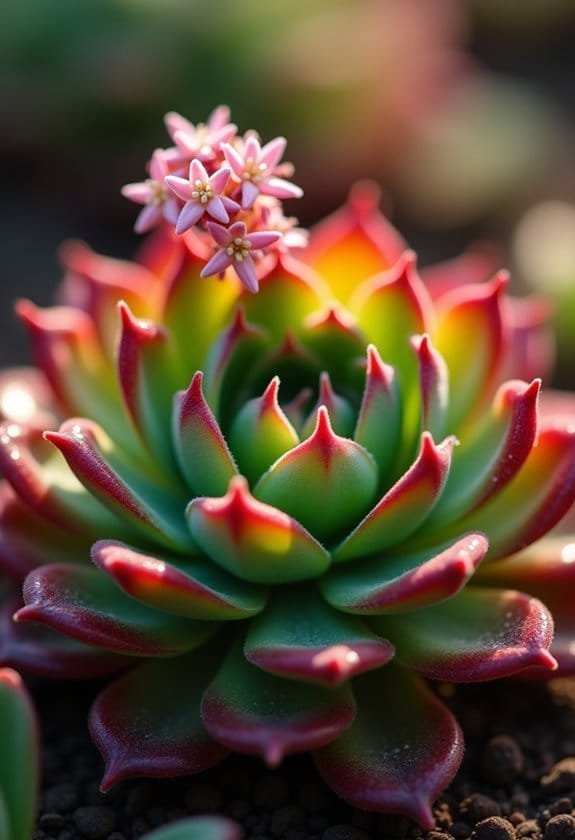
Hylotelephium telephium, often called Orpine or Stonecrop, is a striking succulent perennial that stands out in gardens across Europe and northern Asia. Typically reaching heights of 2 to 2.5 feet, this resilient herb thrives in full sun, favoring dry to medium sandy soils with pH levels from neutral to alkaline.
Its low-maintenance nature, combined with exceptional drought resistance, makes it an ideal choice for gardeners seeking enduring beauty with minimal effort.
During the flowering period, which spans from mid-summer to early fall, Hylotelephium telephium produces dense clusters of star-shaped flowers, exhibiting a mesmerizing array of colors ranging from pink to purplish-red. Each bloom measures about 1 inch, creating a visually striking display that attracts beneficial insects like bees and butterflies, thereby promoting a healthy, vibrant ecosystem.
Moreover, this plant's ability to propagate through stem cuttings, division, or even a single leaf highlights its adaptability and resilience.
Hylotelephium telephium isn't just a simple addition to any garden; it enriches local environments and serves as a sustainable choice for pollinator-friendly spaces. Its vibrant blooms and ecological benefits make it a cherished perennial for many gardeners.