Koelreuteria paniculata, often referred to as the Pride of India or Golden Rain Tree, is a remarkable deciduous tree that reaches heights of 30 to 40 feet. With a broad, dome-shaped crown, it provides significant shade, while its vibrant yellow flowers bloom from July to August, attracting various pollinators. Adaptable and drought-resistant, it thrives in well-drained soils under full sun exposure. This tree's unique lantern-shaped seed pods, measuring 3 to 6 cm, shift from green to striking shades of orange and pink in autumn. Those seeking to enhance their landscape will discover even more compelling qualities and care requirements.
Main Points
- Pride of India (Koelreuteria paniculata) is a medium-sized deciduous tree, reaching heights of 30 to 40 feet with a broad crown.
- It features vibrant yellow flowers that bloom in mid-summer and colorful lantern-shaped seed pods that change from green to orange or pink in autumn.
- The tree thrives in full sun and prefers well-drained soils, showing resilience to drought once established.
- Known for attracting pollinators like bees and butterflies, it's recognized by the Royal Horticultural Society as a "Plant for Pollinators."
- Regular care includes fertilization in early spring and pruning to remove damaged branches, while being vigilant about fungal diseases.
Introduction
Koelreuteria paniculata, commonly referred to as the Pride of India or Golden Rain Tree, presents an inviting elegance with its impressive height and distinctive crown.
This medium-sized deciduous tree, reaching up to 30-40 feet tall, boasts clusters of brilliant yellow flowers during the summer that add vibrant color to landscapes, while its unique lantern-like seed pods further engage the eye in autumn and winter.
Indigenous to East Asian territories like China and Japan, this resilient species thrives in varied soil types and drought conditions, making it a favored option for urban environments.
Common Name
Known for its vibrant beauty and cultural significance, the tree commonly referred to as the "Pride of India" boasts several intriguing names. This moniker highlights its historical roots and importance in Indian culture, serving as a proof of its majestic presence.
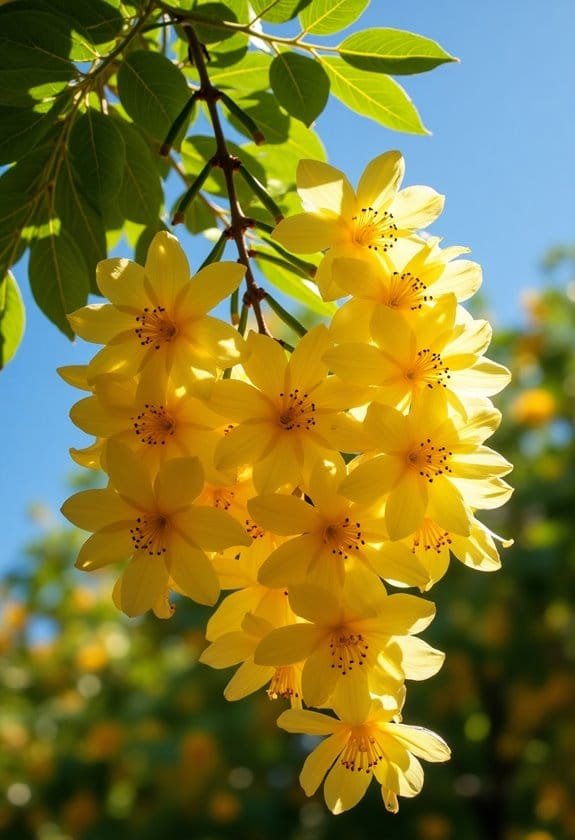
Additionally, the common name "Golden Rain Tree" aptly describes the tree's stunning mid-summer bloom, featuring clusters of golden-yellow flowers that cascade down like a brilliant waterfall of sunlight.
Another name, "Varnish Tree," originates from the sap that this tree produces, which was historically utilized to create a varnish-like substance, showcasing its practical use in various industries. Each common name reflects different facets of the tree, emphasizing its attractiveness, cultural impact, and functional attributes.
In addition to its visual appeal and practical applications, the diversity of these names illustrates how the "Pride of India" has garnered attention and admiration across the globe.
Its presence in gardens and landscapes not only enhances aesthetic value but also connects individuals to its rich heritage and ecological importance. The common names associated with Koelreuteria paniculata encapsulate the essence of this remarkable tree, inviting awe and appreciation from all who encounter it.
Scientific Name
The scientific name for the tree popularly known as the "Pride of India" is Koelreuteria paniculata, a member of the Sapindaceae family. First described in 1772 by the botanist Erik Laxmann, Koelreuteria paniculata is renowned for its striking appearance and seasonal changes.
This tree typically exhibits broad, dome-shaped crowns, complemented by pinnate leaves that can measure between 15–40 cm (6–16 in) in length. Its foliage, lush and inviting, provides a remarkable backdrop for the tree's most celebrated feature: the vibrant yellow flowers.
These blooms emerge in terminal panicles, which can grow to an impressive 20–40 cm (8–16 in) long, gracing the tree during midsummer and attracting various pollinators.
Following this floral spectacle, Koelreuteria paniculata bears distinctive fruit. The tree produces a three-part pod, measuring between 3–6 cm, which intriguingly shifts from green to enchanting shades of orange and pink in autumn.
This visually striking change not only enhances the landscape but also signifies the changing seasons, making Koelreuteria paniculata a cherished specimen in gardens and parks worldwide.
Overview
Originating from East Asia, the Pride of India, or Golden Rain Tree, captivates with its impressive size and vibrant seasonal displays. This medium-sized deciduous tree typically reaches heights of about 10 meters (30-40 feet), showcasing an extensive, dome-shaped crown that provides ample shade.
During mid-summer, the Pride of India bursts forth with striking clusters of yellow flowers, creating a breathtaking panorama that enchants onlookers.
As autumn approaches, the tree's unique fruit emerges, characterized by its distinctive three-part lantern-shaped pods. These pods evolve from green to a warm palette of orange or pink, often persisting well into winter, providing an enduring visual interest.
Native to regions of China, Japan, and Korea, the Pride of India was introduced to North America in 1763, quickly naturalizing across various climates.
Renowned for its adaptability, this remarkable tree tolerates a wide variety of soil types and environmental conditions, which makes it a popular choice for urban landscaping projects, despite potential invasiveness in certain regions.
Consequently, the Pride of India not only enhances aesthetic landscapes but also serves as a reminder of nature's resilience and versatility.
Key Features
Koelreuteria paniculata, often celebrated for its grand stature, typically reaches a height of 30 to 40 feet, adorned with a broad, dome-shaped crown.
During the warm summer months of July and August, it graces the landscape with striking clusters of star-shaped yellow flowers, which not only attract pollinators but also enhance its aesthetic appeal.
This tree's impressive growth, vibrant flowers, and overall visual impact make it a notable choice for both urban and suburban environments.
Growth Size
Reaching impressive heights of 30 to 40 feet, Koelreuteria paniculata boasts a broad, dome-shaped crown that enhances its presence in any landscape. As a medium-sized deciduous tree, it typically grows at a medium to fast rate, allowing it to achieve its full height relatively quickly under favorable conditions.
The rounded crown, characterized by its gracefully spreading branches, contributes considerably to its stately appearance, making it a favored choice for green spaces.
Koelreuteria paniculata can match its height with a width of up to 30 feet, resulting in a dense canopy of foliage that offers ample shade for outdoor activities.
This expansive branching structure creates a natural umbrella, enhancing the tree's ornamental appeal while serving functional purposes in parks and residential areas alike.
Its considerable size and welcoming shade make it an ideal candidate for urban landscaping, where it aids in reducing heat and providing habitat for various wildlife.
Appearance
The impressive growth size of Koelreuteria paniculata sets the stage for its striking appearance. Commonly known as the golden rain tree, this majestic species typically reaches heights of 30 to 40 feet, featuring a broad, dome-shaped crown that provides ample shade.
The tree's pinnate leaves, which can grow between 15 and 40 centimeters in length, consist of 7 to 15 leaflets per leaf, contributing to its lush and vibrant foliage.
In summer, the golden rain tree bursts into life with stunning clusters of yellow flowers, forming large panicles that can measure between 20 and 40 centimeters long. These blooms create a fascinating visual display, reminiscent of a firework explosion against the green backdrop.
As autumn approaches, the tree reveals its distinctive fruit, a three-part pod ranging from 3 to 6 centimeters in length. These pods shift from green to a delightful orange or pink hue, enhancing the tree's autumnal appeal.
Additionally, the tree's bark, characterized by silvery grey plates interlaced with reddish-brown tones, adds an intriguing textural element, particularly significant during winter when the leaves have fallen, revealing its distinctive structure.
Flowering Season
During July and August, the Pride of India dazzles with its vibrant flowering season, showcasing stunning panicles of small yellow flowers. The tree's impressive clusters, which can measure between 20-40 cm (8-16 inches) long, create a spectacular visual display reminiscent of cascading fireworks.
These delicate, hermaphrodite flowers play an essential role in nurturing local biodiversity, as they attract an array of pollinators, including bees and butterflies, during the warm summer months. The flowering season lasts for several weeks, ensuring continuous beauty and color throughout this period.
As the flowers begin to fade, petals gracefully drop, creating a charming "Golden Rain" effect on the ground below, enhancing the overall aesthetic appeal of the tree. This enchanting spectacle not only captivates onlookers but also supports ecosystem dynamics.
Growing Requirements
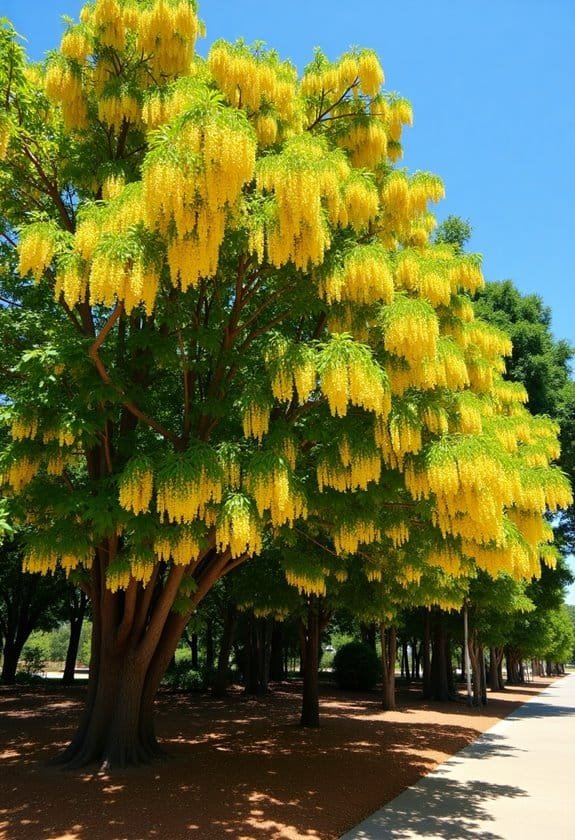
Koelreuteria paniculata flourishes under full sun exposure, requiring well-drained soil to thrive.
This versatile tree adapts to various soil types, from sandy to clay, yet it demonstrates a notable resilience to drought once established, making it a preferred choice for low-maintenance gardens.
Regular, careful watering during dry spells is essential, as it not only supports healthy growth but also enhances the vibrancy of its seasonal blooms.
Light
For ideal growth and vibrant flowering, planting Koelreuteria paniculata, commonly known as Pride of India, in full sun is fundamental. This magnificent tree thrives when it receives at least six hours of direct sunlight each day, enabling the production of its striking yellow flowers during July and August.
While Koelreuteria paniculata can adapt to various lighting conditions, its performance considerably improves in bright, sunny locations, where it showcases its full floral potential. Insufficient sunlight can negatively impact the tree's growth, leading to a leggy appearance characterized by fewer blooms, diminishing both its aesthetic appeal and overall vitality.
Fundamentally, the more light this tree absorbs, the more robust its structure becomes, allowing for a stronger framework to support its stunning display. Although it can tolerate some shade, it's important to understand that flowering will be less abundant in those conditions, akin to a painter with a muted palette, struggling to create a masterpiece.
Therefore, for gardeners aiming to cultivate the Pride of India, prioritizing a sun-drenched planting site won't only guarantee healthy foliage but also maximize the brilliance of its golden yellow flowers.
Soil
Achieving perfect growth in Koelreuteria paniculata requires attention to soil conditions as much as it does to sunlight. This remarkable tree flourishes best in well-drained soils, emphasizing the significance of excellent drainage for root health.
While it adapts to various soil types, including sandy, loamy, and clay soils, its versatility allows it to thrive across different planting environments effectively.
A notable preference for calcareous soils—the alkaline substrate rich in essential nutrients—enhances its robust growth and vibrant flowering.
Although the ideal soil pH isn't strictly defined, Koelreuteria paniculata typically performs well in neutral to slightly alkaline ranges, supporting its nutrient uptake and overall health.
Good drainage stands paramount; while the tree exhibits drought tolerance once established, it remains sensitive to waterlogged conditions, which can impair growth.
Water
Water is an essential factor in the growth requirements of Koelreuteria paniculata. This remarkable tree, also known as the Pride of India, exhibits impressive drought tolerance once established; it's particularly suitable for areas where water availability fluctuates. However, diligent watering is important during the initial growth phase, especially during dry spells, to guarantee its proper establishment and development.
Koelreuteria paniculata thrives best in moist, well-drained soils, yet it possesses the adaptability to endure drier conditions. Excessive watering can lead to detrimental effects, such as root rot or damage to its extensive root system. As such, maintaining a careful approach to irrigation is fundamental.
Throughout the growing season, adequate moisture considerably contributes to vibrant foliage and abundant flowering, particularly during the summer months when the tree showcases its full beauty. As water nourishes its roots, it serves as the lifeblood, enabling the tree to flourish and display its vibrant golden-yellow flowers.
As a result, understanding the appropriate watering practices can enhance the health and appearance of this striking tree, allowing it to thrive in diverse environments with varying moisture levels.
Temperature
Temperature plays a significant role in the growth and health of Koelreuteria paniculata. This ornamental tree thrives in hardiness zone 6, making it ideal for temperate regions where moderate climates prevail.
For optimal development and flowering, it requires full sun, needing at least six hours of direct sunlight each day. The tree grows best within a temperature range of 21°C to 32°C (70°F to 90°F) during the growing season, as it favors warmer conditions for vigorous development.
Once established, Koelreuteria paniculata demonstrates moderate drought tolerance, allowing it to adapt to varying soil moisture levels. While this species isn't particularly frost tender, it can withstand gentle winters, although planting in areas shielded from harsh, variable cold winds is essential for its protection.
This resilience underscores its suitability for diverse environments and highlights its beauty and practicality. By selecting appropriate conditions, gardeners can successfully cultivate this stunning tree, ensuring it flourishes under ideal temperatures and sunlight exposure.
Hence, understanding temperature requirements is essential for anyone interested in incorporating the Pride of India into their landscape.
Pollinator Criteria
Koelreuteria paniculata successfully attracts a diverse array of pollinators, primarily bees and butterflies, through its nectar-rich flowers.
These blooms, prominent from July to August, serve as an essential food source during peak summer, engaging pollinators in a crucial dance of mutualism that enhances ecosystem stability.
Attracted Pollinators
The vibrant flowers of Koelreuteria paniculata play an important role in attracting a variety of pollinators, thanks to their rich nectar and hermaphrodite nature.
These striking clusters bloom during the summer months, extending 12 to 15 inches long, thereby providing an expansive resource for pollinators like bees and butterflies throughout July and August. The bright yellow, long-lasting blooms of this tree not only capture attention but also signify a crucial food source that encourages several insects, enhancing ecosystem health. Additionally, flowering plants such as Ramsons with nectar-rich blooms support early spring pollinators, helping to sustain biodiversity.
Recognizing its significance, the Royal Horticultural Society has included Koelreuteria paniculata in its Plants for Pollinators list, emphasizing its contribution to ongoing support for diverse pollinator populations.
By offering important nectar resources, this species fosters a thriving habitat that promotes biodiversity in gardens and urban landscapes. The presence of these attracted pollinators indicates a balanced ecology, where each flower serves as a small oasis, enriching the surrounding environment.
As these pollinators visit the tree, they participate in a dance of life, helping guarantee the continuation of various ecosystems and serving as a reminder of the interconnectedness inherent in nature's design. Additionally, the role of such flowering plants, like Koelreuteria paniculata, in supporting pollinator populations underscores their importance in maintaining ecological balance.
Pollination Method
Golden Rain Trees employ a unique pollination method that effectively leverages their hermaphrodite flowers. These flowers house both male and female reproductive organs, allowing for self-pollination, which can occur independently of pollinator activity. However, the tree's reproductive potential greatly thrives when visiting insects, particularly bees, engage in pollination. The bright yellow coloration and nectar-rich blossoms attract these busy pollinators.
Blooming during mid-summer, from July to August, the flowers form long panicles measuring 12 to 15 inches. This structure not only enhances visibility but also provides ample access for insects, maximizing pollination opportunities. The process of pollination is vital for the formation of the tree's distinctive lantern-shaped seed pods, ultimately ensuring reproductive success.
As the Golden Rain Tree promotes biodiversity in its local ecosystem, its flowering period coincides perfectly with the peak activity of summer pollinators. This synchronicity fosters a harmonious relationship between the tree and the pollinators, highlighting the interdependence of species.
Fundamentally, the pollination method of the Golden Rain Tree is a fine example of nature's intricate design, demonstrating how adaptive strategies bolster reproductive success and ecological balance.
Care & Maintenance
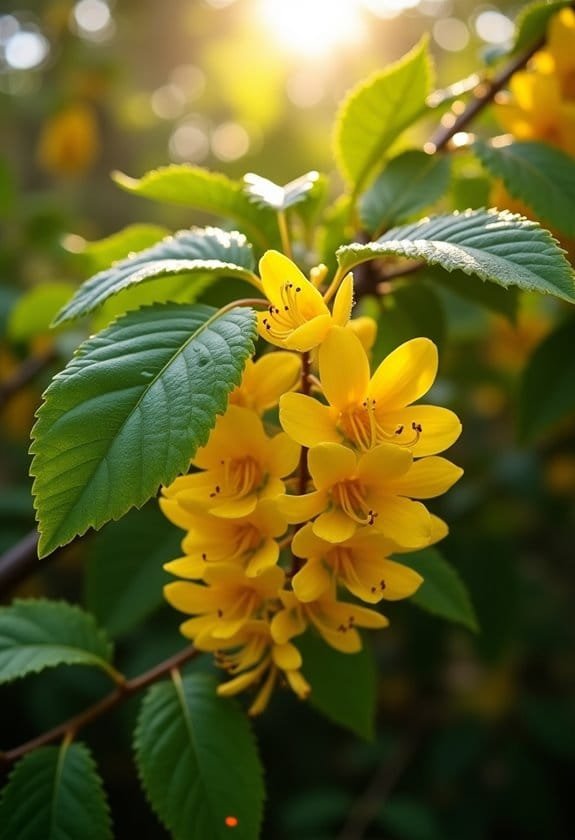
Proper care and maintenance of Koelreuteria paniculata, commonly known as the golden rain tree, guarantee its vigorous growth and stunning displays of yellow blooms.
To thrive, this resilient tree needs a minimum of six hours of direct sunlight each day, along with well-drained soil that can accommodate various types, from sandy to clay.
For ongoing care, regular monitoring for pests and diseases, along with timely fertilization and occasional pruning, can enhance its health and aesthetic appeal, creating a vibrant addition to any landscape.
Planting Tips
When planting Koelreuteria paniculata, choosing the right location is key to its success. Ideally, this vibrant tree thrives in full sun, allowing its golden-yellow blooms to flourish. To promote optimal growth and flowering, guarantee the soil is well-drained, as poor drainage can hinder root development.
One of the vital planting tips involves watering the young tree regularly, particularly during dry spells, which helps establish a resilient root system. Interestingly, the tree is drought tolerant once it matures, making it a low-maintenance option for gardens.
Fertilizing in early spring with a balanced fertilizer will further support vigorous growth and abundant blooms throughout the growing season.
For best results, plant Koelreuteria paniculata during the spring or early autumn when temperatures are more moderate and conducive to root establishment.
Although pruning is generally minimal, any dead or damaged branches should be removed in late winter or early spring to maintain the tree's aesthetic appeal and overall health.
Adhering to these planting tips lays a foundation for a beautiful and sturdy addition to any landscape, guaranteeing its enduring presence for years to come.
Ongoing Care
As Koelreuteria paniculata matures, ongoing care becomes vital to maintain its vibrant blooms and healthy growth. Regular watering is fundamental, particularly during dry spells, guaranteeing this deciduous tree thrives, especially in its establishment phase. A diligent gardener should understand that consistent moisture promotes ideal growth characterized by vibrant yellow flowers.
Minimal pruning is required, but any necessary shaping should occur in late winter. This practice encourages a natural crown formation that enhances aesthetic appeal. In early spring, applying a balanced fertilizer will greatly boost bloom production and support the overall health of the plant.
Mulching around the base serves multiple purposes; it retains soil moisture, suppresses invasive weeds, and stabilizes root temperatures throughout seasonal fluctuations. This protective layer not only nurtures the tree but also mimics nature's resilience.
Lastly, vigilant monitoring for pests, particularly scales and boxelder bugs, is integral. Addressing outbreaks promptly will safeguard the foliage and overall vigor of Koelreuteria paniculata.
Suggested Companions
Selecting the right companions for Koelreuteria paniculata can considerably enhance both the aesthetic and ecological balance of any garden. To create a harmonious landscape, gardeners should consider companion plants that flourish in full sun and share similar soil preferences. Notable choices include Lavender (Lavandula) and various Ornamental Grasses, which not only enrich the visual appeal but also thrive alongside the Golden Rain Tree. Bugloss (Anchusa arvensis) can also be included as a hardy option, as it thrives in nutrient-deficient areas and can establish in disturbed habitats.
Effective care for these companion plants involves consistent watering during dry spells and ensuring ample spacing to minimize competition for nutrients. Ground cover options, such as Creeping Thyme (Thymus serpyllum), can be particularly beneficial; they suppress weed growth, retain soil moisture, and create a cohesive appearance.
Additionally, fertilizing in early spring with a balanced nutrient mix promotes healthier growth and more vibrant flowering. Introducing aromatic herbs like Rosemary, with its remarkable drought tolerance, can further enhance the garden's resilience and ecological richness.
Regular pruning of companion perennials and shrubs is essential as well. This practice maintains air circulation and allows sunlight to penetrate effectively, which reduces potential disease risks and maximizes the flowering potential of Koelreuteria paniculata.
Thoughtful selection and maintenance of companion plants ultimately cultivate a thriving garden ecosystem, enhancing the beauty and resilience of the landscape.
Common Issues
Koelreuteria paniculata encounters several common issues that can impact its health and aesthetic appeal.
While generally resilient, the tree may suffer from fungal diseases like coral spot and cankers, alongside pests such as scales and boxelder bugs, which can diminish leaf vigor.
Additionally, the tree's brittle wood presents a risk during severe weather events, prompting the need for vigilant care and proactive solutions to mitigate these challenges.
Pests/Diseases
Dealing with pests and diseases is crucial for maintaining the health of Koelreuteria paniculata. This ornamental tree faces particular challenges from several pests and fungal diseases that, if left unmanaged, can compromise its structure and vigor.
One common issue is coral spot fungus, identifiable by reddish-brown lesions on branches, which can weaken the tree's overall integrity. Additionally, cankers resulting from fungal infections may lead to branch dieback, necessitating vigilant monitoring and timely pruning to contain their spread.
Another significant concern is Verticillium wilt, a condition that causes leaf wilting and can lead to a distressing decline in the tree's health. Early identification and management are key to mitigating its impact.
Infestations by pests such as scales and boxelder bugs also contribute stress to Koelreuteria paniculata. Regular inspections for these pests are advisable to make sure populations are kept in check and prevented from becoming unmanageable.
The natural brittleness of Koelreuteria paniculata's wood heightens its susceptibility to storm damage, which can lead to further complications regarding pests and diseases on already compromised trees.
Hence, proactive care is crucial for the tree's longevity and beauty.
Solutions
To effectively combat common issues faced by Koelreuteria paniculata, proactive management strategies are essential. One must monitor trees for coral spot fungus and cankers, as these diseases can inflict significant harm if left unchecked. Early detection allows for timely intervention, which reduces further damage to the tree's health.
Additionally, vigilance is vital in managing Verticillium wilt, a disease manifesting through wilting leaves. Trees exhibiting symptoms may need removal to prevent the disease's spread to other nearby plants.
Furthermore, the tree's brittle wood poses a challenge, especially in storm-prone areas. Careful site selection, including evaluating wind exposure, can mitigate risks of breakage.
While Koelreuteria paniculata enhances local ecosystems by attracting pollinators with its nectar-rich flowers, its invasive potential can't be overlooked. In some regions, particularly the eastern United States, it displays aggressive growth, necessitating strategies for managing its spread, such as controlled pruning and monitoring competing flora. Moreover, the presence of other invasive species could exacerbate the competition for resources and disrupt local ecosystems.
Summary
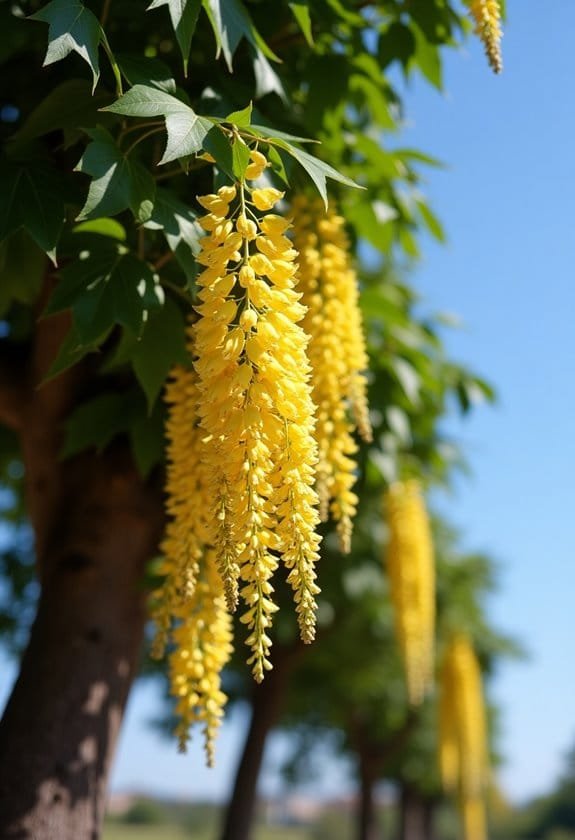
The Golden Rain Tree, or Pride of India, is a striking medium-sized deciduous tree that can grow up to 30-40 feet tall and showcases a broad, dome-shaped crown. This impressive species, known scientifically as Koelreuteria paniculata, blooms in July and August, producing large clusters of vibrant yellow flowers that attract bees and other pollinators, thereby enhancing local biodiversity.
Following the flowering period, the tree develops distinctive lantern-shaped seed pods that change from green to orange and pink during autumn, creating an eye-catching display.
Native to regions in China, Japan, Korea, and Manchuria, the Pride of India was introduced to North America in 1763 and has gained acclaim for its ornamental value. Though it thrives in full sun and adapts well to various soil types, which makes it an excellent choice for urban landscaping, it has earned a reputation as invasive in certain areas.
Remarkably drought-tolerant once established, this tree contributes profoundly to ecosystem health through its nectar-rich blooms. Consequently, the Golden Rain Tree stands out not only for its aesthetic appeal but also for its ecological benefits and adaptability, making it a valued addition to many landscapes.