Liatris spicata, often referred to as Button Snakewort or Dense Blazing Star, is a enchanting perennial native to eastern North America, showcasing robust spikes of vibrant purple flowers that flourish from July to September. This plant can grow between 1 to 5 feet tall and thrives in well-drained, calcium-rich soil with a pH of 6.0 to 7.5, requiring at least six hours of sunlight daily. Remarkably attracted to butterflies and bees, it greatly enhances local biodiversity while retaining resilience against deer. With proper care, including regular deadheading and monitoring for pests, Liatris spicata can consistently beautify gardens and contribute ecologically. Additional insights await.
Main Points
- Liatris spicata, also known as Button Snakewort or Dense Blazing Star, features vibrant purple flower spikes and thrives in moist prairies.
- This plant grows 1 to 5 feet tall and blooms from July to September, attracting butterflies and bees.
- It prefers well-drained, calcium-rich soil with a pH of 6.0 to 7.5 and tolerates moderate drought.
- Liatris spicata has historical medicinal uses among Native American tribes and enhances biodiversity in garden ecosystems.
- Regular care includes full sun, adequate watering during establishment, deadheading, and dividing every 3 to 4 years for optimal growth.
Introduction
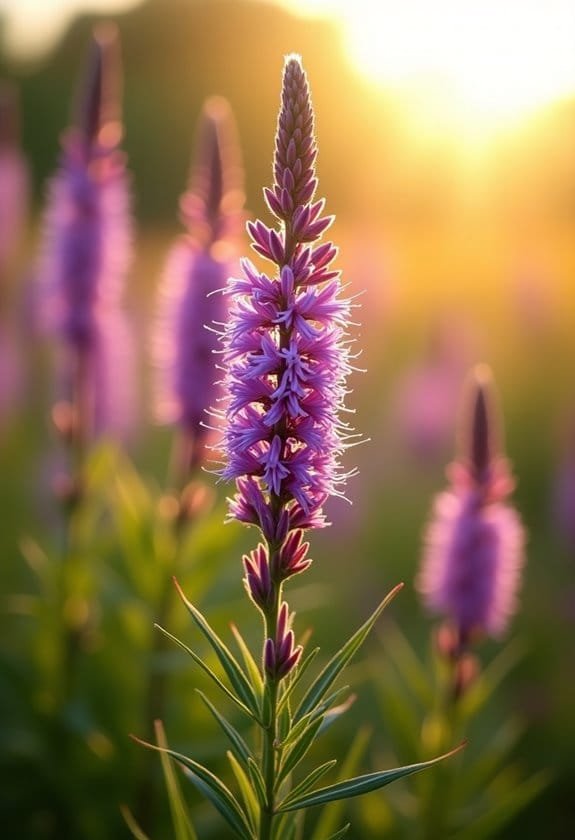
Liatris spicata, commonly known as Button Snakewort or Dense Blazing Star, stands out with its remarkable purple flower spikes.
This perennial plant thrives in the moist prairies and sedge meadows of eastern North America, achieving impressive heights between 1 and 5 feet.
Its ecological importance, alongside its historical medicinal uses, highlights the multifaceted value this fascinating species brings to both nature and human traditions.
Common Name
Commonly referred to by a variety of names, Liatris spicata captures attention in gardens and natural landscapes alike. Known as the dense blazing star, this perennial plant boasts tall spikes adorned with vibrant purple flowers that can reach heights of up to four feet.
Originating from the moist prairies and sedge meadows of eastern North America, Liatris spicata thrives in environments that support its robust growth.
This resilient plant exhibits its remarkable beauty from July to September, during a bloom period that creates an enchanting display, attracting diverse pollinators such as butterflies and bees.
While many gardeners fondly call it gayfeather, the name 'button snakewort' aptly describes its rounded flower heads resembling buttons, both delighting the eyes and inspiring curiosity.
The common names reflect not only its physical characteristics but also its ecological significance. Adorning gardens, the dense blazing star serves as a dynamic complement to a variety of landscapes while providing essential sustenance to pollinators.
Each name evokes a unique aspect of this notorious plant, encapsulating its essence and illustrating why Liatris spicata remains a cherished floral choice across North America.
Scientific Name
The scientific name of the plant often called button snakewort is Liatris spicata (L.) Willd., which emphasizes its classification within the Asteraceae family. This classification places it alongside other flowering plants, offering insight into its ecological relationships.
Liatris species, particularly Liatris spicata, are native to eastern North America, thriving in diverse habitats such as moist prairies and sedge meadows.
Characterized by its striking tall spikes adorned with vibrant purple flowers, Liatris spicata typically grows between 1 to 5 feet (0.30 to 1.52 meters) tall, creating a stunning visual presence in garden settings.
This species often flourishes in hardiness zones 3 to 8, finding its range extending from the Midwest to the East Coast, even into parts of Canada. The unique adaptations of Liatris spicata enable it to flourish in its preferred environments, where it plays a crucial role in supporting local wildlife.
With these attributes, Liatris spicata not only captivates garden enthusiasts but also serves as a critical component of its native ecosystem.
Understanding its scientific classification enriches appreciation for this remarkable plant and its contributions to biodiversity.
Overview
This striking perennial plant, known as Button Snakewort, enchants garden lovers with its tall purple flower spikes and ability to attract pollinators.
Liatris spicata reaches heights of 1 to 5 feet, showcasing its vibrant purple flowers from July to September. Native to eastern North America, it flourishes in moist prairies, sedge meadows, and areas bathed in full sunlight with well-drained soil.
As a biodiversity enhancer, Liatris spicata draws an array of pollinators, including butterflies and bees, becoming a crucial resource within garden ecosystems.
Historically, Native American tribes valued this plant for its medicinal properties, employing it to treat ailments such as swelling and sore throats, which adds to its cultural significance.
Moreover, Button Snakewort displays remarkable resilience; it's deer-resistant, although other wildlife like groundhogs and rabbits may nibble on its foliage.
This characteristic guarantees that it can thrive in various landscapes, making it an excellent addition for both aesthetic appeal and ecological function. Hence, Liatris spicata isn't just a beautiful plant adorned with purple flowers, but also a functional and culturally rich component of diverse gardens.
Key Features
Liatris spicata stands tall, typically reaching heights of 1 to 5 feet, adorned with spikes of fluffy purple flowers that flourish from July to September.
Its linear, grass-like leaves form a dense, mounded cluster, creating a visually striking display that enhances any garden setting.
The combination of its impressive stature and vibrant blooms makes it an attractive choice for those looking to enrich their landscape with both beauty and ecological value.
Growth Size
Standing tall, Liatris spicata typically reaches heights between 1 to 5 feet (0.30 to 1.52 meters), showcasing a sturdy and upright growth habit. This impressive growth size contributes greatly to its role in both garden landscapes and natural settings.
The plant's linear, simple leaves can grow up to 12 inches (30.5 cm) long, creating a lush green backdrop that enhances its overall stature. Arranged alternately along the stem, these pubescent leaves provide a striking contrast to the vibrant flowering spikes.
When fully mature, Liatris spicata can expand in width from 9 to 18 inches (22.9 to 45.7 cm), making it an excellent choice for borders, wildflower patches, and pollinator gardens. The flowering spikes, which can extend 6 to 12 inches (15.2 to 30.5 cm), are crowned with fluffy purple flowers that bloom from the top down, creating a spectacular display that delights the senses.
This growth pattern not only draws attention to the plant but also lasts approximately three weeks during the summer months, ensuring it remains a focal point in any setting.
Ultimately, Liatris spicata's growth size underscores its value as a stunning, resilient garden perennial.
Appearance
Boasting a tall and slender form, Liatris spicata showcases linear, pubescent green leaves that can stretch up to 12 inches in length. This visually striking plant typically reaches heights between 1 and 5 feet, presenting a unique profile in any garden or landscape. The foliage consists of simple, alternate leaves, which serve to accentuate the plant's elegance and robustness.
The flowers, one of its most enchanting features, appear in fluffy purple spikes that bloom sequentially from the top down, contributing a vibrant splash of color. Each spike can measure between 6 to 12 inches long and remains in bloom for approximately three weeks, creating a delightful display that draws the eye of passersby.
Remarkably, these flowers release a pleasant vanilla scent upon drying, enhancing their appeal for use in potpourri and floral arrangements.
Liatris spicata's preference for wetter habitats distinguishes it from other Liatris species, thriving magnificently in moist prairies and sedge meadows. By integrating these key features, the plant not only enriches the environment visually but also adds an aromatic dimension, encapsulating a balance of beauty and utility.
Flowering Season
During the peak of summer, Liatris spicata bursts into a stunning display, typically blooming from July to September. This flowering season showcases tall spikes measuring between 6 to 12 inches, adorned with rounded heads composed of numerous fluffy purple blossoms. The blooms appear sequentially, starting at the top of the spike and descending, which creates a visually enchanting effect. Lasting approximately three weeks, these vibrant blooms not only captivate the eye but also attract a diverse range of pollinators, enhancing the local ecosystem.
Remarkably, Liatris spicata generally flowers in its second year following seed propagation, rewarding patient gardeners with a splash of color that elevates garden aesthetics. Beyond their visual charm, the dried flowers emit a delightful vanilla-like scent, making them ideal for potpourri and floral arrangements, while retaining their appeal over time.
As the flowering season unfolds, the lush purple hues transform gardens, inviting admiration and fostering an appreciation for the natural beauty surrounding them. In nurturing this perennial plant, gardeners contribute to a sustainable environment, showcasing the harmonious relationship between floral beauty and ecological significance.
Growing Requirements
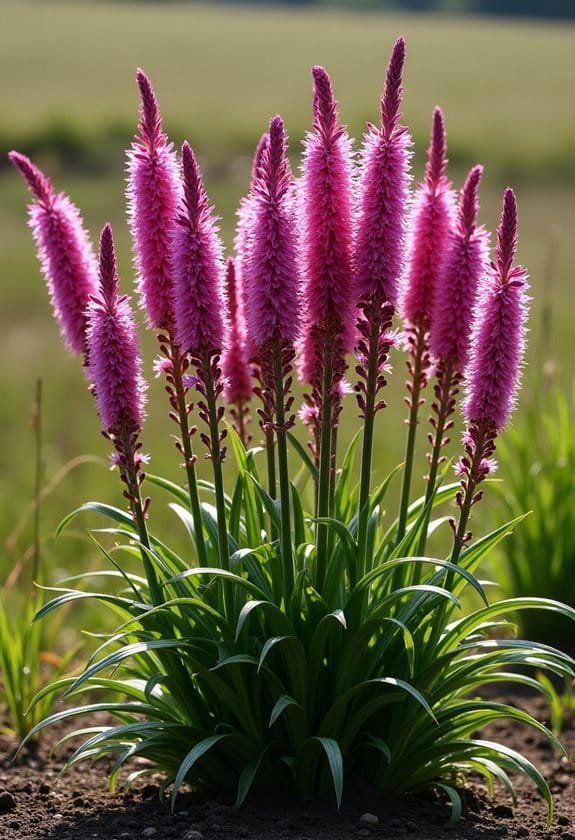
Liatris spicata flourishes in full sun, requiring well-drained soil rich in calcium and magnesium to thrive.
While it can tolerate partial shade and brief droughts, providing ideal conditions greatly enhances its growth and flowering potential.
Understanding these growing requirements guarantees that gardeners can cultivate this visually striking plant effectively, fostering a vibrant and enduring floral display.
Light
For ideal growth and vibrant flowering, Liatris spicata needs full sun, ideally soaking up at least 6 hours of direct sunlight each day. This hardy perennial thrives under full sun conditions, as adequate light fosters robust photosynthesis, leading to enhanced vitality and flowering.
While Liatris spicata can manage some shaded areas, it will generally present fewer blooms and may develop a leggy appearance if exposed to insufficient light.
Under optimum sunlight, this species produces striking tall spikes of purple flowers from July through September, enchanting both gardeners and pollinators alike.
Pollinators are essential for the plant's reproductive success; as a result, bright light not only supports the plant's well-being but also its ecological role. Conversely, inadequate light can compromise flowering and overall health, making it essential to select the right planting location.
Soil
To achieve ideal growth, Liatris spicata demands well-drained soil rich in calcium and magnesium but low in potassium and phosphorus. This hardy perennial flourishes best in areas characterized by moist conditions, such as prairies and sedge meadows, yet demonstrates a remarkable ability to weather drought once firmly established.
The preferred soil pH for optimal performance hovers between 6.0 and 7.5, reflecting a slightly acidic to neutral balance that supports its nutritional needs.
While Liatris spicata can thrive in various soil types—including sandy and loamy compositions—it's essential to safeguard it against overly wet conditions, particularly during winter months, to prevent root rot.
Regular soil checks are vital; monitoring moisture levels and ensuring consistent drainage will greatly enhance the plant's health and blooming potential.
Water
How much water does Liatris spicata need to thrive? This plant flourishes in moist soil, which plays a crucial role in its overall health and development.
While the established Liatris spicata can tolerate moderate drought conditions, it requires consistent watering during its initial growth phase to guarantee ideal establishment and vigor.
The key to nurturing this vibrant perennial lies in providing well-drained soil, as excessive moisture can lead to detrimental issues such as root rot. A balanced approach is essential; plants prefer environments that allow the soil to dry slightly between watering sessions, thereby avoiding prolonged exposure to waterlogged conditions, which can be harmful to their growth.
Furthermore, soil with a balanced composition rich in calcium and magnesium greatly contributes to the strong growth of Liatris spicata.
By maintaining a careful equilibrium of moisture, gardeners can encourage this resilient plant to thrive, resulting in robust blooms that enhance any landscape.
To summarize, achieving the right moisture balance is akin to orchestrating a symphony, where every note must harmoniously align for the most breathtaking performance.
Temperature
Liatris spicata thrives best in USDA hardiness zones 3 to 8, showcasing remarkable adaptability to a variety of temperature conditions. This plant flourishes in moderate climates, with ideal growing temperatures ranging between 70°F and 85°F (21°C to 29°C) during the active growing season.
It benefits from cooler evening temperatures that aid in mitigating stress from midday heat. While Liatris spicata can tolerate fluctuations in temperature, it avoids extreme heat or prolonged cold exposure, which may adversely affect its development and flowering.
Full sun exposure is essential, as this perennial requires at least six hours of direct sunlight daily to reach its full potential. Protecting Liatris spicata from frost during early spring and late fall is important; unexpected freezing temperatures can hinder flowering and diminish overall health.
It's imperative for gardeners to monitor temperature changes, ensuring that this plant remains in its preferred environment. By creating conditions that emphasize stability and warmth, enthusiasts can cultivate vibrant blooms, leading to a visually stunning addition to any garden landscape.
Ultimately, providing the right temperature environment fosters robust growth and flowering for this charming perennial.
Pollinator Criteria
Liatris spicata plays an important role in attracting an array of pollinators, particularly butterflies such as monarchs and bumblebees, which flock to its vibrant purple flower spikes.
With its blooming period extending from July through September, this plant not only serves as an essential food source for insects but also facilitates a diverse range of pollination methods, mainly involving the transfer of pollen by these creatures. Additionally, similar to River Water Crowfoot, Liatris spicata thrives in conditions that support a healthy ecosystem, such as clean, nutrient-rich water. This native plant provides critical habitat for local pollinator species, enhancing local ecosystem diversity.
Attracted Pollinators
Attracting a diverse array of pollinators, Liatris spicata stands out in gardens and natural habitats alike. The plant's vibrant purple flowering spikes are a magnet for bumblebees, digger bees, and long-horned bees, creating a bustling hub of activity. These pollinators flock to the nectar-rich blooms, crucial for their nourishment, especially during the peak flowering period from July through September. This timing is critical, as it aligns perfectly with the highest activity levels of many pollinators.
Additionally, L. spicata is particularly sought after by specific butterfly species, such as the monarch and tiger swallowtail, which depend on its flowers for sustenance as they traverse their migratory paths.
Hummingbirds, attracted by the intense color and sweetness of the nectar, further enhance the plant's appeal, increasing its role in sustaining local biodiversity.
Pollination Method
A wide range of pollinators flock to Liatris spicata, drawn by its vibrant flowers and abundant nectar. Blooming from July through September, the plant features tall spikes of purple flowers that provide essential nectar and pollen, important for supporting various species throughout the summer months.
The unique blooming sequence, where the top flowers open first, entices pollinators to return consistently, ensuring they stay engaged over time.
Among the admirers are bumblebees, digger bees, long-horned bees, and diverse butterflies, including the enchanting monarch and tiger swallowtail. Each plays an essential role in the pollination process, transferring pollen from one bloom to another, facilitating seed production, and enhancing plant reproduction.
Moreover, the plant emits a gentle vanilla scent when its flowers are dried, further attracting pollinators while enhancing their foraging experience.
Liatris spicata not only serves as a feeding ground but also supports local ecosystems by providing habitat for rare moth caterpillars. As a native plant, it fosters biodiversity and instills a sense of harmony within its environment, underscoring the importance of preserving such crucial species for future generations.
Care & Maintenance
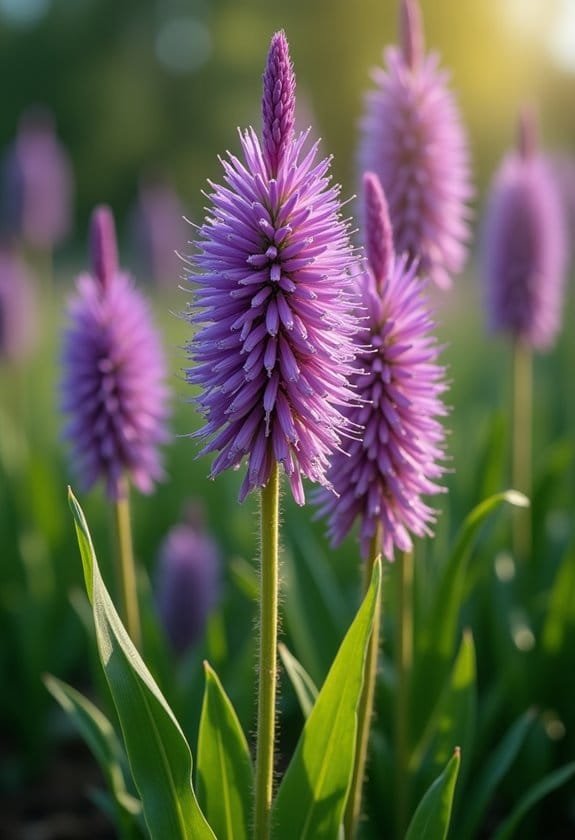
Caring for Liatris spicata involves understanding its specific needs for peak growth and vibrant blooms.
Planted in full sun and well-drained soil, ideally spaced 12-15 inches apart, it flourishes best in conditions rich in calcium and magnesium while minimizing potassium and phosphorus.
Regular maintenance, including deadheading and moderate watering during establishment, guarantees this drought-tolerant perennial remains healthy and continues to attract pollinators to your garden.
Planting Tips
Liatris spicata's success in the garden hinges on proper planting and maintenance techniques that guarantee peak growth. To achieve this, gardeners should plant in full sun with well-drained soil, ideally rich in calcium and magnesium, while avoiding excess potassium and phosphorus levels.
Seed propagation demands patience, as seeds require a germination period of 20 to 45 days and should be spaced 12 to 15 inches apart for optimal growth during the first growing season.
Watering needs are moderate; once established, Liatris spicata can withstand drought conditions, though it's vital not to keep the soil too wet during winter months. In addition to proper irrigation, gardeners should practice deadheading spent flowers. This encourages a longer blooming period, typically spanning from July through September, enhancing the plant's aesthetic appeal.
Additionally, it's advisable to divide the plants every 3 to 4 years to sustain their vigor and flowering performance. This simple yet essential aspect of care guarantees the plants remain healthy and vibrant over time, transforming any garden into a stunning landscape filled with delightful blooms.
Ongoing Care
Successful growth isn't just about planting; ongoing care plays a significant role in maintaining the vibrancy of Liatris spicata. This perennial thrives with moderate watering, requiring less attention once established, thanks to its drought tolerance.
Regular deadheading is crucial, as removing spent flowers enhances the plant's aesthetic appeal while prolonging its blooming period from July through September.
To promote healthy growth, it's advisable to divide Liatris spicata every three to four years. This practice prevents overcrowding in garden beds and encourages robust flowering.
Fertilization should be approached with caution; Liatris prefers low levels of potassium and phosphorus, flourishing instead in calcium- and magnesium-rich soils. A light application of fertilizer in early spring suffices.
Moreover, ongoing care demands vigilance. Gardeners must monitor for any signs of disease or pest infestations, such as Erysiphe cichoracearum, which causes powdery mildew, or Puccinia liatridis, responsible for rust.
Early detection is essential to guarantee the plant's health and longevity, enabling it to thrive and contribute its striking beauty to the landscape. By attending to these care requirements, Liatris spicata flourishes, rewarding gardeners with resilient blooms and enchanting visuals.
Suggested Companions
When planning a garden, pairing Liatris spicata with compatible companions can enhance both beauty and ecological benefits. This perennial thrives alongside native plants like Echinacea purpurea (purple coneflower) and Rudbeckia hirta (black-eyed Susan), creating large sweeps of color that attract similar pollinators, such as butterflies and bees. Additionally, Echinacea purpurea serves as a valuable pollinator magnet, attracting various beneficial insects that support the garden's ecosystem.
These companions flourish in comparable sunlight and moisture levels, fostering a harmonious environment. Furthermore, incorporating Achillea millefolium (common yarrow) and Coreopsis verticillata (threadleaf coreopsis) enriches the landscape with contrasting colors and textures, adding visual intrigue.
Planting these species together guarantees they share similar growing conditions while providing natural support through their diverse growth habits. Including grasses like Schizachyrium scoparium (little bluestem) not only enhances seasonal aesthetics but also strengthens the visual stability of the garden during winter dormancy, as these grasses maintain their structure when Liatris foliage dies back.
To promote airflow and healthy growth, it's essential to space all plants, ideally 12 to 15 inches apart. Regularly deadheading Liatris spicata can also spur blooming in neighboring companions, creating a vibrant and dynamic planting scheme that captivates attention throughout the seasons. Additionally, including pollinator-attracting plants like Salad Burnet complements the garden ecosystem by supporting beneficial insects, which contributes to overall plant health.
Common Issues
Liatris spicata often faces several challenges from pests and diseases, which can compromise its health and vigor.
Common issues include powdery mildew, rust disease, and Verticillium wilt, each presenting unique symptoms that can markedly affect growth if not addressed promptly.
To combat these pathogens, gardeners should focus on practices like enhancing air circulation and ensuring well-drained soil, as these measures can greatly mitigate the risks associated with overwatering and fungal infestations.
Pests/Diseases
Pest and disease management is crucial for the health of Liatris spicata, as these plants are prone to several common issues. One prevalent concern is powdery mildew, caused by the fungal pathogen Erysiphe cichoracearum. This condition thrives in humid environments and poorly ventilated areas, manifesting as white, powdery spots on the leaves.
Additionally, Liatris spicata is susceptible to rust diseases, prominently from the fungus Puccinia liatridis, which produces distinctive orange-brown pustules that can severely weaken plant health.
Another serious threat comes from Verticillium albo-atrum, a soil-borne fungus known to induce wilt symptoms in infected plants, leading to noticeable decline and, if left untreated, eventual death. The cyclical nature of these diseases underscores the significance of regular monitoring and proactive management.
To effectively reduce pest and disease risks, gardeners should guarantee adequate spacing between plants, facilitating air circulation. This practice not only helps decrease humidity but also provides an environment less conducive to fungal outbreaks.
Timely identification and implementation of fungicide treatments can further manage powdery mildew, rust, and wilt, safeguarding the health of Liatris spicata and confirming its seasonal blooming beauty remains intact.
Solutions
Addressing the challenges posed by pests and diseases is crucial for the thriving health of Liatris spicata. This resilient plant can suffer from fungal issues such as Erysiphe cichoracearum and Puccinia liatridis, which necessitate careful monitoring and prompt intervention. Symptoms like wilting and yellowing leaves may indicate the presence of Verticillium albo-atrum, demanding an appropriate response to safeguard plant health.
To promote peak health, gardeners should focus on soil conditions, guaranteeing a well-drained environment rich in calcium and magnesium. These nutrients not only fortify the plant but also enhance its tolerance to moisture, as Liatris spicata prefers damp conditions without becoming waterlogged.
Additionally, maintaining a spacing of 12 to 15 inches between individual plants cultivates better air circulation, greatly reducing the risk of disease outbreaks.
Pest management plays a crucial role in keeping Liatris spicata flourishing. Regular observation for troublesome aphids and beetles is recommended, as these pests can interfere with growth and flowering. Cultural and organic control methods effectively mitigate their impact, fostering a healthy ecosystem.
Summary
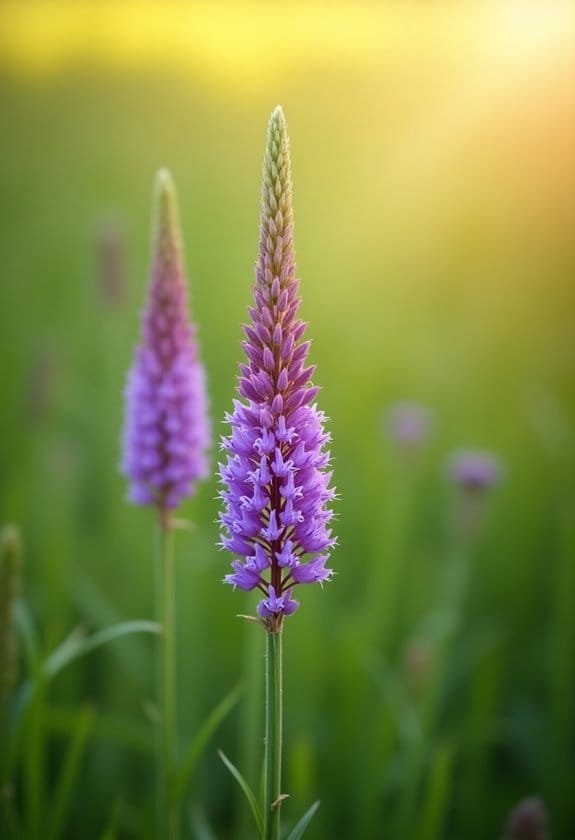
Native to eastern North America, Liatris spicata, also known as Button Snakewort or Dense Blazing Star, is a vibrant perennial flowering plant that flourishes in moist prairies and sedge meadows. This striking species typically reaches heights between 1 to 5 feet (0.30 to 1.52 m), showcasing tall spikes adorned with fluffy purple flowers that bloom from July to September.
These attractive blossoms play a vital role in local ecosystems, effectively drawing in a variety of pollinators, including butterflies, bumblebees, and hummingbirds.
Historically, Native Americans utilized the roots and flowers of Liatris spicata for various medicinal purposes, treating ailments like pain and serving as a natural insect repellent. The plant thrives best in full sun and well-drained soils enriched with calcium and magnesium, making it a popular choice among gardeners and landscape designers.
In addition, its propagation can occur through corms, seeds, or purchased seedlings, ensuring its continued presence in native habitats. Overall, Liatris spicata not only enhances biodiversity by attracting pollinators but also holds a significant place in the cultural heritage of Native American communities, blending ecological importance with historical significance.