Persicaria bistorta, known as common bistort, is an herbaceous perennial belonging to the Polygonaceae family. It typically grows to heights of 20 to 80 cm (8 to 31 inches) with a spread up to 90 cm (35 inches), featuring twisted rootstocks and elongated leaves. Flowering from late spring to autumn, its cylindrical spikes showcase delicate pink blossoms that provide essential nectar for pollinators, enhancing local biodiversity. Thriving in well-drained loamy soil with consistent moisture, it requires roughly six hours of sunlight daily. With its culinary and ornamental uses, common bistort stands out, promising a wealth of intriguing details awaiting discovery.
Main Points
- *Persicaria bistorta*, commonly known as Common Bistort, belongs to the Polygonaceae family and can grow up to 80 cm tall.
- This herbaceous perennial features pink cylindrical flower spikes and thrives in moist, loamy soil with good drainage.
- Flowers bloom from late spring to autumn, attracting pollinators like bees and butterflies, enhancing garden biodiversity.
- Common Bistort is used in traditional dishes and is noted for its ornamental appeal and medicinal properties.
- Regular care includes moisture maintenance, pruning spent flowers, and dividing the rhizome every few years for vigor.
Introduction
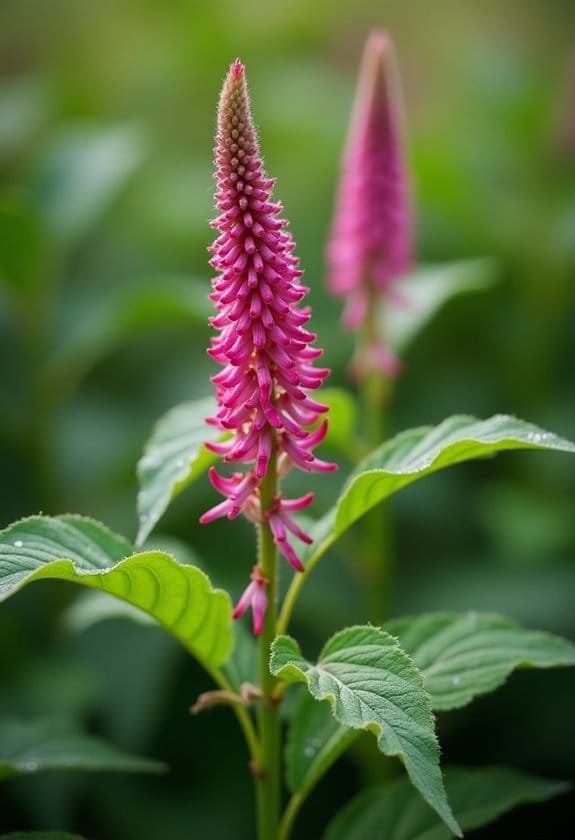
Persicaria bistorta, commonly referred to as common bistort or snake-root, presents a fascinating blend of botanical beauty and historical significance.
Growing between 20 to 80 centimeters in height, this herbaceous perennial is notable for its twisted rootstock and vibrant pink flower spikes, which grace wet meadows and gardens from late spring to autumn. Additionally, bistort's nutrient-rich soil preferences parallel those of other resilient forbs, making it a versatile choice for diverse garden settings.
With a culinary legacy tied to dishes like dock pudding, bistort not only serves as an ornamental delight in landscapes but also holds a place in traditional gastronomy, reflecting its rich, multifaceted nature. Additionally, like agrimony, bistort plays a role in supporting biodiversity within its ecosystem by providing habitats for various pollinators.
Common Name
The rich tradition surrounding the common name "Bistort" reflects its culinary heritage, particularly in Northern England where it's often used to make Easter pudding, also known as "dock pudding." This name highlights the plant's historical significance and versatility, linking it to time-honored recipes that celebrate local agriculture.
The term "Bistort" itself is derived from its culinary applications, emphasizing its role in traditional farming landscapes. Additionally, meadowsweet was historically important in similar regional dishes that utilized local herbs.
Moreover, the common bistort has acquired the name "Snake-root," attributed to its thick, twisted rootstock that resembles a snake, which adds a layer of intrigue to its character.
This herbaceous perennial showcases beautiful spikes of pink flowers that bloom from late spring to autumn, enhancing both its aesthetic appeal in gardens and its value as a culinary herb.
As an important aspect of regional cuisine, bistort carries educational significance, illustrating how plants can influence local diets and cultural practices. Its ability to thrive in damp habitats is comparable to other herbs like meadowsweet, showcasing the adaptability of wetland plants.
The common bistort thrives in damp habitats, making it a favored choice for bog or marginal gardens, where its distinct features and historical roots become focal points of interest. Furthermore, its ecological benefits as a vital food source for pollinators contribute to the overall health of local ecosystems.
Scientific Name
With a scientific classification rooted in history, *Bistorta officinalis* reflects the plant's unique characteristics and applications. Commonly referred to as European bistort, this perennial herb belongs to the Polygonaceae family, underscoring its connection to a diverse group of flowering plants. The genus name, *Bistorta*, derives from the Latin term 'bistor,' meaning 'twisted,' which aptly describes the plant's thick, twisted rootstock—a feature that not only enhances its aesthetic appeal but also contributes to its traditional culinary and medicinal uses.
Ranging in height from 20 to 80 cm (8 to 31 inches), *Bistorta officinalis* showcases a robust, erect growth habit that thrives in moist environments. Common Bistort is often celebrated for its ability to attract pollinators through its striking pink flower spikes that bloom from May to July and is particularly appealing to solitary bees and butterflies as well.
Among its variants, the Superba form stands out for its larger and more vibrant flowers, which have garnered the prestigious Award of Garden. This cultivar exemplifies the ornamental potential of the species, enchanting gardens and landscapes alike.
Understanding the scientific name provides insight into the plant's lineage and applications, revealing a rich tapestry of heritage that enhances its significance in horticulture and herbalism.
Overview
Common bistort, known scientifically as *Bistorta officinalis*, stands out as a remarkable herbaceous perennial prized for its adaptability and visual appeal. This vibrant plant, classified as Persicaria bistorta, typically grows to a height of 20 to 80 centimeters (8 to 31 inches) and can spread up to 90 centimeters (35 inches) in width, making it an impressive presence in various landscapes.
The plant features thick, twisted rootstocks and prominent longish-oval basal leaves that change into triangular, stalkless upper leaves as it matures.
A striking attribute of common bistort is its dense, cylindrical flower spikes, which bear delicate pink blooms that grace gardens and natural settings from late spring to autumn. The peak flowering period occurs between June and August, enticing pollinators and adding aesthetic charm to its habitat.
This hardy plant thrives in moist to damp environments, often occupying meadows, wetlands, and freshwater margins. Beyond its ornamental uses, common bistort holds culinary traditions, recognized in dishes like dock pudding, while its medicinal properties, attributed to tannic and gallic acids, highlight its multifaceted importance in both culinary and herbal practices.
Key Features
Common bistort (Persicaria bistorta) showcases a remarkable growth size, reaching heights of 20 to 80 cm (8 to 31 inches) and spreading up to 90 cm (35 inches) wide with its creeping rhizomes.
Its striking cylindrical spikes of pink flowers bloom from late spring to autumn, primarily between April and August, adding vibrant color to meadows and wetlands.
The plant's unique appearance, marked by longish-oval basal leaves and stalkless triangular upper leaves, enhances its visual appeal, setting a fascinating scene in any garden landscape.
Growth Size
Persicaria bistorta showcases impressive growth characteristics, typically reaching heights of 20 to 80 cm (8 to 31 in) and spreading up to 90 cm (35 in) in width. This plant exhibits a robust structure, characterized by a thick, twisted rootstock, which aptly contributes to its common name, "snakeroot."
The growth size of Persicaria bistorta is particularly notable during the spring season, as its vigor allows for a lush and appealing presence in gardens and natural habitats.
The basal foliage comprises longish-oval leaves that provide a striking backdrop to the plant's upper features. As the stem ascends, the upper leaves transform into triangular, stalkless formations, decreasing in size, which enhances the overall visual interest.
The inflorescence, composed of cylindrical spikes adorned with delicate pink flowers, begins its enchanting bloom from late spring and persists into autumn, primarily between April and August.
When cultivated in ideal conditions, specifically in moist and fertile soil, bistort can even re-bloom throughout the fall. This remarkable adaptability not only showcases its resilience but also highlights the plant's aesthetic appeal within various landscapes.
Appearance
The striking appearance of bistort captivates garden enthusiasts with its unique features. Commonly known as Persicaria bistorta, this perennial typically reaches heights between 20 to 80 centimeters (8 to 31 inches) and can spread up to 90 centimeters (35 inches) wide.
The plant showcases basal foliage that consists of longish-oval leaves, while the upper leaves present a triangular shape, becoming stalkless and progressively smaller as they ascend the stem.
One of bistort's most distinctive features is its thick, twisted rootstock, which aptly earns it the nickname "snakeroot," reflecting the plant's characteristic growth form.
Its impressive inflorescence, made up of cylindrical spikes, is adorned with lovely pink flowers, which bloom from late spring through autumn. The Royal Horticultural Society highlights these flower spikes, which can extend from 10 to 15 centimeters (4 to 6 inches) in length, forming dense, bottlebrush-like clusters that add vibrant color to gardens.
In the United States, the roots have historically been used to make herbal remedies, further enhancing the plant's appeal. Common bistort, with its striking attributes, beautifully combines ornamental aesthetics with practical uses in horticulture and traditional medicine.
Flowering Season
Bistort typically showcases an impressive flowering season that spans from late spring to early autumn, with blooms reaching their peak between June and August. During this period, the plant produces striking cylindrical inflorescences, adorned with attractive pink flowers that can extend up to six inches in length.
Each flower spike, usually unbranched, features a single spike atop the stem, presenting a distinctive appearance that stands out in gardens and natural habitats alike. Additionally, the extended blooming period of Bistort helps sustain local pollinator populations, providing consistent forage throughout the growing season.
The flowering duration of Persicaria bistorta plays an essential role in its ecological impact, as these blooms attract various pollinators, including bees and butterflies, vital to maintaining biodiversity within ecosystems.
Pollination timing aligns beautifully with the flowering period, ensuring that the plants are effectively pollinated, enabling seed production.
Preferred growing conditions throughout this flowering season include moist, fertile soils and partial to full shade, which help promote favorable blooming and longevity.
Additionally, the presence of insect pollinators during this season is crucial for the overall health of surrounding ecosystems, as they contribute to the cross-pollination of various wildflower species.
As a result, gardeners frequently observe a cascade of color and life during the summer months, highlighting the importance of Bistort in providing sustenance to pollinators while enriching the landscape with its vibrant flowers.
Growing Requirements
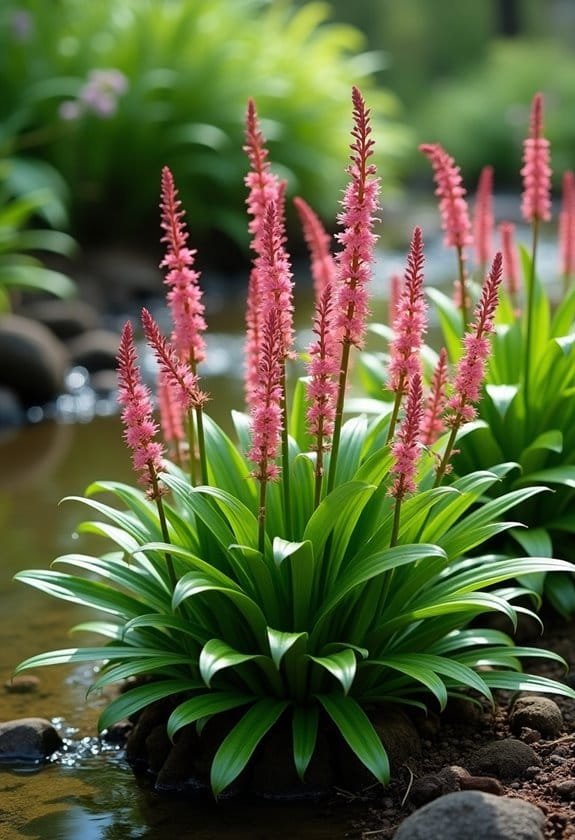
Persicaria bistorta's growing requirements are essential for its thriving presence in gardens, blending practicality with aesthetic charm.
This perennial flourishes in well-drained loamy soil, ideally with a pH between acidic and neutral, while requiring consistent moisture for peak growth, especially in drier periods.
With a preference for full sun to partial shade, it's versatile enough to enhance both sunny borders and shaded nooks, demonstrating its adaptability across various climate zones.
Light
Adaptability is a key characteristic of this perennial, as it thrives in a range of light conditions from full sun to partial shade.
The effects of light intensity on Persicaria bistorta are significant; while direct sunlight can enhance its growth, excessive heat can stress the plant, particularly during prolonged dry spells. The ideal balance typically involves around six hours of sunlight daily, fostering both robust foliage and vibrant blooms.
In terms of light duration preferences, this species flourishes best when exposed to consistent daily light, promoting photosynthesis and, consequently, overall vigor. Lack of adequate light duration may hinder blooming, diminishing its ornamental appeal. Additionally, Bellis perennis is known to thrive in similar light conditions, showcasing the adaptability of many perennials.
Moreover, the impact of light color can't be understated; different wavelengths influence various growth processes. For instance, blue light encourages vegetative growth, while red light plays a vital role in flowering initiation.
Additionally, Salad Burnet exhibits drought tolerance due to its deep taproot system, allowing it to withstand periods of insufficient moisture which can be beneficial when managing light exposure through varying seasons.
Cultivating Persicaria bistorta in well-lit areas, while ensuring some respite from harsh midday rays, can harmoniously combine these light aspects, promoting both lush foliage and sustained blooming throughout the growing season. In this way, the nuanced interplay of light conditions contributes to the plant's success in diverse garden settings.
Soil
Cultivating common bistort requires a foundation of rich, loamy soil that's well-drained. This plant flourishes in specific soil types that offer ample nutrients, essential for its robust growth and development.
Ideally, the soil should maintain an acidic to neutral pH level, hovering between 6.0 and 7.0, which is important for healthy root establishment and vigor. To achieve ideal conditions, gardeners often turn to soil amendments like compost or well-rotted manure, enhancing nutrient content and improving soil structure.
Before planting, soil testing is advisable to determine its current pH and nutrient levels. This guarantees that any necessary adjustments can be made, promoting compatibility with the growth requirements of common bistort.
While regular moisture is essential, the soil must remain well-drained to prevent waterlogging, which could lead to detrimental root rot.
In early spring, light feeding with a balanced fertilizer supports vigorous growth and encourages beautiful flowering.
Common bistort can be propagated successfully by seed or division of clumps, both methods benefitting from well-prepared soil, where the abundance of nutrients facilitates strong establishment in their new environment.
Water
Water is essential for the thriving growth of common bistort, as it prefers moist to wet soils. This plant flourishes in environments with regular water availability, such as bog gardens or damp meadows. Additionally, it shares similar habitat preferences to Bogbean, thriving in waterlogged conditions.
To maintain ideal conditions, employing effective water retention techniques is important. This might involve mulching, which helps reduce evaporation and keeps the soil consistently moist.
Irrigation scheduling strategies play a notable role, particularly during the hot summer months when water demand increases sharply. Regular watering becomes critical during prolonged dry spells; otherwise, the flowering and overall vigor of common bistort can diminish greatly.
Fortunately, moisture measurement tools, such as soil moisture sensors, are available to help gardeners monitor soil hydration more effectively, ensuring that the plant receives the moisture it needs without overwatering.
Overwatering can be detrimental, leading to waterlogging that harms root health. Striking a balance between sufficient moisture and well-drained soil conditions is essential for best growth. Additionally, like Marsh Marigold, common bistort thrives in consistently moist environments and can withstand temporary standing water.
Temperature
Temperature plays a notable role in the growth and flowering of Persicaria bistorta. This perennial plant thrives in USDA hardiness zones 3 to 7, making it ideally suited for cooler temperate climates. Its remarkable temperature tolerance enables it to flourish in full sun or partial shade, although excessive heat can diminish its performance, particularly in the warmer zones 1 to 8.
Seasonal effects on temperature greatly impact its flowering and growth patterns, as the plant tends to struggle under dry conditions, revealing its reliance on consistent moisture.
The ideal growing conditions for common bistort involve average to moist, well-drained soils, preferably with an acidic to neutral pH. This adaptability to different climates guarantees its successful integration into diverse landscapes, which may fluctuate in temperature throughout the year.
For best results, gardeners must maintain moisture levels without creating waterlogged conditions, as the plant's health is intricately linked to its environment.
Therefore, understanding the intricate relationship between temperature and moisture is essential for maximizing the flowering performance of Persicaria bistorta, assuring this resilient perennial continues to grace gardens with its vibrant blooms.
Pollinator Criteria
Persicaria bistorta plays a significant role in attracting a diverse array of pollinators, particularly bees and butterflies, thanks to its striking pink cylindrical flower spikes.
These flowers, blooming extensively from late spring to autumn, not only provide essential resources—such as nectar and pollen—but also enhance the visibility of the plant, capturing the attention of early emerging pollinator species like bumblebees. Importantly, the tubular flowers of certain plants are specially structured to optimize access for various pollinators, further illustrating the importance of plant morphology in pollination success.
Understanding the plant's pollination method and its influence on local ecosystems underscores its value in supporting declining bee populations and promoting biodiversity within gardens. Moreover, Marsh Woundwort's role as a pollinator attractor in wetland areas highlights the importance of maintaining diverse flowering plants for ecological balance.
Attracted Pollinators
Attracting a variety of pollinators, common bistort (Persicaria bistorta) thrives during the peak foraging season, providing an essential food source for bees and butterflies. From June to August, its enchanting pink flower spikes emerge, forming dense clusters that serve as abundant nectar sources. These flower spikes are particularly appealing to honeybees and bumblebees, who are drawn to the rich rewards they offer. The timing of the bloom aligns perfectly with the active foraging seasons of numerous pollinators, ensuring effective pollinator attraction and enhancing biodiversity.
Moreover, common bistort's preference for moist habitats complements its ecological role, promoting healthy ecosystems that sustain diverse pollinator populations. By incorporating this native plant into gardens, individuals contribute considerably to the conservation of pollinator species, fostering resilience within local biodiversity. Ploughmans Spikenard's ability to attract essential pollinators during its flowering season harmonizes with this ecological narrative, underscoring the interconnectedness of plant species in supporting robust insect communities. Additionally, it thrives in moist, nutrient-rich loam soil, which further supports its ecological benefits.
The structure and density of its flower spikes not only cater to the foraging needs of various insects but also provide a lovely visual cue to onlookers of nature's intricate web of life. Consequently, common bistort stands as a reflection of how a single plant can positively influence and sustain vital pollinator interactions within its environment.
Pollination Method
Pollination serves as an essential process for common bistort, primarily depending on insect pollinators like bees and butterflies to transfer pollen between flowers. These organisms demonstrate specific pollinator preferences, favoring the nectar-rich pink flower spikes of bistort, which are designed to attract them. The flowers, with exserted stamens, guarantee that pollinators make ideal contact with pollen while they forage.
Nectar rewards play a fundamental role in drawing a variety of pollinators during the flowering period from late spring to autumn. The timing of this flowering aligns perfectly with peak insect activity, maximizing the chances for fruitful reproduction. Great Burnet also shares similar attributes regarding its ability to attract pollinators like bees and butterflies, enhancing the overall ecosystem.
Each cylindrical flower spike not only provides ample landing space for pollinators but also serves as a ready source of nourishment, promoting successful visits. Additionally, bistort's role in supporting pollinator populations enhances its importance within the ecosystem as it contributes to local biodiversity and the overall health of the environment.
Through this effective pollination method, common bistort achieves reproductive success, generating fruits that contribute to its life cycle. The interdependence between bistort and its pollinators illustrates a delicate balance of ecological relationships, where every flower's design, every pollinator's buzz, plays a critical part in a wondrous tapestry of nature.
Therefore, understanding these dynamics is essential for appreciating the broader implications for biodiversity.
Care & Maintenance
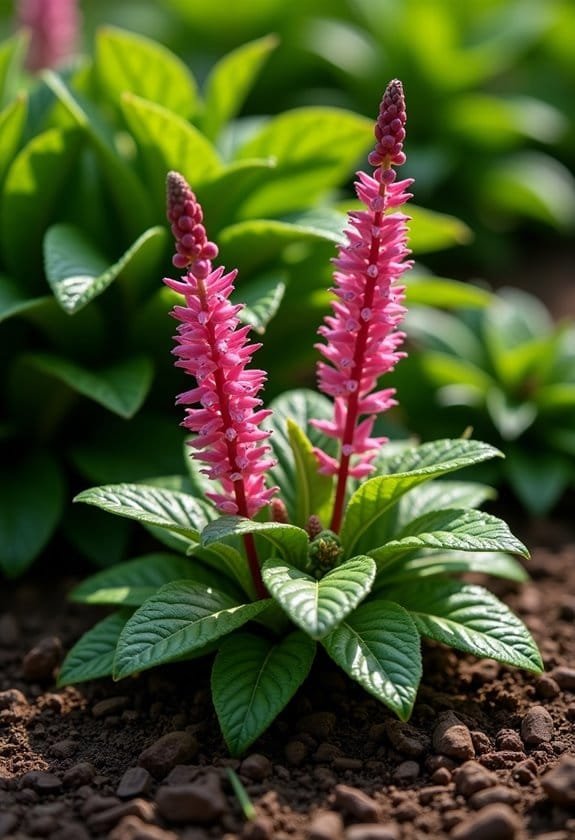
Caring for Persicaria bistorta requires attention to soil quality and environmental conditions to foster robust growth and flowering potential.
This plant thrives in moist, fertile, well-drained loamy soil and benefits from a sunny to partially shaded position, making it adaptable for various garden designs.
Regular maintenance tasks like removing spent flower spikes and providing light spring feeding can greatly enhance its aesthetic appeal and longevity in any garden setting.
Planting Tips
Often, gardeners find that planting Persicaria bistorta is straightforward due to its low maintenance needs and resilience. To achieve the best growth, it's vital to focus on site selection; this perennial thrives in moist, fertile soils and prefers full sun to partial shade. Additionally, employing proper planting techniques can greatly enhance its establishment.
When considering its layout in the garden, companion planting can be particularly beneficial. Planting Persicaria bistorta alongside spring flowering bulbs and other perennials not only elevates visual appeal but also promotes biodiversity, providing habitat for beneficial insects.
As it requires consistent moisture, gardeners should make sure that the soil remains adequately watered, especially during dry spells. Utilizing mulch can help retain moisture while suppressing weeds, which compete for nutrients.
Moreover, regular removal of spent flower spikes is recommended. This simple practice encourages reblooming and maintains a tidy appearance, contributing to the garden's overall health by preventing disease. Papaver rhoeas, commonly known as the Corn Poppy, can offer additional color and attract pollinators, enriching the garden ecosystem while enhancing visual interest.
Incorporating these thoughtful strategies guarantees a vibrant display, allowing Persicaria bistorta to flourish, creating an enchanting focal point in any landscape. By following these guidelines, novice and experienced gardeners alike can successfully cultivate this remarkable perennial.
Ongoing Care
Maintaining the health of Persicaria bistorta is vital for vibrant blooms and lush foliage. This plant thrives best in moist, fertile soil, requiring consistent watering, particularly during dry spells.
A structured fertilizer schedule, incorporating a balanced fertilizer every four to six weeks during the growing season, helps nourish the roots and supports robust growth.
To encourage ongoing blooming, gardeners should employ effective pruning techniques by removing spent flower spikes. This practice not only promotes flowering but also guarantees that the foliage remains healthy and green.
It's essential to monitor for any signs of overcrowding, as Common bistort spreads slowly via rhizomes; periodic division every three to five years is beneficial for maintaining vigor.
When considering garden placement, Persicaria bistorta prefers full sun to part shade, offering versatility for various garden settings, such as cottage or bog gardens.
Its low-maintenance nature makes it an exceptional choice for both novice and seasoned gardeners alike. By implementing these care strategies, one can create an idyllic environment for Persicaria bistorta to thrive, resulting in a delightful visual display that enhances any landscape.
Suggested Companions
Pairing Persicaria bistorta with compatible plants can greatly enhance its beauty and overall garden health. This perennial performs well in moist environments, thriving alongside moisture-loving companions like astilbe and hostas. Such combinations allow for effective moisture management, ensuring all plants flourish together.
To create colorful contrasts, consider adding spring-flowering bulbs such as daffodils and tulips, which emerge before the bistort's foliage fully develops, providing a vibrant early-season display.
For added textural diversity, plant common bistort near ferns, which thrive in similar soil conditions. The combination of diverse leaf shapes and sizes enriches the visual appeal of the garden.
To attract pollinators, integrating flowering perennials like echinacea or lupine, which bloom at overlapping times, proves beneficial; both appreciate damp soils, enhancing biodiversity.
Lastly, when utilizing common bistort as ground cover, pairing it with broadleaf plants like ligularia contributes to a lush and vibrant garden aesthetic. Additionally, common bistort's ability to thrive in well-drained soils enhances its compatibility with a variety of surrounding plants.
Altogether, these thoughtful combinations not only elevate the visual interest but also promote a healthier, more resilient ecosystem in the garden setting.
Common Issues
Common issues with Persicaria bistorta often arise from pests and diseases, impacting its thriving nature.
While this perennial generally requires low maintenance, certain infestations or infections can lead to noticeable decline, prompting immediate intervention.
To guarantee healthy growth and vibrant blooms, gardeners should remain vigilant, employing appropriate solutions such as organic pesticides or beneficial insects to combat potential threats.
Pests/Diseases
While Persicaria bistorta is mostly resilient against pests and diseases, it can still face challenges in certain conditions. Common pests such as aphids thrive in overly humid environments, occasionally affecting the plant's health. Their presence can lead to stunted growth and leaf discoloration, making pest prevention strategies essential.
Additionally, slugs and snails may wreak havoc in damp settings, causing considerable leaf damage that not only affects aesthetics but also hinders the plant's productivity.
When it comes to diseases, powdery mildew emerges as a potential threat in humid conditions, while fungal infections like root rot can establish themselves if the roots dwell in waterlogged soil. Employing effective disease management techniques becomes necessary in these scenarios; therefore, ensuring well-drained soil is crucial for the vitality of this species.
To mitigate risks, avoiding overhead watering helps prevent mold and fungal growth on the foliage, preserving the plant's vigor.
Regular inspections and maintaining good airflow around Persicaria bistorta can greatly minimize the likelihood of encountering pests and diseases, ensuring this robust perennial flourishes in its environment.
Solutions
To maintain the health and appearance of Persicaria bistorta, implementing effective solutions for common issues is important. Proper planting strategies are crucial; selecting well-drained, consistently moist soils encourages ideal growth. This moisture management is particularly essential during dry spells, as insufficient hydration can lead to browning or wilting leaves, signaling distress in the plant.
Regular watering during these periods guarantees vibrancy and prevents the plant from entering dormancy, enhancing its ornamental appeal.
Pest prevention should also be prioritized, even though Persicaria bistorta is generally resistant to infestations. Maintaining good plant health, through practices like adequately feeding and watering, can thwart potential pests before they arise.
Additionally, should the rhizomes spread too aggressively, dividing the clumps every few years is advisable to control growth while promoting vigor, effectively managing its expansion in the garden.
Lastly, regular maintenance, such as removing spent flower spikes, fosters reblooming and an enduring attractive presence in the landscape.
Summary
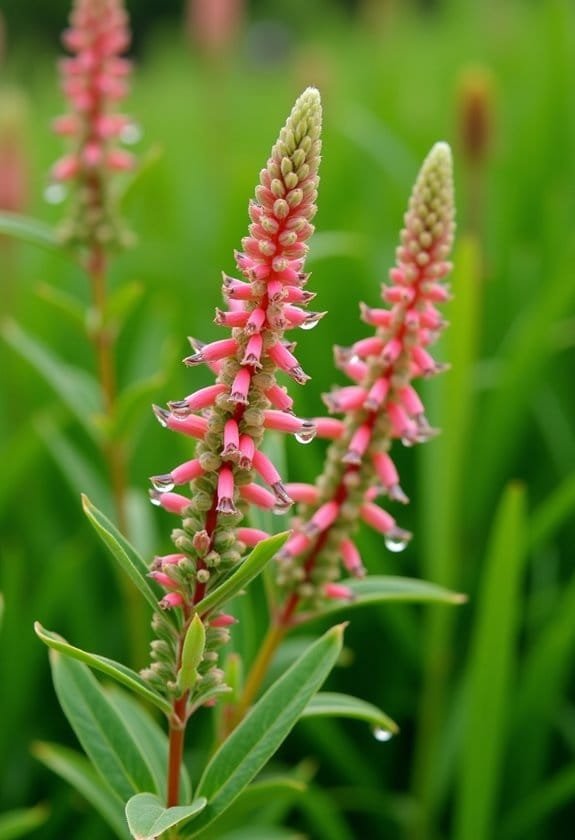
Persicaria bistorta, known as common bistort, is a resilient herbaceous perennial that thrives in moist, fertile soils. Typically reaching heights of 20 to 80 cm, this plant showcases thick, twisted rootstocks and longish-oval basal foliage, creating a visually striking presence in gardens and meadows.
From late spring to autumn, particularly between May and July, it adorns itself with cylindrical pink flower spikes, attracting pollinators and enhancing the landscape.
Common bistort has significant culinary uses, especially in traditional dishes like dock pudding, which is made during Lent. Its roots and leaves are rich in tannic and gallic acids, imparting notable medicinal properties, such as astringent effects, which have been utilized for centuries in herbal remedies.
Beyond its functional benefits, common bistort serves outstanding ornamental value; it has earned the Royal Horticultural Society's Award of Garden Merit.
Its ability to thrive in shade and wet conditions makes it an excellent choice for ground cover in bog gardens. In this way, Persicaria bistorta embodies a harmonious blend of aesthetic appeal, nutritional utility, and therapeutic benefits, solidifying its worth in both culinary and horticultural domains.