Iberis amara, commonly known as Wild Candytuft, thrives in dry, rocky soils across western and southern Europe and North Africa. This perennial reaches heights of 10-30 cm and boasts clusters of sweetly scented flowers, primarily in white and pale violet, enticing pollinators like bees and butterflies. Preferring well-drained, calcium-rich soil and full sun, this plant flourishes with minimal water, demonstrating impressive drought tolerance. It faces challenges from pests and diseases but remains generally resilient, enriching gardens while supporting biodiversity. Understanding its growing requirements and care practices can lead to a more vibrant ecological garden experience. There's much more to uncover.
Main Points
- Iberis amara, or Wild Candytuft, is a flowering plant native to western/southern Europe and North Africa, known for its sweetly scented blooms.
- It thrives in well-drained, calcium-rich soil under full sun, with a preferred pH that is neutral to mildly alkaline.
- Blooming from mid- to late-summer, it attracts pollinators like bees and butterflies with its clusters of flowers and sweet nectar.
- Regular care includes deadheading, minimal fertilization, and monitoring for pests like aphids; it exhibits resistance to deer and rabbits.
- Companion plants that pair well with Iberis amara include drought-tolerant options like lavender and thyme, enhancing garden biodiversity.
Introduction
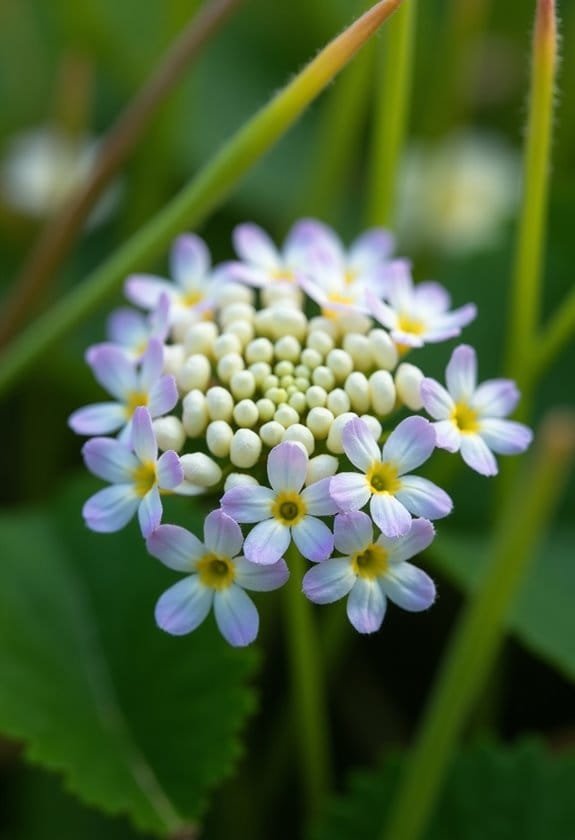
Iberis amara, widely known as Wild Candytuft, showcases its origins in the temperate regions of western and southern Europe, alongside some parts of North Africa.
This ornamental annual, which typically reaches heights between 10 to 30 cm, captivates with its clusters of sweetly scented flowers that bloom in a stunning array of colors, from pristine white to rich violets.
Understanding this plant's preferences for soil and light conditions not only enriches one's gardening expertise but also highlights its role in supporting local ecosystems by attracting essential pollinators such as bees and butterflies.
Common Name
Known for its vibrant blooms and distinctive characteristics, Iberis amara is commonly referred to as Wild Candytuft, Bitter Candytuft, and Rocket Candytuft. These common names reflect not only its appealing appearance but also its varied uses and tastes.
The term "Wild Candytuft" emphasizes its natural habitat, as this perennial plant flourishes in the dry, rocky soils of Western and Southern Europe, as well as North Africa. This adaptability enables it to thrive in harsh environments, often decorating hillside landscapes.
The name "Bitter Candytuft" alludes to the plant's somewhat peppery flavor, which infuses its culinary applications, especially in salads. Meanwhile, the designation "Rocket Candytuft" pays homage to its associations with the broader family of Brassicaceae, which includes other plants like arugula, known for their spicy leaves.
In addition to its culinary and aesthetic roles, Iberis amara supports local ecosystems by attracting bees and other beneficial pollinators. Consequently, Wild Candytuft serves as an invaluable asset to pollinator gardens, enhancing local biodiversity while also enchanting the senses with its fragrant, colorful blossoms.
Scientific Name
The scientific designation of Wild Candytuft is *Iberis amara*, a member of the Brassicaceae family, widely recognized as the mustard family. This flowering plant was first described in the pivotal year of 1753, as indicated in the reference *Sp. Pl.: 649 (1753)*, illustrating its long-standing significance in botanical studies.
Native to the western and southern regions of Europe, *Iberis amara* flourishes in countries like Belgium, France, and Germany, thriving in diverse habitats.
Typically, this erect annual plant grows between 10 to 30 cm in height, although some specimens can occasionally reach up to 40 cm, showcasing impressive resilience and adaptability.
Its flowers, an essential aspect of its allure, exhibit a range of colors, primarily white and pale violet; cultivated varieties often display even deeper hues.
The scientific name *Iberis amara* isn't merely a label—it conveys a rich history and a unique identity within the vast botanical world. Through studying this species, one can appreciate the intricate beauty and ecological significance of flowering plants, wherein each name encapsulates a story waiting to be explored.
Overview
Wild Candytuft, with its charming blooms and ideal landscape versatility, stands out within the garden scene as a beloved ornamental annual. Known scientifically as Iberis amara, this small plant hailing from western and southern Europe and North Africa belongs to the mustard family, Brassicaceae. Typically reaching a modest height of 10-30 cm (4-12 inches), its sweetly scented flowers bloom from mid- to late summer. Each inflorescence boasts 10-30 delicate flowers, each approximately 0.4 inches wide, creating a delightful display.
Wild Candytuft thrives in moist, well-drained soil under full sun, favoring high-calcium conditions while also tolerating mildly acidic or poorer soils. Its ornamental value makes it a popular choice for landscapes, often used in borders, on slopes, or within pollinator gardens, as it attracts bees for their crucial pollination efforts.
Additionally, the plant exhibits resistance to deer and rabbits, making it a practical choice for many gardeners.
Though it plays an important ecological role, caution is advised when handling Wild Candytuft due to its potential mild toxicity. Consequently, it serves both aesthetic and functional purposes, enriching gardens while supporting local wildlife.
Key Features
Iberis amara, or wild candytuft, showcases a remarkable growth size, typically standing between 10 to 30 centimeters tall, occasionally reaching up to 40 centimeters.
Its sweetly scented flowers bloom in mid- to late-summer, presenting vivid inflorescences that display an enchanting array of colors, from pristine white to striking violet and fuchsia.
This plant thrives in moist, well-drained, high-calcium soil, making its resilience and ornamental appeal significant for gardens while inviting beneficial pollinators like bees and butterflies.
Growth Size
Erect growth and compact clusters characterize *Iberis amara*, which typically reaches heights of 10–30 cm (4–12 in) but can occasionally achieve up to 40 cm (16 in). This plant exhibits a growth habit that allows it to form tightly-knit clusters of stems, promoting an attractive compact appearance.
The lower leaves are spathulate and can grow up to 8 cm long, while the upper leaves adopt a lanceolate or oblong-cuneate shape, measuring as small as 3 cm. Such varying leaf sizes contribute richly to its overall texture and diversity.
*Iberis amara* is also known for its striking inflorescence. Consisting of 10-30 individual flowers that each measure about 1 cm across, the clusters display a range of colors, chiefly featuring delicate white shades and deeper violet hues. This floral arrangement not only enhances the plant's aesthetic appeal but also draws in pollinators, essential for its reproduction.
As the flowering phase concludes, the fruit develops into suborbicular siliculae, typically about 5 mm in diameter, which promises to create further clusters of foliage in subsequent growing seasons, reinforcing the plant's role in various ecosystems.
Appearance
With its compact clusters and striking inflorescences, *Iberis amara* presents an appealing visual display in gardens and natural landscapes.
This perennial plant typically grows to heights between 10 and 30 cm, occasionally reaching up to 40 cm under ideal conditions. The standout feature of *Iberis amara* is its small, sweetly scented flowers, which burst forth in mid- to late-summer, showcasing a delightful range of colors from pristine white and soft pale violet to vibrant shades of pink, violet, and fuchsia.
Each corymb structure is composed of 10 to 30 flowers, with individual blooms measuring approximately 0.4 inches across, creating a dense, charming effect that can brighten any space.
The leaves themselves exhibit remarkable diversity; lower leaves are spathulate and can reach up to 8 cm in length, while the upper leaves are either lanceolate or oblong-cuneate, with smaller dimensions of around 3 cm. They frame the flowers beautifully, enhancing the overall aesthetic of this enchanting plant.
Completing the plant's allure, its fruit consists of suborbicular siliculae, roughly 5 mm in diameter, adorned with deeply notched apices and intricate reticulate vein patterns.
Flowering Season
Blooming vibrantly from mid- to late-summer, wild candytuft (Iberis amara) captivates with its sweetly scented flowers that lure in pollinators. During its flowering season, this enchanting plant showcases clusters called corymbs, each containing 10 to 30 individual flowers, each measuring approximately 0.4 inches (1 cm) across.
The flowers exhibit a delightful spectrum, ranging from pristine white and pale violet to richer hues of pink, violet, and fuchsia, adding ornamental value to garden landscapes.
To guarantee a prolonged flowering experience, regular deadheading is essential; removing spent blooms encourages the plant to redirect its energy toward producing new flowers and fosters healthy growth.
Wild candytuft flourishes best in well-drained, high-calcium soil, emphasizing the importance of the right substrate for thriving gardens. Additionally, it prefers full sun, basking in the sunlight that promotes vigorous blooming and robust plant development.
With proper care and ideal conditions, this wildflower not only enhances the aesthetic appeal but also contributes to local ecosystems by attracting a variety of pollinators throughout its vibrant flowering season. The harmonious blend of beauty and ecological function makes wild candytuft a cherished addition to any garden.
Growing Requirements
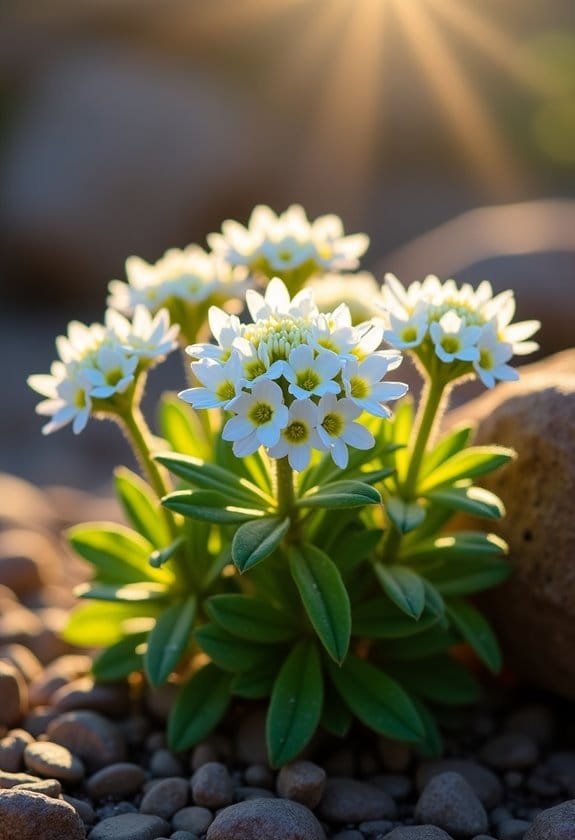
Iberis amara flourishes in well-drained, calcium-rich soil, thriving best when basked in full sun, yet it can accept partial shade, albeit with diminished flowering.
The plant's resilience to poor or sandy soils enhances its appeal for diverse gardening environments, but it can't withstand waterlogged conditions, which risk root rot.
Understanding its light, soil, and water preferences is essential to nurturing this hardy perennial, ensuring robust growth and vibrant blooms through the seasons.
Light
For ideal growth, Iberis amara thrives in full sunlight, needing at least six hours of direct light each day. This remarkable plant, often referred to as Wild Candytuft, flourishes in warm environments, such as dry hillsides where sun exposure is abundant.
While it can tolerate partial shade, it's important to mention that flowering diminishes considerably under shadier conditions. If gardeners wish to see their Iberis amara produce an impressive display of blooms, ample sunlight becomes non-negotiable. Wild Marjoram can serve as a comparison, demonstrating the importance of full sunlight exposure for optimal growth and vibrancy.
Light plays an essential role in not just the aesthetic appeal of the garden but also in attracting important pollinators like bees and butterflies, which contribute considerably to the ecosystem's health. Additionally, Wild Thyme, another plant that requires full sun exposure, exemplifies how essential sunlight is for thriving growth.
Additionally, Iberis amara can adapt to various soil types, including high-calcium and mildly acidic soils, provided that sufficient light is available. The interplay between sunlight and the plant's growth potential ensures that it can thrive and flourish, rewarding growers with vibrant, lively flowers.
To summarize, guaranteeing your Wild Candytuft has access to full sunlight is paramount, allowing it to grow robustly and effectively showcase its enchanting blooms.
Soil
Choosing the right soil type is vital for successful Iberis amara cultivation. This plant thrives in moist, well-drained garden soil that's particularly high in calcium, which greatly enhances growth and flower production. The ideal pH for Iberis amara leans towards neutral to mildly alkaline; however, it can tolerate mildly acidic or even poor soils, offering flexibility for various gardening conditions.
While full sun encourages peak blooming, Iberis amara can survive in partial shade, although this greatly reduces flowering potential. It's important to monitor soil moisture diligently. Iberis amara requires moderate watering to maintain its vigor but is sensitive to waterlogging that can lead to root rot, ultimately stifling its growth.
Overcrowding is one factor to avoid, despite the plant's small size; too many plants in close proximity can stress their rooting systems, impairing growth and diminishing the beautiful blossoms.
Vigilantly ensuring that the soil remains moist yet well-drained creates an environment where Iberis amara can flourish, showcasing its delicate blooms while enhancing the overall beauty of the garden. Therefore, thoughtful soil management proves indispensable for successful Iberis amara cultivation.
Water
When cultivating Iberis amara, maintaining proper water levels is essential for its growth. This enchanting plant thrives best in well-drained soil that effectively prevents waterlogging, a condition that can lead to detrimental root rot. During the critical germination phase, gardeners should guarantee the soil moisture remains at a moderate level. Regular watering early in the growing season supports robust growth and vibrant flowering, particularly before summer heat stress takes hold.
Once established, Iberis amara demonstrates impressive drought tolerance, requiring less frequent watering during dry spells. This resilience showcases the plant's adaptability, allowing it to withstand extended periods without excessive hydration. Additionally, incorporating white clover's nitrogen-fixing capabilities into your garden can further enhance soil fertility and overall health. Creeping Cinquefoil's drought tolerance makes it an excellent companion plant to share growing conditions with Iberis amara.
Gardeners can enhance soil moisture retention by mulching around the plant's base. This simple tactic not only conserves water but also minimizes competition from weeds that could otherwise hinder growth.
Careful monitoring of soil moisture levels is essential, particularly in shifting weather conditions. Through judicious watering practices and an understanding of the plant's needs, one can cultivate a healthy Iberis amara, resulting in a flourishing display of its enchanting blossoms throughout the growing season.
Ultimately, a balanced approach to watering guarantees longevity and vibrancy in this beautiful addition to any garden.
Temperature
Iberis amara flourishes best in a temperature range of 65-70°F, making it an ideal choice for cooler climates. This delightful plant exhibits distinctive sensitivity to heat; when summer temperatures rise, it often dies back, indicating its preference for mild conditions.
For optimal development and blooming, gardeners should consider sowing seeds in the fall or just after the last spring frost, aligning with Iberis amara's natural life cycle.
While it can tolerate partial shade, providing full sun exposure greatly enhances robust flowering and overall plant vigor. The warmth of sunny conditions invigorates the plant's growth, encouraging the striking clusters of white flowers for which it's admired.
To guarantee prolonged blooming during its flourishing temperature range, regular deadheading is essential; this practice encourages continual flowering by redirecting energy towards new blooms rather than seed production.
Understanding these temperature requirements helps gardeners create the perfect environment for Iberis amara, allowing it to thrive. By maintaining the right conditions, including monitoring soil and air temperature, one can enjoy the enchanting beauty of this wild candytuft with ease and elegance.
Pollinator Criteria
Iberis amara, known for its vibrant blooms, serves as a magnet for pollinators, primarily bees and butterflies.
The plant's corymbs, which can hold up to 30 flowers each, create an inviting landscape that enhances foraging opportunities during its bloom period from mid- to late-summer.
Understanding the specific pollination methods and the diverse pollinator attraction is essential for fostering healthy ecosystems and promoting biodiversity in garden settings. Additionally, like Common Skullcap, Iberis amara's ecological significance plays a crucial role in supporting local biodiversity and attracting essential pollinators.
Attracted Pollinators
How do certain plants manage to attract a diverse array of pollinators? Iberis amara, commonly known as wild candytuft, uses multiple strategies to enhance its attractiveness. Blooming in mid- to late-summer, its sweetly scented flowers emit fragrances that entice various pollinators, particularly bees and butterflies, which are essential for the plant's reproductive success.
The floral structure of Iberis amara is particularly significant; flowers are arranged in corymbs of 10-30 blooms, presenting a striking visual and providing ample food in a concentrated area. Furthermore, it exhibits characteristics similar to Blue Eryngo, known for its vital nectar source for pollinators.
With hues ranging from pristine white to deep violet, these colors serve as beacons, guiding pollinators toward their nectar-rich offerings. Additionally, the plant thrives in full sun and well-drained soil, creating an inviting habitat for foraging pollinators. Furthermore, similar to Vipers Bugloss and its role as a vital nectar source, Iberis amara supports local ecosystems by attracting a variety of beneficial insects.
Pollination Method
The effective pollination of Iberis amara relies on its unique flower structure and the criteria that attract a range of pollinators. The plant showcases an intricate corymb inflorescence, typically comprising 10-30 flowers per cluster, enhancing visibility and accessibility for visiting creatures. These clusters allow pollinators like bees and butterflies to locate and access nectar efficiently, thereby facilitating the essential pollination process.
Flowering from mid- to late-summer, Iberis amara's bloom coincides perfectly with heightened pollinator activity, ensuring that its sweetly scented blooms draw in diverse species. Each flower features four unequal petals that create a striking visual appeal; the vibrant color variations, from white to deep purple, further entice pollinators.
The sweet nectar and ample pollen provided by these flowers form an irresistible invitation, supporting not just individual survival but also local biodiversity.
In this way, Iberis amara plays a significant role in maintaining ecosystem health, acting as both a source of nourishment for pollinators and a promoter of plant reproduction.
The subtle intricacies of its floral design exemplify nature's remarkable ability to foster symbiotic relationships between plants and their pollinators.
Care & Maintenance
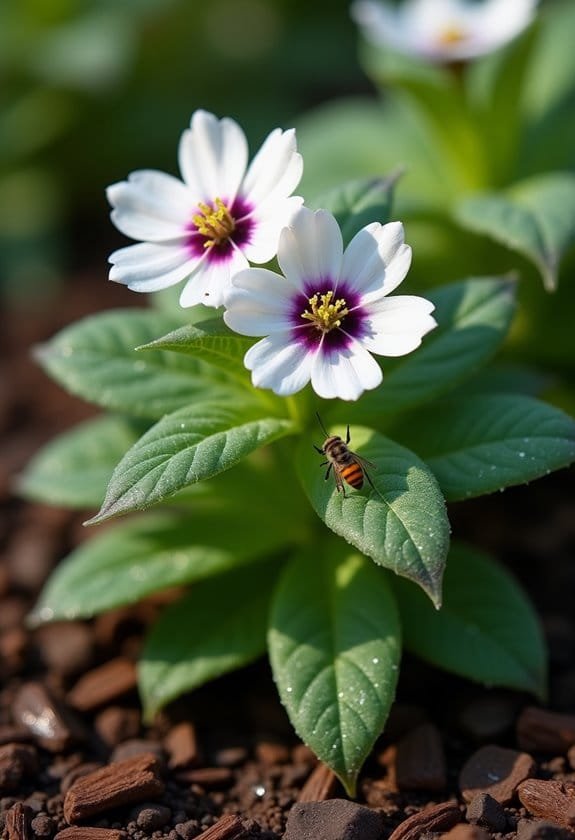
When it comes to caring for Iberis amara, understanding the right planting tips is essential for maximizing its vibrant blooms.
Proper ongoing care, including regular deadheading and mindful watering practices, guarantees this resilient plant flourishes in well-drained, high-calcium soils under full sun exposure.
Additionally, exploring suggested companions for Iberis amara can enhance the garden's ecosystem, promoting a harmonious environment that nurtures diverse plant life.
Planting Tips
For successful growth of *Iberis amara*, gardeners should focus on proper planting techniques and ongoing care.
This perennial thrives best when seeds are sown directly into well-drained, high-calcium soil, ideally in the fall or just after the last spring frost. These conditions cater to *Iberis amara*'s preference for cooler temperatures and full sun conditions, which considerably enhances blooming.
When implementing these planting tips, it's vital to verify that the chosen soil remains moist yet not waterlogged, as this resilient plant is drought-tolerant once established.
To maximize the ornamental appeal, regular deadheading of spent flowers throughout the summer encourages a continuous display of vibrant blossoms. Gardeners should also be vigilant for any signs of distress or pests; although this species is generally pest-resistant, occasional aphid infestations may occur and require prompt attention.
If transplanting seedlings, minimizing root disturbance is fundamental for their healthy development, since *Iberis amara* doesn't typically respond well to relocations once established.
Focusing on these strategies will help guarantee a thriving and beautiful garden.
Ongoing Care
Planting *Iberis amara* sets the stage for its thriving beauty, but ongoing care is key to maintaining its health and vigor. This resilient plant thrives in full sun and prefers well-drained, high-calcium soil. Regular monitoring of light and soil conditions is vital for ideal growth.
Although *Iberis amara* is drought-tolerant once established, it requires moderate watering; be careful to avoid waterlogged conditions, which could lead to root rot.
In order to maximize flowering potential, regular deadheading of spent blooms is essential, as it encourages a longer blooming season and enhances the plant's overall aesthetic appeal. Notably, *Iberis amara* generally remains pest-free, though gardeners should remain vigilant for occasional aphids. If detected, using organic insecticidal soap proves effective in managing these nuisances.
Lastly, while this plant flourishes even in poor soils, minimal fertilization can support enhanced growth. Applying organic amendments occasionally guarantees that the plant retains its robust vigor while remaining a stunning fixture in the garden.
With careful ongoing care and attention to these needs, *Iberis amara* offers delightful beauty year after year.
Suggested Companions
Choosing the right companions for *Iberis amara* enhances both its beauty and health in the garden. This hardy perennial flourishes in full sun conditions, making it the perfect partner for other drought-tolerant plants.
Consider pairing it with *Lavandula* (lavender) and *Thymus* (thyme), which thrive in similar environments and poor soils. Together, they create a harmonious, low-maintenance landscape.
For a more vibrant visual appeal, companions like *Gaillardia* (blanket flower) or *Echinacea* (coneflower) can be introduced. These lively blooms not only contrast beautifully against *Iberis amara*'s pastel flowers but also attract essential pollinators, enhancing biodiversity in the garden. Additionally, *Silverweed* can grow in the same conditions, benefiting from the same pollination dynamics due to its partnership with native bees and butterflies.
When incorporating *Iberis amara* in borders or rock gardens, *Sedum* (stonecrop) serves well as ground cover. Its presence adds texture while helping retain moisture in the soil. Additionally, *Allium* species, such as flowering onions, offer contrasting heights and shapes while acting as natural pest repellents.
To maintain aesthetics and prolong flowering, regular pruning or deadheading of companion plants is advisable. This keeps the garden thriving, promoting both beauty and ecological balance. Moreover, the relationship with pollinators in your garden can significantly improve ecological health and biodiversity.
Common Issues
Iberis amara frequently encounters common issues that can hinder its health, such as powdery mildew, root rot, and pest infestations.
These challenges stem from environmental factors like humidity and overcrowding, necessitating careful management to guarantee robust growth.
Pests/Diseases
Despite its general resistance to pests, Iberis amara can still encounter common garden issues, particularly from pests like aphids and flea beetles. These tiny insects can considerably weaken the plant if left unchecked, drawing sap and causing leaves to curl or develop a sticky residue. Regular monitoring is essential to catch aphid infestations early, and insecticidal soap can provide an effective treatment.
Moreover, disease issues primarily arise from overwatering or poorly drained soils, leading to conditions such as root rot and fungal infections. When Iberis amara receives excessive moisture, its roots may not have adequate aeration, becoming susceptible to decay. Common Tansy can also create challenges in the garden by outcompeting Iberis amara and other native plants.
Powdery mildew can also thrive in overly humid environments, creating a white, powdery substance on leaves, which could hinder the plant's photosynthesis. Ensuring good air circulation and avoiding overhead watering are vital preventative measures against this disease.
Healthy Iberis amara typically exhibits strong resistance to pests and diseases when nurtured properly. Adequate spacing, well-drained soil, and appropriate watering techniques can mitigate many of these concerns, allowing for a vibrant and resilient garden display. Additionally, incorporating native species into the garden can encourage biodiversity and help control invasive plants like Creeping Buttercup.
Understanding these challenges fosters a more profound appreciation for this remarkable plant.
Solutions
Effective solutions for common issues with *Iberis amara* can greatly enhance its health and blooming potential. Proper spacing is essential; plants should be spaced at least 12 to 18 inches apart. This spacing allows for adequate airflow, reducing competition for fundamental nutrients and minimizing the risks of mold or fungal diseases.
Regular deadheading of spent flowers plays an important role as well; removing these faded blooms encourages prolonged blooming and helps maintain the plant's visual appeal, ensuring an extended display of vibrant flowers throughout the growing season.
Monitoring for pests, particularly aphids, is crucial to keep *Iberis amara* thriving. If infestations occur, treating them promptly prevents stress on the plants that could compromise their health.
Additionally, it's significant to examine the soil condition; *Iberis amara* prefers well-drained soil and is susceptible to root rot if waterlogged. As a preventive measure, gardeners should place their plants in full sun, since partial shade can lead to reduced flowering and overall vigor, impacting the plant's aesthetic beauty.
Summary
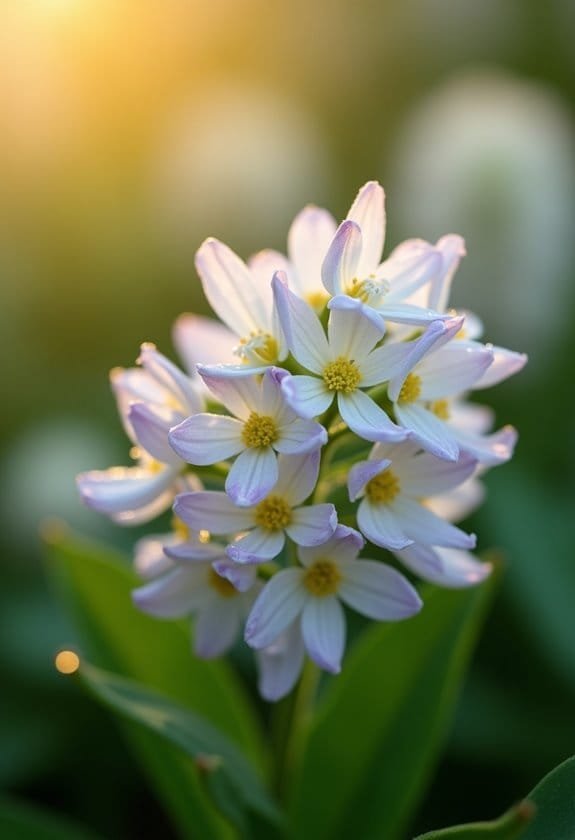
With its charming sweet-scented flowers, wild candytuft (Iberis amara) is a delightful addition to gardens, blooming from mid- to late-summer. This small ornamental annual belongs to the mustard family, Brassicaceae, and thrives in well-drained, high-calcium soil, ideally under full sun exposure.
Although it tolerates partial shade and less fertile soils, wild candytuft prefers conditions that truly enhance its growth potential.
Reaching heights of 10 to 30 cm, and occasionally up to 40 cm, Iberis amara displays flowers in shades ranging from pure white to delicate violet and pink. These attractive blooms not only mesmerize garden visitors but also serve a crucial ecological role, attracting pollinators like bees and butterflies, making the plant excellent for pollinator gardens. Additionally, wild candytuft's seeds yield mustard, showcasing its culinary potential. This resilient species demonstrates a significant resistance to deer and rabbits, further solidifying its status as an ideal choice in diverse landscaping applications. Furthermore, incorporating plants like ramsons(Allium ursinum) can enhance the biodiversity of pollinator gardens.
To conclude, incorporating Iberis amara into garden designs not only enhances aesthetics but also supports local ecosystems, making it a worthwhile and impactful gardening choice.